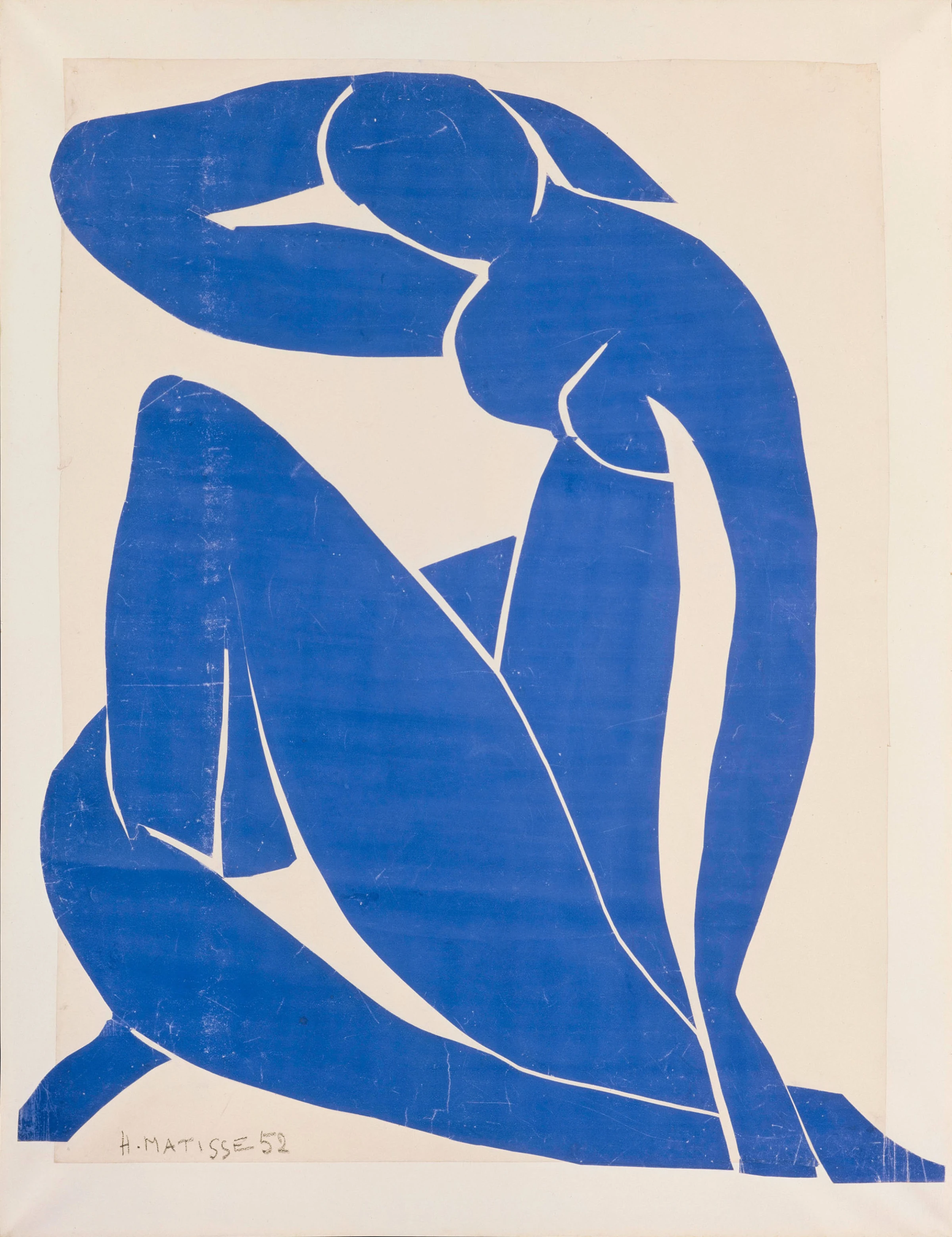
Grand Palais Reframes Matisse’s Final Years as Urgent Work, Not Late-Career Calm
A major Paris exhibition on Matisse from 1941 to 1954 argues that his celebrated late period emerged from illness, constraint, and sustained formal risk rather than decorative ease.
The Grand Palais exhibition on Henri Matisse’s final period, organized with the Centre Pompidou, positions the years 1941 to 1954 as a sustained experiment under pressure rather than a decorative afterglow. This is a consequential reframing. In broad public memory, late Matisse often appears as bright color, clear shape, and effortless pleasure. The Paris show argues for a harder reading: the apparent ease is the visible surface of a working method built in proximity to illness, physical limitation, and relentless iterative discipline.
The historical hinge is Matisse’s 1941 surgery and prolonged recovery, after which he resumed work with what curators describe as emergency-level intensity. The exhibition reportedly gathers around 300 works, including cut-outs, drawings, maquettes for Jazz, interiors, and chapel studies. Scale matters here. A compact survey can flatter a thesis. A large, medium-spanning assembly must prove it. By staging multiple bodies of work side by side, the show invites viewers to track technical transfer between paper, ink, paint, and spatial composition across the period.
The cut-outs are the obvious anchor, but the curatorial intelligence is in refusing to isolate them as a final decorative chapter. Instead, they appear as one component in a wider studio ecology in which drawing practice, chromatic testing, and compositional relocation happened continuously. This matters for scholarship and for market interpretation. Treating the cut-outs as singular icons can obscure the developmental logic that produced them, and can flatten the late period into style rather than process.
For institutions, the exhibition also addresses a geographic lacuna. Paris did not host the major 2014-15 cut-outs survey seen in London and New York, leaving a public gap in how French audiences encountered this part of Matisse’s oeuvre. The current project functions as a corrective and as a national-collection argument, emphasizing how postwar acquisitions and museum policy helped codify Matisse as a symbol of cultural rebuilding after wartime rupture.
The show arrives inside an unusually dense Matisse calendar, with companion exhibitions and related projects across Baltimore, Chicago, San Francisco, and Barcelona. This distributed programming cycle should be read as more than commemoration. It is a coordinated museum-economy event that reactivates loans, scholarship, donor attention, and visitor traffic around a shared canonical axis. In practical terms, Matisse becomes a platform for testing how institutions package modernism for audiences shaped by immersive media and shorter attention rhythms.
There is a curatorial risk in this kind of cycle. Canon reinforcement can become conservative repetition unless institutions articulate why these works matter now. The strongest argument in Paris is temporal and material: late Matisse demonstrates how constraint can produce formal invention at scale. That proposition resonates in a period when many artists and institutions face shrinking production windows, health precarity, and unstable funding structures.
Collectors should note that this interpretive turn may influence value narratives within postwar and modern segments. Works historically grouped under decorative modernism may be reframed through labor intensity, procedural complexity, and cross-medium significance. The result is not simply a pricing question. It affects exhibition design, catalog language, and acquisition priorities, especially for museums seeking to connect canonical artists to contemporary debates on process and embodiment.
Ultimately, the Grand Palais presentation does what major monographic exhibitions should do. It does not just display famous objects, it changes the terms under which those objects are read. If the public leaves with the sense that late Matisse was built through difficulty, not ease, then the show will have corrected one of the most persistent distortions in modern-art reception. The bright surface will remain, but the work behind it becomes legible again.