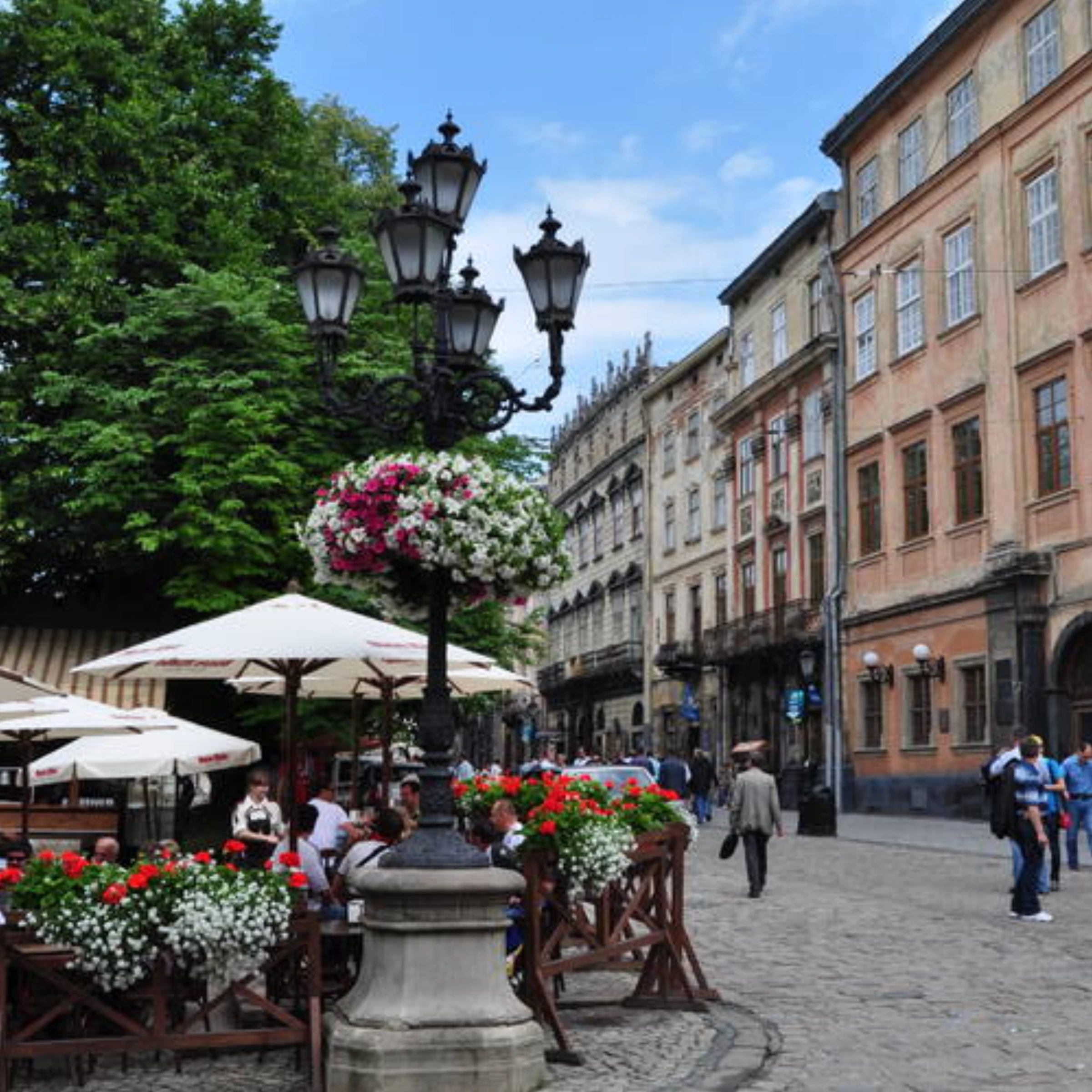
Drone Damage at Lviv’s Bernardine Monastery Renews Pressure on Cultural Protection Enforcement
A Russian drone strike that damaged buildings in Lviv’s UNESCO-listed historic center has intensified calls for stronger cultural protection mechanisms during wartime.
Damage to buildings around Lviv’s Bernardine Monastery after a Russian drone strike has sharpened a persistent reality of this war: legal frameworks for cultural protection exist, but enforcement remains weak in the moment of attack. The strike hit the historic center of Lviv, an area inscribed on UNESCO’s World Heritage List and later added to the organization’s in-danger register, yet cultural designation did not function as deterrence.
Ukrainian officials and international observers have framed the incident as part of a larger pattern in which heritage sites, museums, archives, and civic monuments become exposed whenever long-range aerial attacks intensify. The Lviv event is notable not only for the physical damage but for its symbolic charge: this is one of the country’s most historically layered urban centers, central to modern Ukrainian identity and to the transnational history of Eastern and Central Europe.
Heritage policy specialists have long argued that documentation alone is insufficient under kinetic pressure. Digitization programs, emergency inventories, and condition reports remain essential, but they do not replace immediate protective capacity, insurance clarity, salvage coordination, and rapid post-strike stabilization funding. When attacks are frequent, the quality of response logistics can determine whether damage remains local or escalates into permanent loss.
The political response has now expanded beyond conservation language. Ukrainian officials used the strike to challenge the international cultural system more directly, including questions about whether state actors accused of systematic cultural destruction should retain unqualified participation in major cultural bodies and events. That debate has immediate implications for curators, biennial organizers, and institutions balancing principles of exchange against wartime accountability.
For museum leaders and trustees, this case underscores the need to treat heritage risk as an operational field rather than a symbolic one. Preparedness plans now require cross-border legal support, specialist transport networks, structural engineers familiar with historic fabric, and conservation teams that can be deployed quickly after strikes. Institutions that partner with Ukrainian organizations should expect requests that are specific, technical, and time-sensitive, not only financial.
There is also a public communication challenge. International audiences often encounter war damage through isolated images, while the slow labor of assessment, triage, and restoration remains underreported. That asymmetry can weaken fundraising and policy momentum. Clear reporting standards, verified damage mapping, and transparent restoration pathways are now core components of cultural defense strategy, not secondary tasks.
At the legal level, the episode revives scrutiny of obligations under the 1954 Hague Convention and related protocols. Those instruments articulate duties to protect cultural property during armed conflict, but enforcement is typically delayed, fragmented, or dependent on broader diplomatic dynamics. In practice, documentation and evidence chains built today may matter most in future accountability forums, not in preventing tomorrow’s strike.
The Lviv damage therefore sits at the intersection of architecture, law, and geopolitics. It is a conservation problem, a governance problem, and a credibility test for international cultural institutions claiming universal stewardship principles. Stakeholders should monitor updates from UNESCO, emergency heritage coordination by ICOMOS, and Ukrainian cultural authority briefings as assessments continue. The current phase is not only about what was hit, it is about whether the system can respond faster than the next wave of damage.