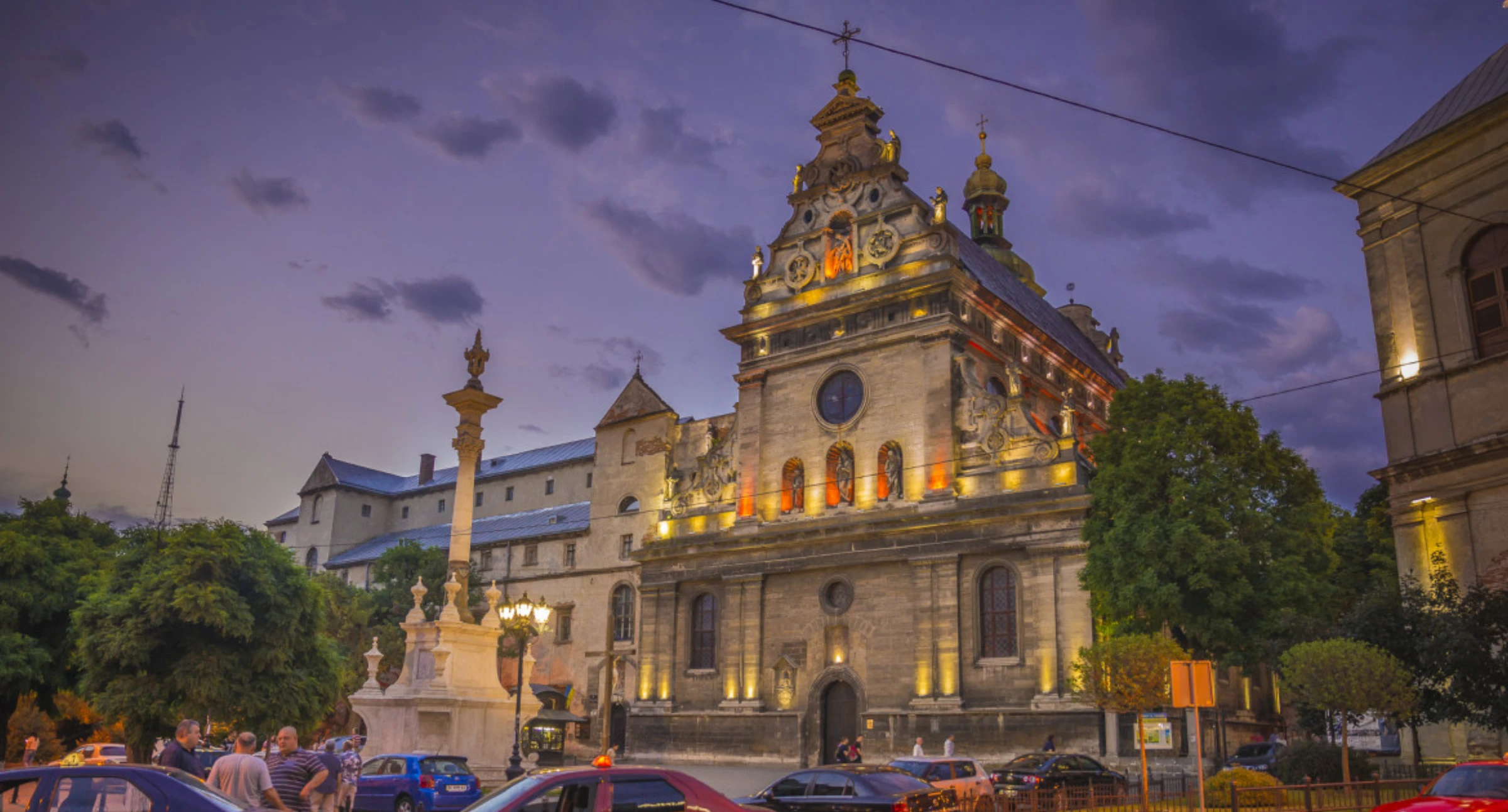
Strike Damage Near Lviv’s Bernardine Monastery Reopens the Cultural-Heritage War Front
Damage in Lviv’s UNESCO-listed historic center underscores how cultural infrastructure remains exposed as the war in Ukraine escalates.
Damage from a Russian drone strike in Lviv has pushed cultural heritage back to the center of wartime accountability. According to reports from city officials and international observers, the attack affected buildings within the UNESCO-listed historic core, including the area around the Bernardine Monastery and St. Andrew’s Church. The incident is not an isolated architectural loss. It is part of an ongoing pattern in which civilian cultural environments are folded into military pressure campaigns.
The affected zone sits inside the UNESCO World Heritage designation for the Ensemble of the Historic Centre of Lviv, a site recognized for its layered Central European urban history. The monastery complex itself is one of the city’s most legible markers of that history, combining ecclesiastical, civic, and defensive identities. Damage in this context is therefore double-coded, immediate physical harm and longer-term erosion of historical continuity.
UNESCO’s public response was unusually direct in tone, describing alarm at strikes in the protected area while repeating that all parties must safeguard cultural property. That diplomatic formulation follows international convention, but the operational reality on the ground is increasingly blunt. Heritage managers, archivists, and municipal conservators are now forced to work under conditions closer to disaster response than standard conservation practice.
For Ukraine’s cultural sector, this compounds a multi-year emergency. Institutions have already had to shift collections, harden storage, and reorganize staffing under energy and mobility constraints. When active strikes reach designated heritage districts, the burden moves from preventive planning to triage. Documentation teams must verify losses quickly, legal teams must preserve evidence trails, and restoration planning must begin before security conditions stabilize.
The broader policy stakes are significant. Calls from Ukrainian officials and cultural bodies for stronger international consequences, including institutional sanctions and membership reviews in multilateral bodies, are likely to intensify after incidents like this. Whether those calls produce formal outcomes remains uncertain, but they are reshaping how cultural diplomacy is discussed in real time, less as symbolic exchange, more as enforcement and risk governance.
For museums, foundations, and grantmakers outside Ukraine, the implication is practical. Support models built around exhibition partnerships or soft cultural programming are no longer sufficient on their own. What is needed now is sustained funding for emergency conservation logistics, materials, and technical partnerships tied to on-site teams. In Lviv, the question is no longer whether culture is on the front line. It is how quickly institutions can adapt to the fact that it already is.
There is also a documentation race underway. Every damaged façade, roofline, and interior surface must be recorded to a standard that can support future conservation and legal review. That means photogrammetry, archival cross-reference, and chain-of-custody discipline for evidence files. International conservation frameworks from bodies such as ICCROM and ICOMOS are increasingly relevant in active-conflict settings, where technical records become part of both restoration design and accountability architecture.
For the wider art world, this incident should end the fiction that cultural heritage risk is peripheral to contemporary programming. Biennials, fairs, and museums that continue to treat heritage destruction as an occasional side topic are operating behind events. Funding councils and private foundations can respond now by prioritizing rapid-grant mechanisms for emergency conservation in affected regions, then linking those grants to verified reporting standards. Lviv's damage is local in geography but global in implication: cultural memory is now a live infrastructure vulnerability.