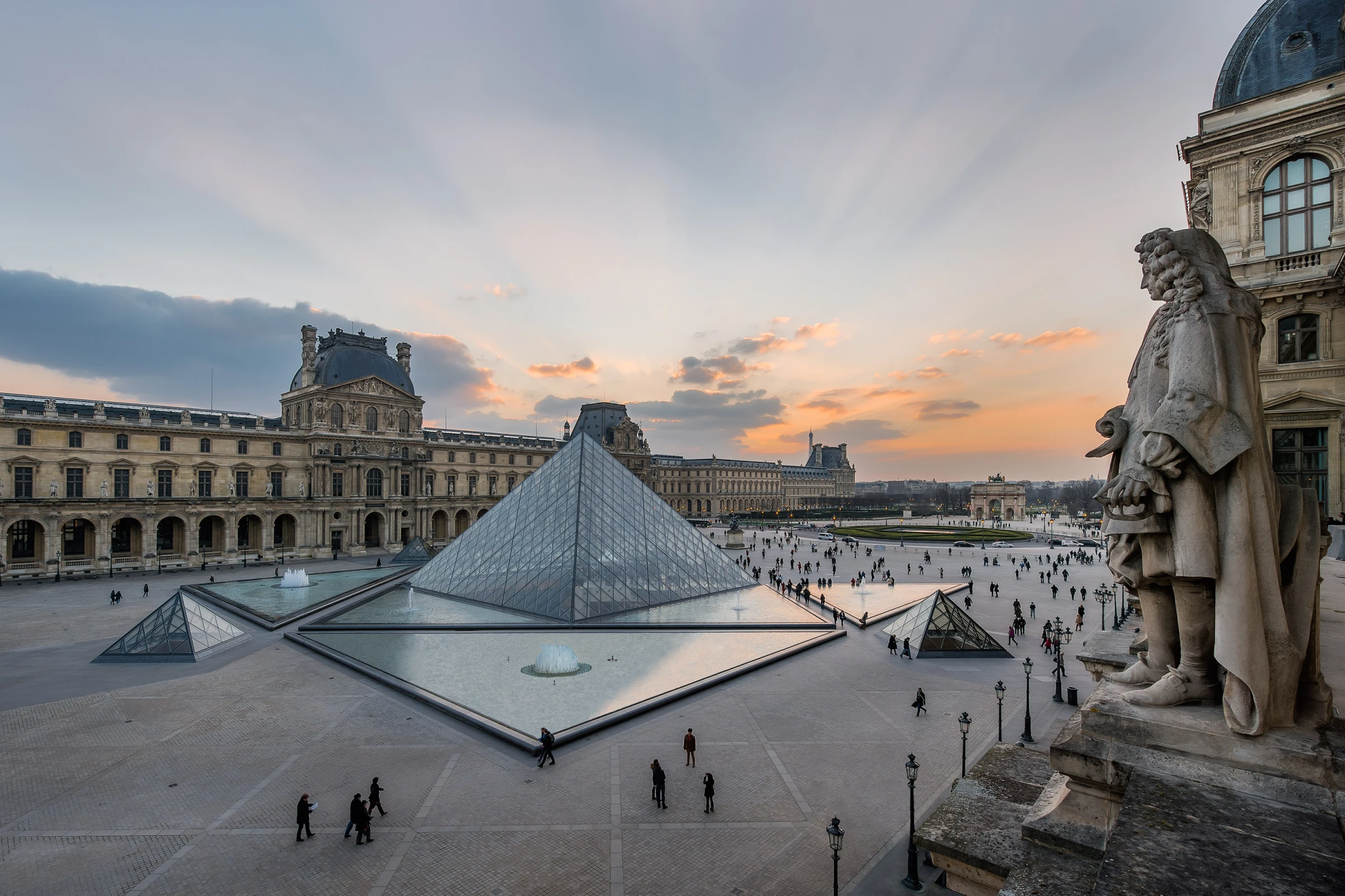
Louvre Leadership Reset Begins Under Christophe Léribault After Security and Governance Crisis
Christophe Léribault takes over a strained Louvre after theft, labor unrest, and parliamentary scrutiny over security spending priorities.
The Louvre enters its next phase under Christophe Léribault with unusual institutional pressure from all sides. The museum is still absorbing the fallout from last year’s crown jewels theft, parliamentary criticism of management priorities, and sustained internal labor tension. Léribault, who previously led the Musée d’Orsay, is not stepping into a routine succession. He is stepping into a credibility test at Europe’s most visible museum.
According to current reporting, French auditors and lawmakers focused on delayed security deployment and a leadership model that emphasized major capital vision over operational resilience. The balance between symbolic projects and basic risk control is now the central policy dispute. At an institution with the scale and international profile of the Musée du Louvre, those decisions carry consequences beyond Paris, they shape lender confidence, state oversight, and public trust in how national collections are protected.
The headline financial conflict is stark. Long-horizon plans around a major new visitor infrastructure project continue to sit beside urgent requirements for safety systems, maintenance, and collection protection. If the current leadership transition is going to stabilize the museum, the first signal must be spending discipline that clearly favors risk reduction and technical reliability before prestige construction. That sequence matters to staff and parliament, but it also matters to international partners considering loans and co-organized exhibitions, including peers such as the Metropolitan Museum of Art that monitor governance standards closely when collaborating at scale.
Léribault’s supporters point to his track record in Paris institutions and his reputation for lower-friction management style. That matters now because the Louvre’s internal climate has become part of its operating risk. A museum cannot run complex conservation, logistics, security, and public programming pipelines efficiently when trust has eroded across departments. Rebuilding internal confidence is not soft management language here, it is a prerequisite for execution.
For collectors, trustees, and policy observers, the immediate benchmark is simple. Over the next two quarters, does Louvre leadership publish a coherent order of operations that prioritizes life-safety, collection security, and core infrastructure, with measurable milestones? If yes, the museum can regain institutional momentum quickly. If no, the transition will be read as cosmetic and pressure will return.
This moment is bigger than one appointment. It is a test of whether a flagship museum can move from event-driven visibility back to governance competence. In a period of heightened scrutiny across major institutions, the Louvre’s next decisions will be read internationally as a model, or a warning. If Léribault can align staff, parliament, and executive authority around a realistic sequence of repairs, the museum has a path back to stability. If that alignment fails, even successful exhibitions will sit on top of unresolved structural risk.
There is a second-order effect here for the international exhibition calendar. Major lenders and partner institutions look at governance quality when deciding where risk sits in a collaboration. If the Louvre demonstrates disciplined delivery on maintenance and security timelines, it can quickly restore confidence in long-cycle partnerships. If delays continue, partners will begin pricing in operational uncertainty through stricter loan conditions, higher insurance burdens, and shorter lending windows, all of which reduce curatorial flexibility.