Los Angeles Enters an Infrastructure-Heavy Cultural Cycle Ahead of 2028
With major museum openings, transit-linked commissions, and Olympic-timed redevelopment, Los Angeles is building a dense cultural infrastructure cycle that will shape programming and real estate alike.
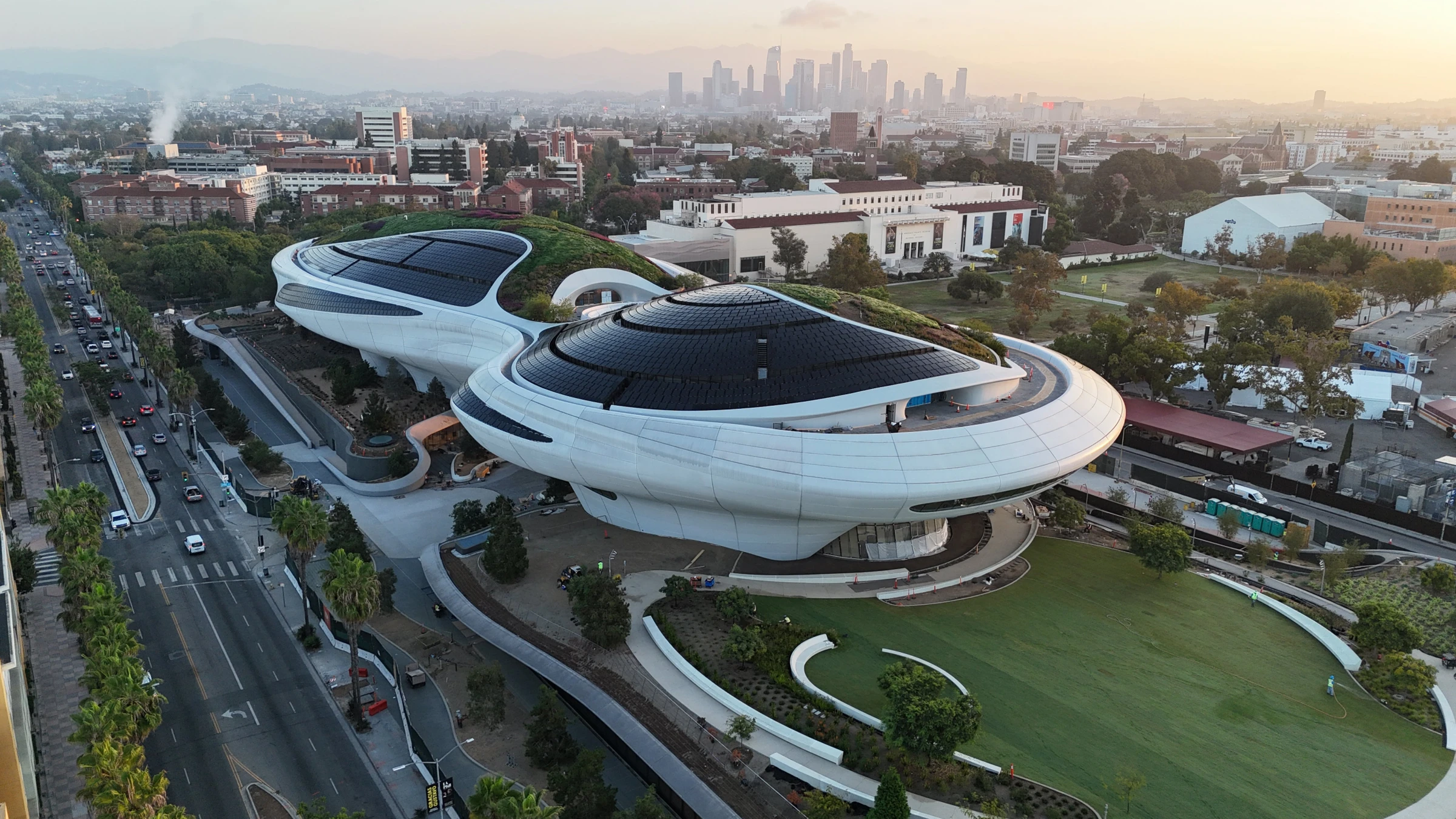
Los Angeles is entering a compressed period of cultural infrastructure delivery that merges museum expansion, transit redesign, and global event planning. The city’s current cycle includes the opening momentum around the David Geffen Galleries, the September launch trajectory of the Lucas Museum of Narrative Art, new station-linked commissions on Metro’s Wilshire corridor, and additional public-space projects timed against World Cup and Olympic visibility.
What distinguishes this phase is coordination, not scale alone. Cultural institutions are being integrated into mobility and destination planning, with new transit access points explicitly designed to reshape audience flow to museum districts. In practical terms, this can widen attendance geography and reduce friction for visitors who were previously car-dependent. It also changes programming economics, because expanded access alters weekday traffic patterns and the viability of recurring public programs.
The Lucas Museum component is especially relevant for market observers. Its collection model, narrative-art framing, and architectural profile create a different institutional proposition than legacy encyclopedic museums. For curators and collectors, the key question is how quickly the museum converts opening attention into a stable exhibition and loan strategy. For nearby institutions including LACMA, the effect may be competitive and complementary at once, with tourism uplift alongside sharper differentiation pressure.
Public-art infrastructure is also expanding beyond museum campuses. Projects associated with corridor development and neighborhood initiatives are embedding commissioned work directly into transportation and streetscape environments, supported by city and agency partnerships such as LA Metro. That model can redistribute cultural visibility, but it also raises long-term stewardship questions: conservation budgets, commissioning equity, and governance continuity after event-driven funding peaks.
For institutions, the real risk is over-concentration of capital expenditure before operational systems are fully aligned. New buildings and civic branding milestones attract headlines, yet staff capacity, maintenance funding, and audience-development strategy determine whether infrastructure becomes enduring cultural value or short-lived spectacle. Los Angeles has the advantage of scale and philanthropic depth, but it will still need disciplined post-opening management across institutions and agencies.
For collectors, galleries, and advisors, this cycle is a signal to reassess West Coast strategy through 2028. Acquisition opportunities, commissioning ecosystems, and institutional partnerships often shift where infrastructure and policy align. Los Angeles appears to be moving from episodic cultural growth to coordinated civic-cultural planning. If execution stays on track, the city’s next chapter will be defined less by isolated blockbusters and more by how museums, transit, and public art function as one metropolitan system.
The city’s international-event calendar adds another layer of urgency. Mega-events can accelerate capital delivery, but they can also concentrate spending on visibility over durability. For art institutions, the strategic task is to use this period to secure long-term audience relationships and education pipelines before attention disperses. Organizations tied to destination branding will need to prove that post-event programming remains locally grounded and financially viable.
This is where inter-institutional collaboration becomes critical. Los Angeles has enough cultural scale to support differentiated identities if institutions coordinate loan schedules, scholarship networks, and audience development rather than competing on headline volume alone. The most resilient projects will be those that treat infrastructure as a platform for sustained cultural work, not a one-time signal of civic ambition. The next two years will determine whether Los Angeles converts this construction cycle into lasting institutional depth.
There is also a direct implication for art-market actors. As institutional schedules densify, demand for loans, sponsorship, and site-responsive commissions increases in concentrated windows. Galleries and collectors that plan early around these calendars can place works more strategically and build stronger institutional relationships. Those that treat the cycle as media noise may miss a multi-year repositioning moment in one of the world’s most consequential art cities.