Museum Honoring Sculptor Lola Mora Opens in Argentina
A new cultural center in northwestern Argentina gathers six monumental sculptures by the pioneering artist Lola Mora for the first time in over a century
What Happened
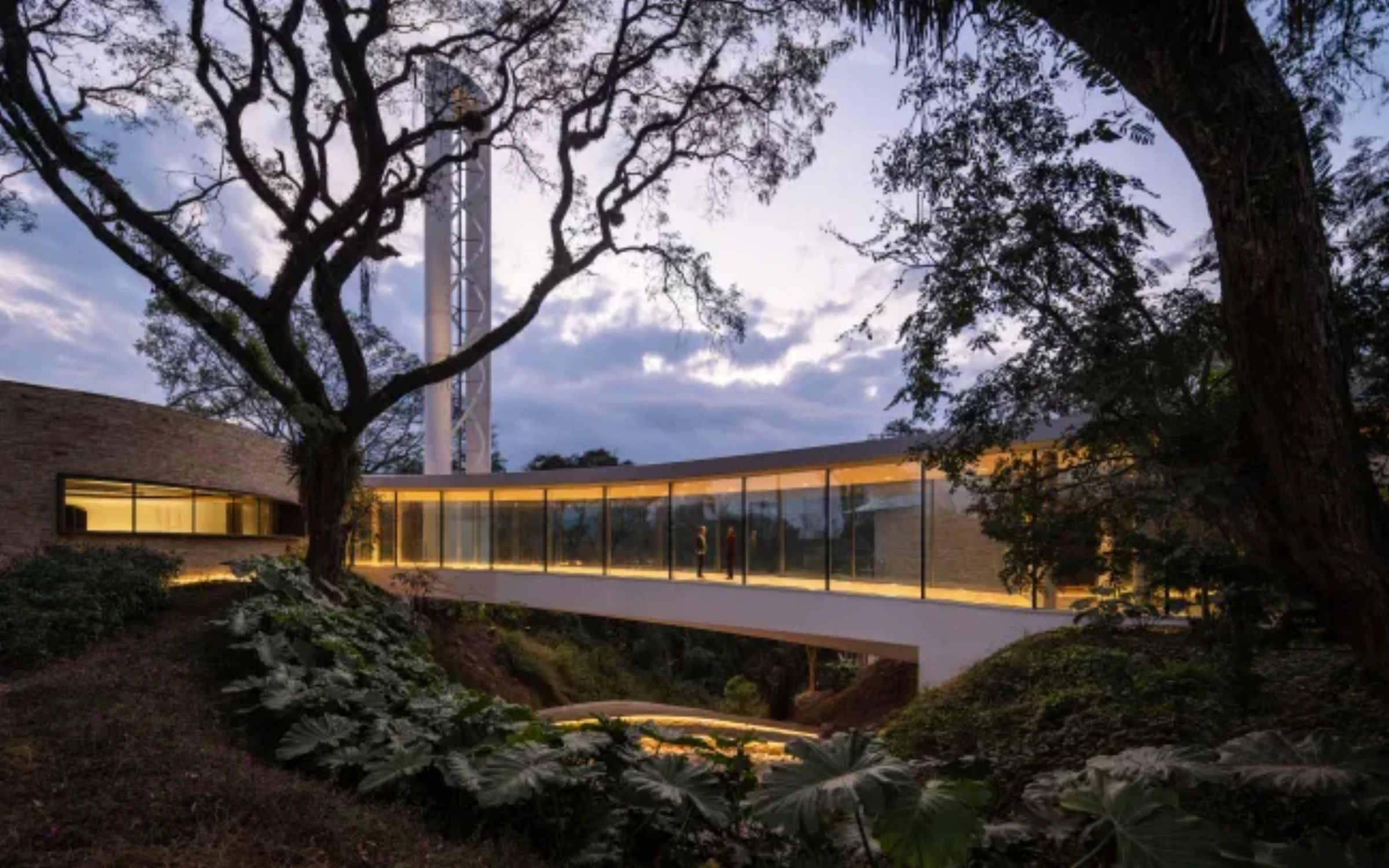
The Lola Mora Cultural Center, named for the pioneering Argentine sculptor, opened in early July in the vicinity of San Salvador de Jujuy in northwestern Argentina. Nestled in the Yungas forest, the museum features wide terraces overlooking the city and houses six monumental works by Mora (1866 to 1936), an innovative artist who has grown to the status of regional hero in her native country. The institution brings together Mora's allegorical sculptures for the first time in more than a hundred years, offering a comprehensive view of one of Latin America's most distinctive sculptural voices.
The sculptures, which include The Lions, Liberty, Progress, Work, Peace, and Justice, were commissioned in 1906 for Buenos Aires's Palace of the Argentine National Congress. Fifteen years after their installation at the Congress building, they were removed and relocated to various sites around Jujuy province. The reasons for their removal remain a subject of debate, with some historians citing structural concerns about the weight of the marble sculptures on the Congress building's architecture, and others pointing to the political discomfort Mora's bold, unconventional style caused among the conservative establishment of early 20th-century Buenos Aires. Following restoration efforts, the sculptures are now reunited in a purpose-built museum that does justice to their scale and ambition.
Lola Mora's Revolutionary Career
Dolores Candelaria Mora Vega, known professionally as Lola Mora, was born in 1866 in Trancas, Tucuman, Argentina. She studied sculpture in Rome under the Italian sculptor Costantino Barbella, developing a style that combined classical techniques with a distinctly South American sensibility. Her work was characterized by its emotional intensity, fluid drapery, and a willingness to depict the female body with a directness that shocked the sensibilities of her contemporaries. At a time when women in Argentina were largely excluded from public life and professional artistic practice, Mora secured major public commissions, including the Nymphs fountain in Buenos Aires and the congressional sculptures that now form the core of the new museum's collection.
Mora's career was marked by both triumph and controversy. The Nymphs fountain, installed in 1903, depicted nude female figures in a public space, provoking a scandal that led to its eventual removal and relocation. The congressional sculptures faced a similar fate, removed from their original context and scattered across Jujuy province. Mora's later years were marked by financial difficulty and declining institutional support, as the artistic establishment that had once celebrated her turned against her work. She died in 1936, largely forgotten by the institutions that had once commissioned her most ambitious projects. The opening of a museum dedicated to her work represents a belated but significant recognition of her contribution to Argentine and Latin American art, and part of a broader regional effort to recover the histories of women artists who were marginalized during their lifetimes.
Her artistic output extended beyond public monuments. Mora also produced portrait busts, funerary sculptures, and architectural decorations for private clients, work that has received less attention than her public commissions but demonstrates the range of her technical skill. She experimented with new materials and techniques, including early uses of reinforced concrete for outdoor sculpture, an innovation that was decades ahead of its time in Latin America. Her willingness to take risks, both technically and socially, set her apart from her contemporaries and contributed to the mixed reception of her work.
The Architecture
The circular building housing the collection is the final project of the Argentine-American architect Cesar Pelli (1926 to 2019), one of the most prolific architects of the late 20th century. Pelli founded the New Haven-based firm Cesar Pelli and Associates in 1977, later renamed Pelli Clarke and Partners. His best-known works include the Pacific Design Center in Los Angeles, the Petronas Towers in Kuala Lumpur, and the World Financial Center in New York. He also served as dean of the Yale School of Architecture from 1977 to 1984. The Lola Mora Cultural Center is a fitting capstone to a career defined by buildings that engaged with their natural surroundings, from the tropical modernism of the Pacific Design Center to the skyscraper forms of the Petronas Towers.
The building's shape was inspired by the form of a sculptor's chisel, a direct reference to Mora's practice. It features a cantilevered roof and copious natural light, creating a space that feels both protective and open to the landscape. Rafael Pelli, Cesar's son and a partner at Pelli Clarke and Partners, told The Art Newspaper that the natural environment surrounding the center was an essential element in its design. As the sculptures' conservation requirements became apparent, the design evolved into a light-filled structure that treads lightly on its site and celebrates the landscape around it. The result is a building that frames Mora's monumental sculptures in a way that no conventional gallery space could, allowing visitors to see them in natural light against the backdrop of the Yungas forest.
What Comes Next
The Lola Mora Cultural Center is part of a broader trend of Latin American institutions reassessing and celebrating artists who were marginalized during their lifetimes. Museums dedicated to single artists have proliferated across the region in recent years, from the Frida Kahlo Museum in Mexico City to the Tarsila do Amaral project in Sao Paulo. These institutions serve as both museums and acts of historical correction, reclaiming space for artists whose work was undervalued by the establishments of their time.
For Mora specifically, the museum represents an opportunity to introduce her work to audiences who may know little about her beyond her status as a regional icon. The six sculptures on display represent the most ambitious public commission of her career, and seeing them together for the first time in over a century offers a new perspective on her achievement. Victoria Martinez Fascio, the museum's director, emphasizes the symbolic importance of the institution, describing Mora as an artist who created, fought, and challenged the conventions of a society that often failed to recognize her talent. The museum's location in northwestern Argentina, far from the Buenos Aires art establishment that once rejected her, adds another layer of meaning to the project.
The center also raises questions about the future of single-artist museums, a format that has both passionate advocates and skeptical critics. Supporters argue that dedicated institutions provide the depth of context that general museums cannot, allowing visitors to understand an artist's full trajectory. Critics worry that single-artist museums can become hagiographic, prioritizing reverence over critical engagement. The Lola Mora Cultural Center appears to navigate this tension by framing Mora's work within the broader context of Argentine cultural history, rather than presenting it in isolation. Whether the museum attracts the visitor numbers needed to sustain its operation in a remote location remains to be seen, but the early response from the local community and the international architectural press suggests that the project has struck a nerve.
For the people of Jujuy, the museum is also an economic development project, drawing cultural tourists to a region better known for mining and agriculture than for art. The provincial government has invested in road improvements and signage to support the museum, betting that cultural tourism can diversify the local economy. The strategy has worked elsewhere in Latin America, most notably in Marfa, Texas, where Donald Judd's Chinati Foundation transformed a remote desert town into an international art destination. Whether the Lola Mora Cultural Center can achieve a similar transformation depends on sustained investment and the quality of its programming in the years to come, but the combination of world-class architecture, significant sculpture, and a compelling narrative of artistic recovery gives it a strong foundation.
The museum's opening also prompts reflection on the broader question of which artists get museums and why. The decision to dedicate a cultural center to Mora, rather than to one of her male contemporaries, reflects a deliberate choice to center a figure who was marginalized by the artistic establishment of her time. That choice is part of a pattern across Latin America, where institutions are increasingly dedicated to artists whose work was undervalued during their lifetimes, particularly women, Indigenous artists, and artists of African descent. The question for the future is whether this representational progress will be matched by the resources needed to sustain these institutions over time.
Mora's work, with its blend of classical training and regional identity, also raises interesting questions about the relationship between European artistic traditions and Latin American cultural production. She trained in Rome and worked within a sculptural tradition that owed much to Italian classical models, but her subjects and her audience were distinctly Argentine. The tension between European form and Latin American content that runs through her work anticipates debates that would occupy Latin American artists for the next century. How the institution chooses to frame Mora's work, whether as a precursor to later Latin American artistic movements or as a singular figure deserving of individual attention, will shape how visitors understand her contribution to the history of sculpture.
The museum's remote location in northwestern Argentina, far from the Buenos Aires art scene that once rejected Mora, adds a layer of irony to the project. The same establishment that removed her sculptures from the Congress building a century ago has now invested in their permanent display in a world-class building. Whether this represents a genuine reassessment of Mora's work or simply the passage of time rendering controversy harmless is a question that visitors will have to answer for themselves. What is certain is that the sculptures, seen together for the first time in over a century, will speak for themselves. Their scale, their craftsmanship, and their emotional power have survived the institutions that sought to diminish them, and they now have a home worthy of their ambition.