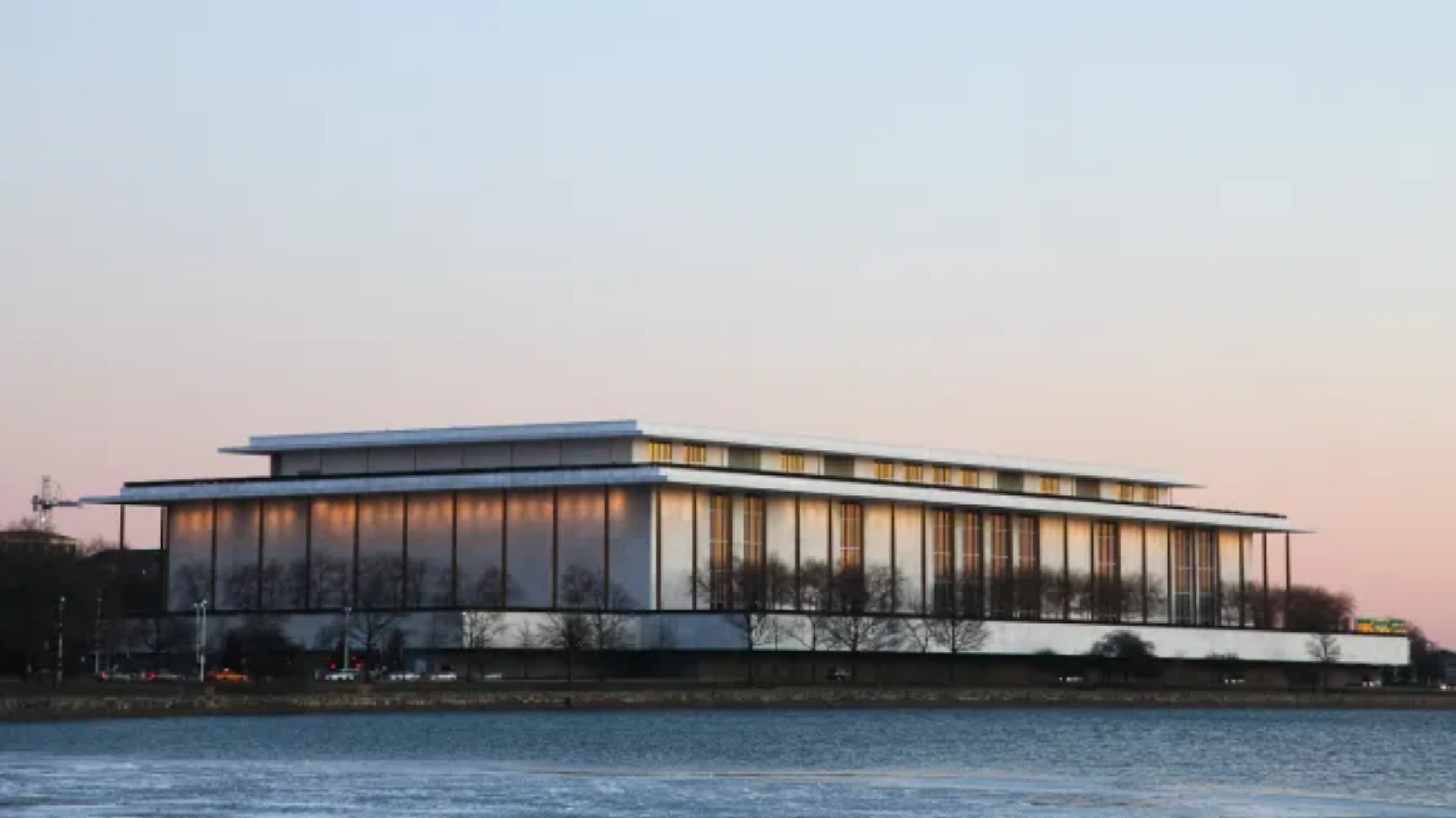
Kennedy Center Board Votes to Close Institution for Two-Year Renovation
The Kennedy Center will shut down from July for a two-year renovation backed by $257 million from Congress, deepening the politicization of one of the US’s central cultural institutions.
The board of the John F. Kennedy Center for the Performing Arts has voted unanimously to shut the institution for two years beginning this July, approving a full closure to execute a renovation plan supported by $257 million in congressional funding. The decision is operationally dramatic and politically charged, coming after months of high profile leadership upheaval and intensifying culture war attention around the Center.
According to reporting in Artforum and the New York Times, the current plan includes replacing seating, extensive marble work, and major mechanical upgrades including the heating system. While many large arts campuses have staged phased renovations while maintaining partial programming, this plan opts for total suspension in pursuit of speed and construction control.
Supporters argue that a complete shutdown is the only realistic way to complete heavy structural and systems work without exposing visitors and artists to long periods of disruption. From that perspective, the closure is a practical construction decision and a risk management strategy. If the timeline holds, the Center could reopen with improved accessibility, comfort, and technical infrastructure.
Critics, however, point out that the closure cannot be separated from governance context. The Kennedy Center has become a symbolic battleground in national politics, with appointments, removals, and public rhetoric reshaping how the institution is perceived. In that environment, a two year blackout is not a neutral pause. It is a period in which identity, mission, and programming direction can be redefined with limited public counterweight.
The institution also carries a unique civic role in Washington. It is not only a presenter of elite performances; it is a nationally branded public stage where diplomacy, state ritual, and cultural prestige intersect. A prolonged closure therefore has downstream effects on artists, touring schedules, education work, audience access, and partner ecosystems across the performing arts economy.
Recent artist cancellations and withdrawals from Center related activity suggest reputational fragility before construction has even begun. That matters because trust is now part of capital planning. Even if the project is delivered on budget, reopening momentum depends on whether the institution can persuade artists and audiences that it remains a credible public cultural platform rather than an ideological instrument.
The broader lesson for US institutions is clear. Capital projects now operate in a fused environment where architecture, politics, labor, and narrative all move together. A building renewal can quickly become a legitimacy test. Boards that treat construction as a technical silo risk underestimating how audiences interpret governance decisions during periods of closure.
When the Kennedy Center returns, evaluation will extend beyond new marble and seats. The real metric will be whether it can reassemble artistic confidence, rebuild broad public participation, and demonstrate that a flagship national institution can survive deep politicization without surrendering its civic purpose. That is a harder renovation than concrete and stone, and it has already begun.