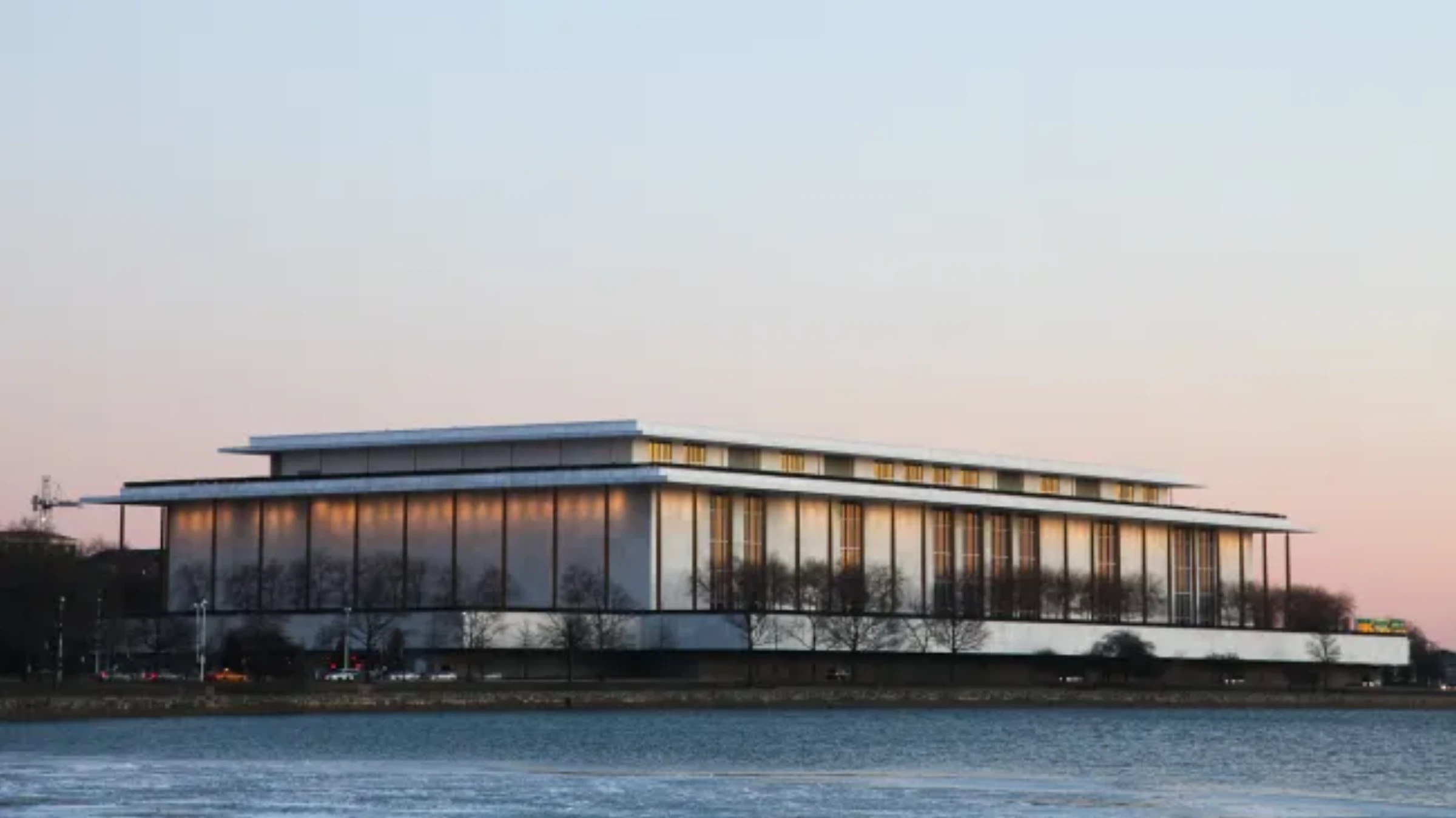
Kennedy Center Board Votes to Close Venue for Two-Year Renovation
The Kennedy Center plans a two-year closure starting this summer after a unanimous board vote, setting up a high-stakes reset that blends infrastructure overhaul with a deeper fight over institutional direction.
The Kennedy Center board has voted to close the institution for two years while a major renovation proceeds, with shutdown expected to begin after an Independence Day event cycle. The move is being framed as a practical construction choice, but the scale and timeline make it a structural test for one of the United States' most visible cultural institutions.
When a flagship venue goes dark for that long, the main question is not only what gets rebuilt in concrete and marble. The harder question is what happens to artistic continuity, labor planning, audience retention, and donor confidence while the institution loses its normal rhythm. Two years is enough time to reset habits across an entire local ecosystem.
The headline budget, reported at $257 million, places this in the category of capital projects that can either sharpen mission or blur it. Capital spending often arrives with promises of modernization, but the best outcomes depend on whether governance priorities are clear before construction begins, not after. The Kennedy Center now has to prove that sequence.
There is also a programming reality. If resident companies and partner presenters are displaced, they need replacement venues, revised contracts, and audience communication that is both credible and sustained. Without that, closures become less a temporary interruption and more a multi-season market transfer to competing stages.
The political context around this decision is impossible to separate from the operational context. Leadership turnover and public messaging around the institution have already made the center a symbolic site in broader cultural debates. A full closure intensifies that pressure because every delay, cost shift, or curatorial choice becomes read as a referendum on direction.
For arts administrators, this is a familiar lesson in risk stacking. Construction risk, governance risk, and reputational risk compound each other. Managing one without the others is not enough. Strong boards usually counter this with transparent milestones, public reporting cadence, and independent oversight on schedule and spending.
The benchmark should be straightforward: can the center protect artistic commitments while a hard-hat project runs? Institutions that do this well preserve their public identity through off-site programming and strong digital continuity. Institutions that do it poorly disappear from civic conversation and have to buy back relevance later at much higher cost.
Comparable capital strategy playbooks are visible across major performing arts organizations, including documentation standards at the Kennedy Center, long-range planning frameworks from the New York Philharmonic, and audience-development models tracked by the National Endowment for the Arts.
What matters now is execution discipline. The center needs a practical relocation map for artists, a predictable communications calendar for members and ticket buyers, and governance reporting that avoids triumphal language until measurable milestones are actually hit. That is how trust is maintained during institutional downtime.
If the renovation delivers on schedule and the artistic program reopens with continuity intact, the project can be defended as strategic. If not, the closure will be remembered as a costly period where infrastructure planning outpaced cultural stewardship. In arts governance terms, this is now a live stress test, not a theoretical one.