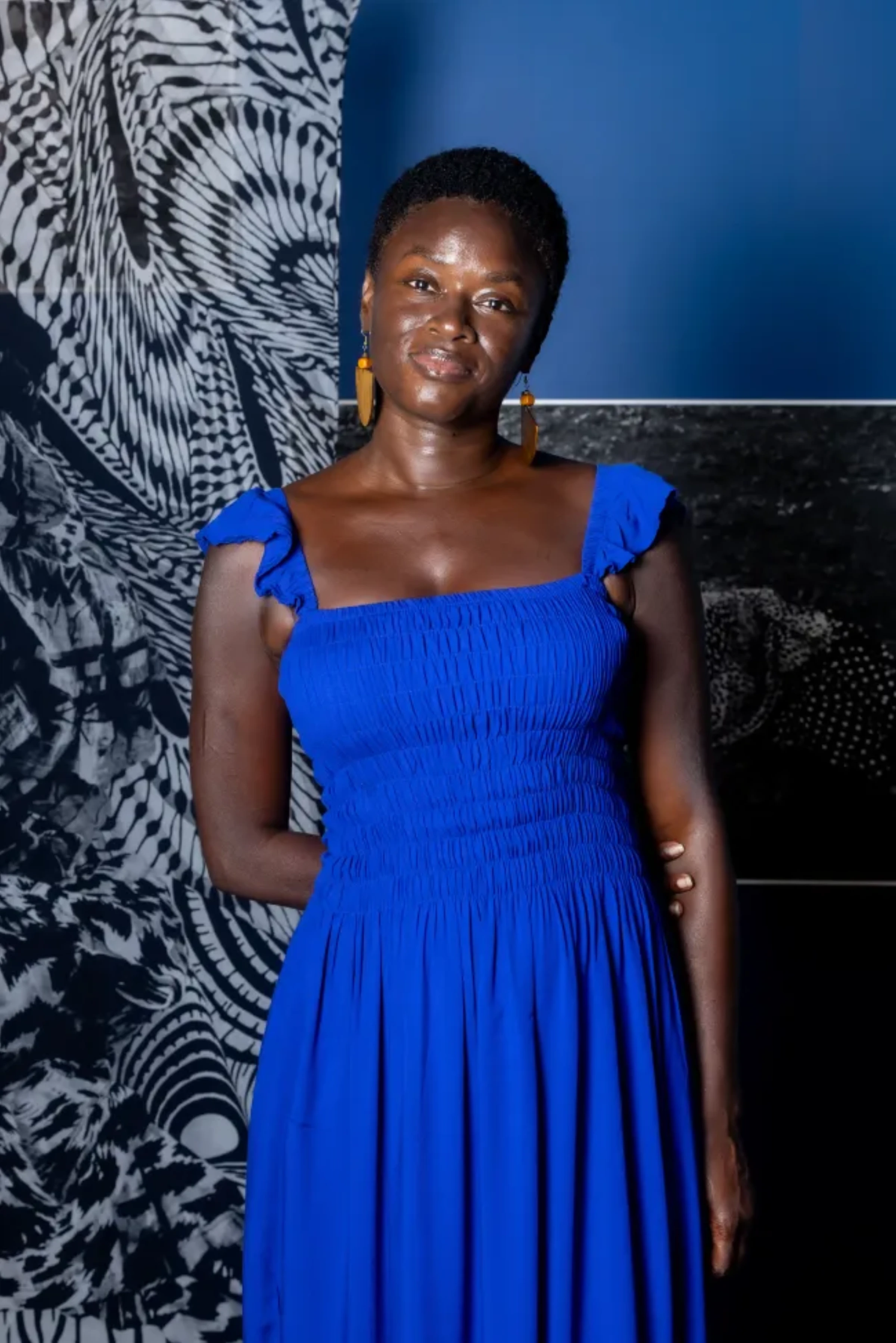
Keisha Scarville Wins Brooklyn Museum’s 2026 UOVO Prize
Brooklyn-based artist Keisha Scarville receives the 2026 UOVO Prize, pairing a $25,000 unrestricted grant with a public plaza presentation and a large-scale commission in Bushwick.
Keisha Scarville has been named the 2026 recipient of the Brooklyn Museum’s UOVO Prize, and the award still matters because it links recognition to real public surface area. The package combines an unrestricted $25,000 grant with a presentation at the museum’s Iris Cantor Plaza and a commission for UOVO’s Bushwick façade. That structure turns a prize announcement into an urban visibility pipeline.
Scarville’s practice, grounded in photography, collage, and archival materials, is built around migration, memory, and absence. Her work often pulls intimate family references into broader social space without flattening them into identity shorthand. In a field that often overproduces statement language, Scarville’s strength is formal discipline: the images hold emotional charge without surrendering to sentimentality.
The planned plaza presentation from the series Mama’s Clothes is especially consequential. Works rooted in grief and lineage can be misread when framed only as private testimony. Situated in a civic threshold space, these images become propositions about public memory: who is legible in institutional narratives, whose domestic archive is treated as history, and whose is treated as anecdote.
Scarville’s Brooklyn biography is not a branding detail. Born in the borough to Guyanese immigrant parents, she makes work that registers Caribbean diaspora as an active cultural engine, not a decorative footnote. That framing aligns with Brooklyn’s lived demographics more honestly than many museum narratives that invoke community language without materially redistributing attention.
The UOVO component introduces a second layer: logistics infrastructure meeting public art communication. Storage companies increasingly shape the conditions of contemporary art circulation, conservation, and value. By commissioning work for a storage façade, UOVO effectively acknowledges that back-of-house infrastructure is now part of the public symbolic economy of art.
For the Brooklyn Museum, the prize also tests curatorial follow-through. Awards can become annual PR ritual unless the exhibition architecture does real interpretive work. The benchmark here is whether the display preserves Scarville’s conceptual precision and diasporic specificity rather than smoothing it into broad celebratory language.
Past recipients show that the UOVO Prize can function as a career hinge when backed by sustained institutional support. Scarville’s selection indicates that Brooklyn institutions are still willing to invest in artists who combine formal rigor, archival intelligence, and social depth. If this cycle is handled seriously, the project can become more than a single-season visibility moment.
It is also a reminder that local prizes can set national standards when they tie money, space, and curatorial labor together. The strongest outcome here would be a commission that remains visually powerful from the street while preserving the layered archival intelligence that defines Scarville’s practice in gallery settings.
Watch the installation language when it opens. If labels, programming, and public talks are handled with precision, this commission could become a model for how institutions present diasporic memory work without reducing it to symbolic inclusion. That would make the prize consequential well beyond a single season.
Primary references and context: Brooklyn Museum, UOVO, MoMA, Tate, and context from the Studio Museum in Harlem.