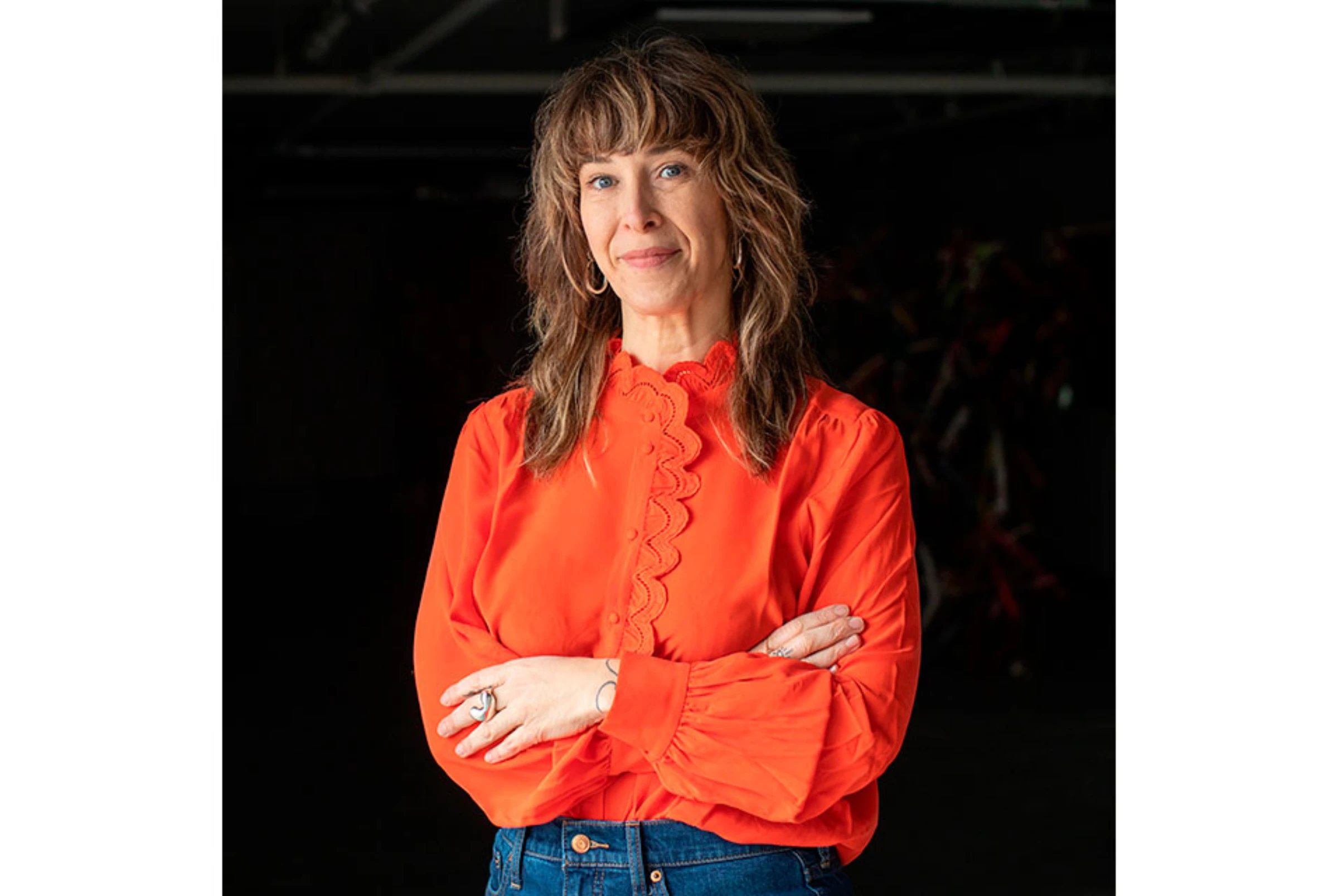
Harvard’s Carpenter Center Names Kate McNamara Director, Signaling a Studio-to-Public Model
Kate McNamara’s appointment to lead Harvard’s Carpenter Center points to a program strategy centered on residencies, publishing, and community-facing contemporary practice.
Harvard’s Carpenter Center for the Visual Arts has appointed Kate McNamara as director after her interim tenure, and the move carries more strategic weight than a standard institutional handoff. Leadership transitions at university art centers often preserve existing calendars while boards assess risk. This appointment suggests the opposite, a push toward expanded residencies, broader publishing partnerships, and stronger cross-campus and local engagement under a curator already associated with artist-driven models.
The Carpenter Center occupies a distinctive position in U.S. art infrastructure. It is both an academic unit and a public-facing contemporary space, and it operates inside one of the most visible university ecosystems in the world. That combination can produce conservative programming if governance prioritizes reputational insulation over experimentation. McNamara’s record, from nonprofit and gallery settings to educational institutions, indicates a different direction, one that treats the center as a site of active production rather than only presentation.
For artists and curators, the practical question is whether leadership language converts into structural opportunities. Residencies, commissions, and publishing commitments matter only when paired with budgets, staffing, and decision speed. If the center can align those pieces, the appointment could strengthen its ability to attract emerging and mid-career artists who need institutional partners that can move beyond exhibition-only relationships.
The broader institutional context also matters. University art spaces are under pressure to justify relevance to students, faculty, and the surrounding city, while maintaining rigorous curatorial standards. McNamara’s emphasis on shared practice and interdisciplinary collaboration fits that challenge. It also aligns with a wider shift toward institutions that blend academic inquiry with civic participation rather than separating them into parallel tracks.
Stakeholders evaluating the next 12 months should watch three indicators: first, whether residency and commissioning pipelines expand with transparent criteria; second, whether publication and research outputs deepen rather than thin out; third, whether local partnerships become recurring infrastructure instead of one-off activation. Those metrics will reveal whether this is a symbolic appointment or an operational reset.
For now, the signal is constructive. The Carpenter Center has committed to a leader whose trajectory spans nonprofit innovation, curatorial practice, and educational ecosystems. If execution holds, the center could become a stronger model for how university institutions support contemporary art as a living public practice, not just an academic supplement.
In a period when many institutions are narrowing risk and flattening ambition, this appointment points toward expansion with accountability. That is the right kind of risk for a center with Carpenter’s legacy and reach.
There is also architectural and pedagogical context unique to this role. The center sits in Le Corbusier’s only North American building, a fact that often narrows programming toward legacy interpretation. A more ambitious model links architectural inheritance to contemporary practice and institutional experimentation. That is where leadership choices become curatorial policy rather than administrative maintenance.
Watch how quickly the new director translates rhetoric into publishable outputs, open calls, and durable artist support structures. Benchmarks should include transparent opportunities listed through Carpenter Center events and programs and stronger alignment with research initiatives in the Harvard University ecosystem. If those channels become more porous and accountable, the appointment will register as a genuine governance shift.