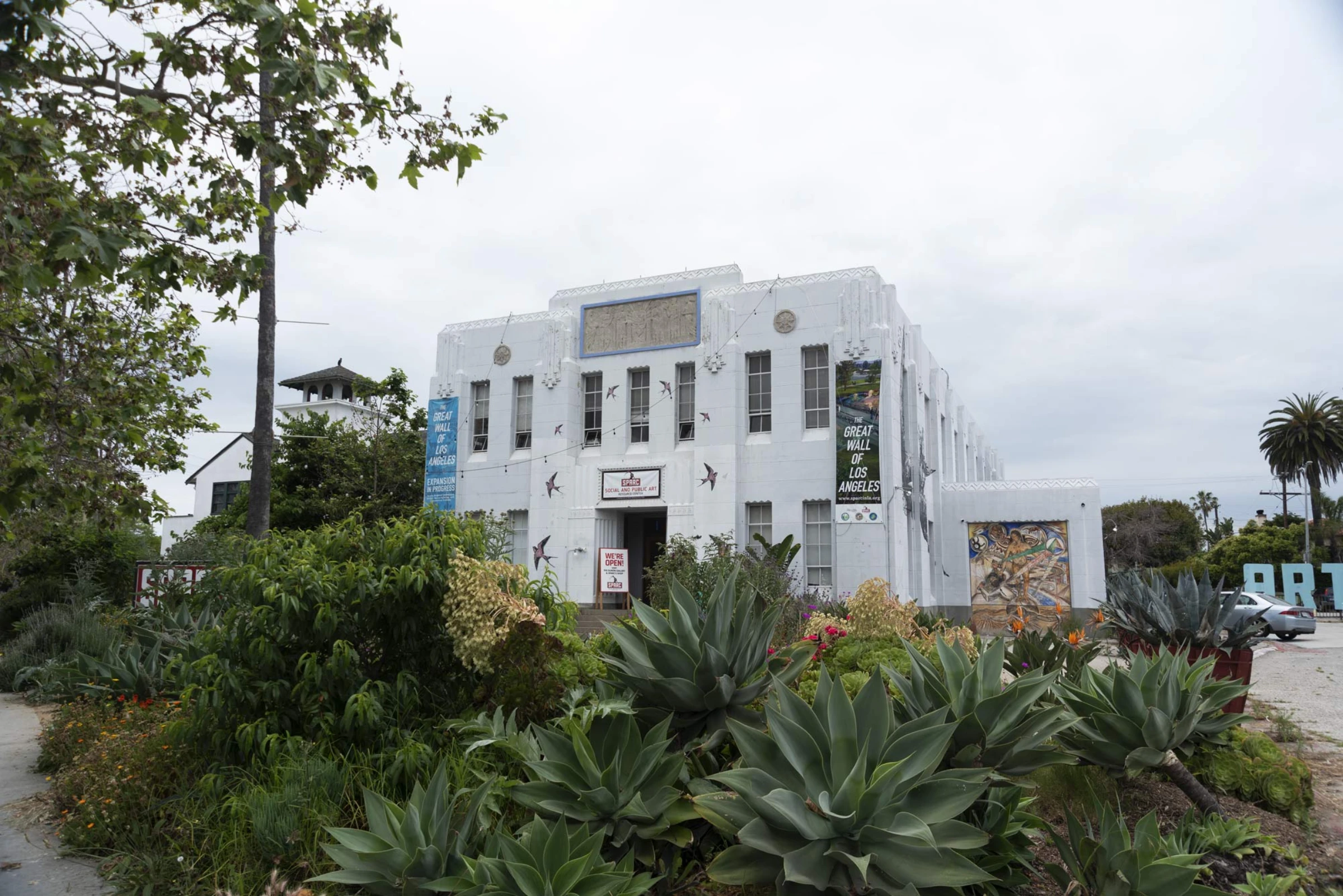
Judy Baca Pushes Back on Allegations Around Great Wall Expansion Grant
The Los Angeles artist says public claims about a $5 million grant for The Great Wall of Los Angeles expansion misrepresent how funds are structured and overseen. The dispute is now becoming a test case for how major public-art projects communicate governance.
Artist Judy Baca has publicly rejected allegations that she personally profited from grant funding tied to the expansion of The Great Wall of Los Angeles, one of the most important community mural projects in the United States. The claims, amplified through local media and political channels this week, focus on a $5 million grant package associated with restoration, educational programming, and future extension planning. Baca and representatives connected to the project say the accusations flatten a multi-entity funding structure into a misleading personal narrative.
At the center of the dispute is a familiar problem in public art administration: large grants are often administered through nonprofit, municipal, and programmatic layers that are difficult to read from outside. In this case, project leaders argue that funds are restricted by category, audited through established mechanisms, and routed toward labor, materials, youth apprenticeship, and long-term conservation planning rather than private gain. Critics, by contrast, have framed line items in ways that suggest blurred boundaries between artist leadership and budget control.
When a public artwork scales, transparency has to scale with it, not trail behind the headlines.
The Great Wall of Los Angeles has always functioned as more than a singular artwork. It is a pedagogical and civic platform shaped by collective authorship, youth training, and neighborhood memory. That legacy is one reason this controversy carries unusual weight. When a project is both canonical and socially embedded, governance questions quickly become symbolic battles over who gets to claim stewardship of public culture. The argument is no longer only about accounting, it is about legitimacy, historical ownership, and trust.
The broader policy context also matters. Public arts funding across US cities has moved toward tighter compliance frameworks after years of politically motivated scrutiny of cultural budgets. Administrators are demanding more documentation and more frequent reporting, but many institutions still fail to communicate those safeguards in language the public can parse. The result is a vacuum that turns technical grant mechanics into combustible talking points. Baca’s response underscores how vulnerable even established projects are when financial communication remains opaque.
What happens next will likely depend on documentation rather than rhetoric. If the organizations involved publish clear breakdowns of disbursement, oversight roles, and deliverables, the temperature could drop quickly. If disclosure remains partial, the dispute may harden into a long political cycle that damages the project regardless of legal outcomes. For the field, the lesson is straightforward: major public-art initiatives now need governance communication plans as robust as their curatorial or community plans. In 2026, artistic significance alone does not protect a project from administrative mistrust.
There is also a labor story inside this debate that deserves attention. Large mural initiatives rely on coordinators, conservators, educators, and trainees whose work is often invisible once political controversy starts. Budget lines that look abstract in a PDF usually represent real wages, insurance costs, scaffolding, materials testing, and environmental mitigation. When those categories are misread as discretionary spending, the public conversation punishes the exact infrastructure that allows community art to survive beyond ceremonial unveilings.
For editors and institutions alike, the operational takeaway is clear: publish the paperwork context early, maintain a public-facing update cadence, and treat administrative clarity as part of cultural stewardship rather than a defensive afterthought.