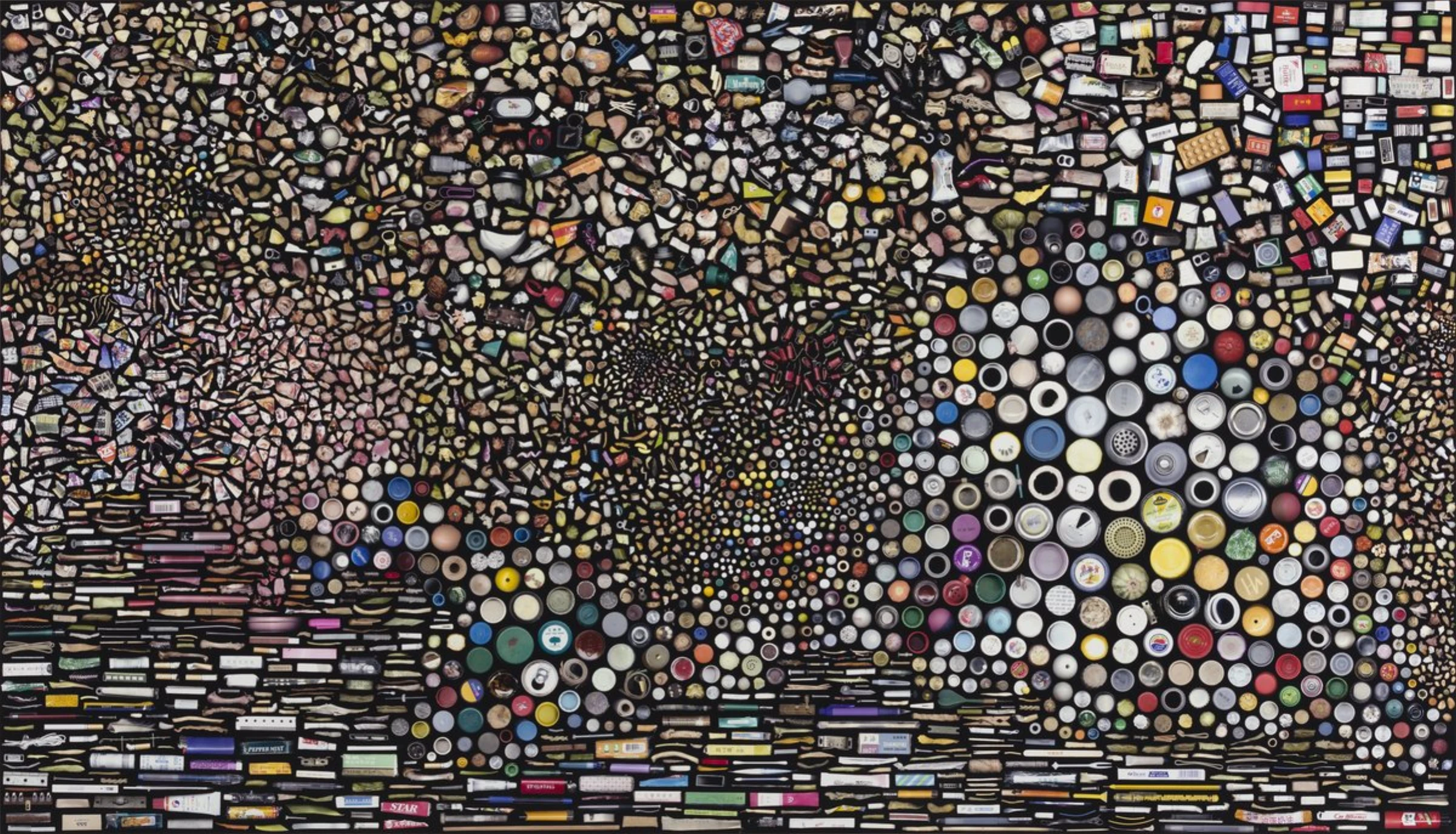
Collector Jean-Marc Bottazzi Argues for Depth Over Checklist Buying
In a new interview, Jean-Marc Bottazzi outlines a collector model built on sustained artist support, concentrated positions, and skepticism toward fair-floor hype.
Collector interviews often read like lifestyle profiles with little practical value. Jean-Marc Bottazzi's latest remarks are more useful than that because they present a coherent acquisition philosophy that can be tested against real market behavior. Speaking about a collection of roughly 1,000 works, Bottazzi makes a direct case for concentration, long-term artist support, and resistance to fair-driven urgency. In a market still saturated with fear-of-missing-out tactics, that position lands as both critique and strategy.
His framing is plain: collecting should not be a checklist exercise. The point is to build conviction around specific artists and stay with them over time. That approach appears in his sustained relationship with A-Yo and in his repeated emphasis on focus rather than breadth for its own sake. The model resembles portfolio concentration in finance, where deep knowledge in fewer positions can outperform shallow exposure across many names. In art terms, it produces collections with internal logic, not just cumulative value.
The interview's Hong Kong context is important. Bottazzi describes M+ as the city's key institutional development and references his own involvement around the museum's visual art ecosystem. For collectors in Asia, that institutional gravity matters because museum programming can shape artist visibility, scholarship, and eventual secondary-market confidence. When private collectors align with institutions through loans, donations, or long-term advocacy, they influence not only pricing attention but also historical framing.
His comments on art fairs are similarly pointed. He dismisses first-day status theater and argues that if a collector is truly following a gallery, decisions should not depend on opening-hour spectacle. That is a useful corrective in a cycle where access narratives can crowd out due diligence. Fair floors reward speed, but speed without prior research mostly transfers advantage to the better-prepared seller. A disciplined buyer uses fairs to verify quality, condition, and comparative placement, not to improvise identity through purchases.
For younger collectors, the practical takeaway is clear. Start with a thesis, not a shopping list. Build around artists or movements you can study in depth. Track institutional exhibitions, publication history, and gallery consistency before increasing spend. Use museum resources and public programming, including platforms like M+ exhibitions, to sharpen judgment rather than outsourcing taste to market momentum.
Collectors testing this approach can cross-check market and curatorial signals through dedicated works-on-paper ecosystems such as the International Fine Prints and Drawings Association, where dealer specialization and publication culture make medium-specific due diligence easier.
There is also a governance lesson for advisors and family offices. Collections that grow too quickly across incompatible segments can become hard to steward, hard to place, and hard to narrate. Concentrated collecting can carry concentration risk, but it usually improves documentation quality, curatorial coherence, and lending potential if executed with discipline. In institutional terms, it yields collections that are easier for museums to engage because the underlying story is legible.
Bottazzi's position will not suit every buyer. Some collectors are intentionally encyclopedic and can sustain that model with serious research infrastructure. Still, his central argument holds up: conviction beats accumulation. In a period where market noise is constant and velocity is praised as sophistication, a slower, deeper method may be the more durable path to both cultural impact and long-horizon value.
For this season's buying cycle, the benchmark is simple. Before adding another work, ask whether it advances a thesis, strengthens an existing artist position, or improves the collection's historical clarity. If the answer is no, the strongest move may be to wait.