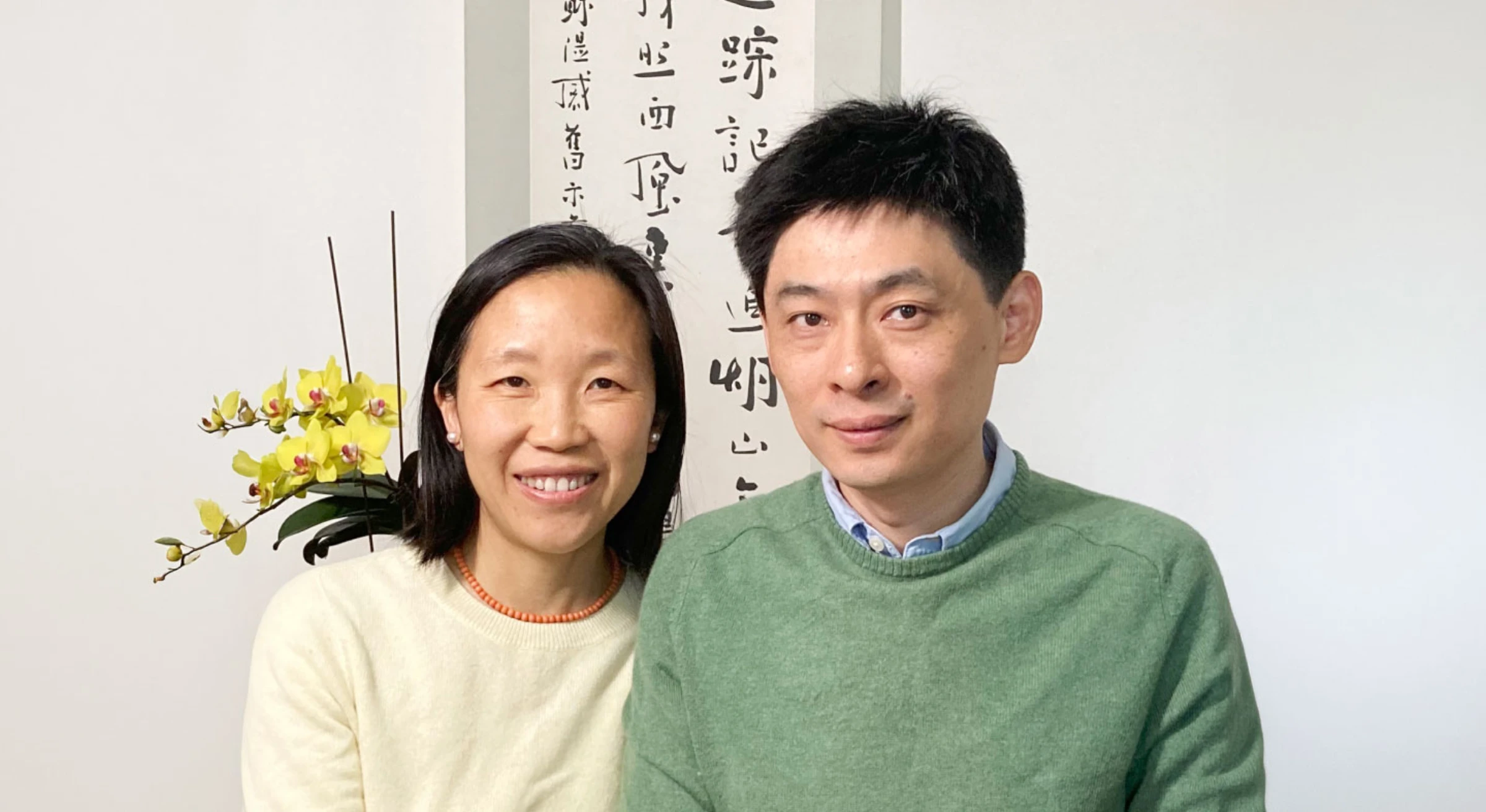
Liu Ding and Carol Yinghua Lu to Curate the 19th Istanbul Biennial
IKSV has appointed Liu Ding and Carol Yinghua Lu to lead the 2027 Istanbul Biennial, signaling a rigorously research-driven edition shaped by political volatility and algorithmic culture.
The Istanbul Foundation for Culture and Arts (IKSV) has appointed artist-curator Liu Ding and art historian-curator Carol Yinghua Lu to lead the 19th Istanbul Biennial, set to run from September 18 to November 14, 2027. The decision lands at a moment when major biennials are under pressure to justify their scale, sharpen their public role, and prove that curatorial discourse can still produce social and aesthetic stakes rather than institutional theater.
The appointment is significant in part because Liu and Lu arrive as a long-term collaborative pair with a clearly articulated methodology. They have worked together since 2007, and their recent role as co-artistic directors of the eighth Yokohama Triennale gave them direct experience managing large, multinational exhibition systems without collapsing into generic survey logic. Their profile suggests a curatorial model built less on spectacle and more on structure, argument, and temporal framing.
In the statement released through Istanbul Biennial channels, the curators point to an art world navigating political instability and the ambient force of algorithmic technologies. Their language is careful but pointed: they reject technological escapism and reactive commentary, and they call for a biennial that restores art's critical rigor and individual agency. That framing matters because biennials have increasingly become arenas where institutions borrow the language of urgency while producing low-risk consensus programming.
For collectors and patrons, this appointment is an early signal that the 2027 edition may reward sustained attention to artists whose practices hold up under conceptual pressure rather than trend momentum. A biennial led by this team is likely to elevate work with historical density, political legibility, and formal discipline. That has downstream effects in acquisition strategy, especially for collections trying to bridge post-socialist narratives, transregional modernities, and contemporary institutional critique.
For curators and museum directors, the key question is not only which artists will be selected, but how the exhibition's architecture will position them. Istanbul has long carried a specific geopolitical charge, linking Europe, West Asia, and North Africa in ways that scramble standard center-periphery assumptions. Curatorial decisions here often reverberate across subsequent institutional programming cycles, particularly in cities where biennials now function as research engines for museum exhibitions.
There is also a governance dimension. IKSV's institutional framework has historically balanced international visibility with local public access, and this edition is expected to remain free. In an era of tightening arts budgets and increased scrutiny around public value, maintaining free entry is not a minor line item. It is a statement about audience, legitimacy, and the social contract that large recurring exhibitions claim to uphold.
No curatorial theme has been formally announced yet, so it is premature to map artist probabilities with confidence. Still, the language coming from Liu and Lu suggests a refusal of soft futurism and a return to argument as curatorial form. If that position holds through the exhibition's commissioning and public program phases, the 19th Istanbul Biennial could become one of the stronger tests of what large-scale exhibitions can do when they treat ideas as material conditions rather than branding devices.
The immediate takeaway is clear. This is not a placeholder appointment. It is a high-intent curatorial selection by a major institution with a track record of shaping global exhibition discourse. The next phase, artist list, commissions, and site strategy, will determine whether the biennial converts that intent into a genuinely consequential exhibition.