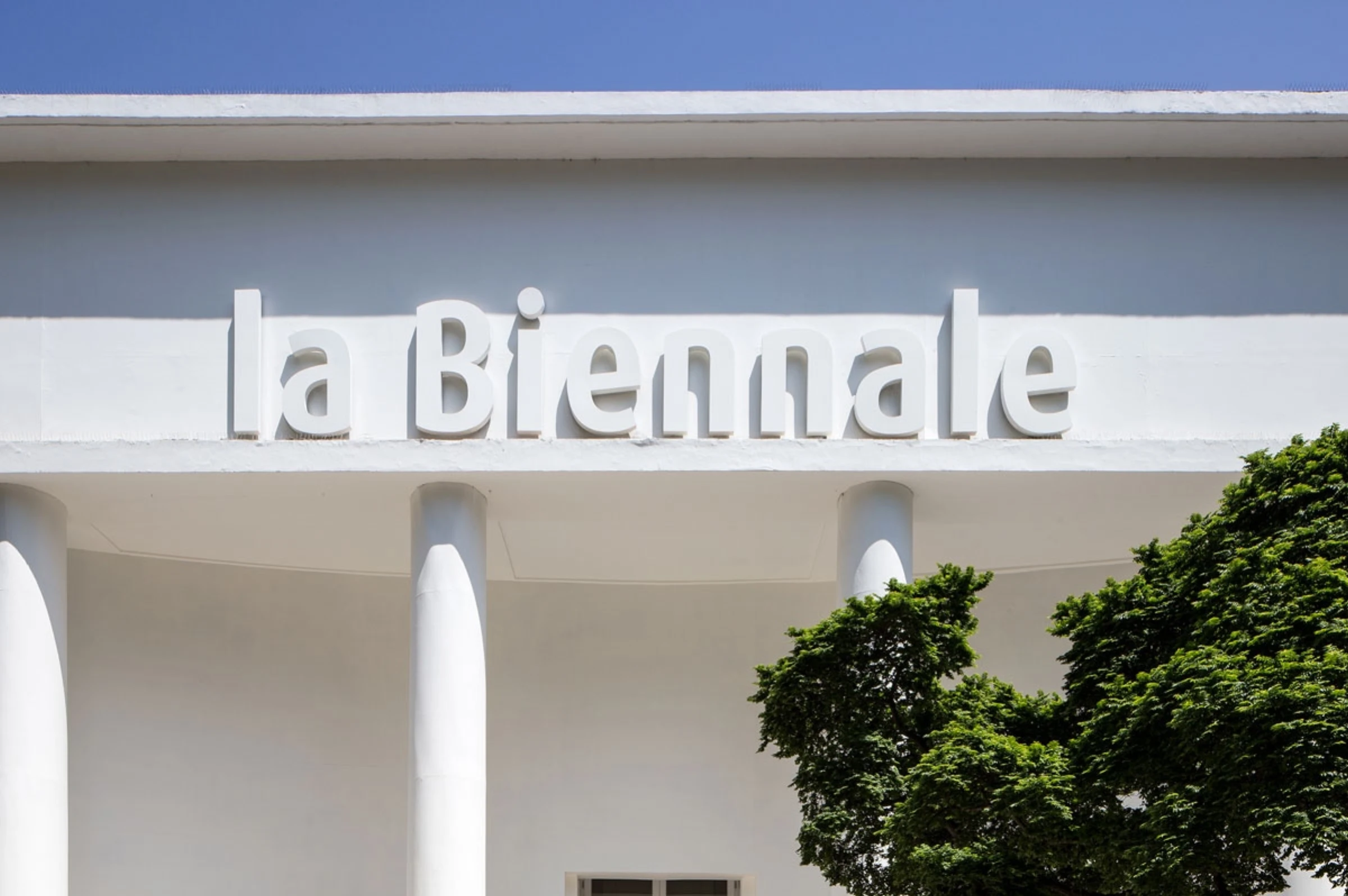
Iran Withdraws From Venice Biennale Days Before Opening, Deepening 2026 Governance Crisis
Iran’s late withdrawal from the 2026 Venice Biennale intensifies an already unstable edition shaped by jury resignations, award-rule changes, and escalating geopolitical pressure.
Iran has withdrawn its planned pavilion from the 2026 Venice Biennale only days before the exhibition opens to the public, according to an announcement relayed by Biennale organizers and reported by Artforum. For an event that has spent months insisting on continuity under pressure, the timing is the real story: a last-minute state withdrawal inside an edition already forced to renegotiate its own rules.
The immediate consequence is practical, an empty national presentation in a calendar built around soft power staging. The larger consequence is institutional. The 2026 edition was already strained by disputes over eligibility, jury legitimacy, and political standards for participation. Iran stepping out now confirms what many curators and commissioners have privately said for weeks: this Biennale is no longer being shaped only by artistic selection, but by rapidly changing geopolitical thresholds.
Artforum’s report notes that organizers did not provide a detailed public explanation for Iran’s decision. That silence matters. In normal editions, the Venice Biennale’s national pavilion structure is governed by long-lead planning, logistics, and diplomatic coordination. A reversal this late, without a substantive institutional account, signals either conditions too unstable to publicly narrate or negotiations that failed too close to opening to be meaningfully repaired.
The withdrawal arrives after another procedural rupture, the resignation of the Biennale’s full international jury. In their wake, the framework for top prizes was altered, with Golden and Silver Lions no longer awarded at opening and visitor-voted alternatives introduced for close-of-event recognition. That sequence, jury collapse followed by prize redesign, has already shifted the signal the Biennale sends to artists and commissioners. Prestige metrics that once looked fixed are now contingent.
For collectors and institutions, this matters beyond Venice. The Biennale has always functioned as a market and reputational accelerator, where museum acquisitions, gallery positioning, and artist trajectories can be advanced in compressed time. When governance becomes unstable, the decision risk moves downstream: lenders become cautious, board-level stakeholders ask harder legal and ethical questions, and public institutions face pressure to justify participation frameworks that may change mid-cycle.
There is also a curatorial cost. National pavilions are often criticized as outdated diplomatic containers, yet they still create specific historical readings by forcing artists and publics to confront how states represent themselves. A missing pavilion is not neutral absence. It distorts comparative viewing conditions and leaves curators, critics, and audiences with a partially erased map of the moment.
What happens next is likely to be decided less in public statements and more in administrative adaptation. Organizers will need to stabilize expectations around access, awards, and eligibility while preserving enough curatorial coherence to avoid the appearance of an improvised mega-event. If they fail, the 2026 edition risks becoming a case study in governance drift, where rules were revised quickly but not convincingly.
The broader lesson is that biennials now operate inside tighter political feedback loops than their governance models were built to handle. Venice remains the most visible test case, which is why every procedural change there resonates globally. For arts leaders watching from São Paulo, Sharjah, Istanbul, and Gwangju, this is not a local disruption. It is a warning about how fragile cultural infrastructure can become when international exhibitions inherit state-level conflicts without state-level tools to manage them.
Primary institutional references for this developing situation include La Biennale di Venezia, the Biennale Arte 2026 program pages, and the Biennale news channel, where any procedural clarifications are likely to appear first.