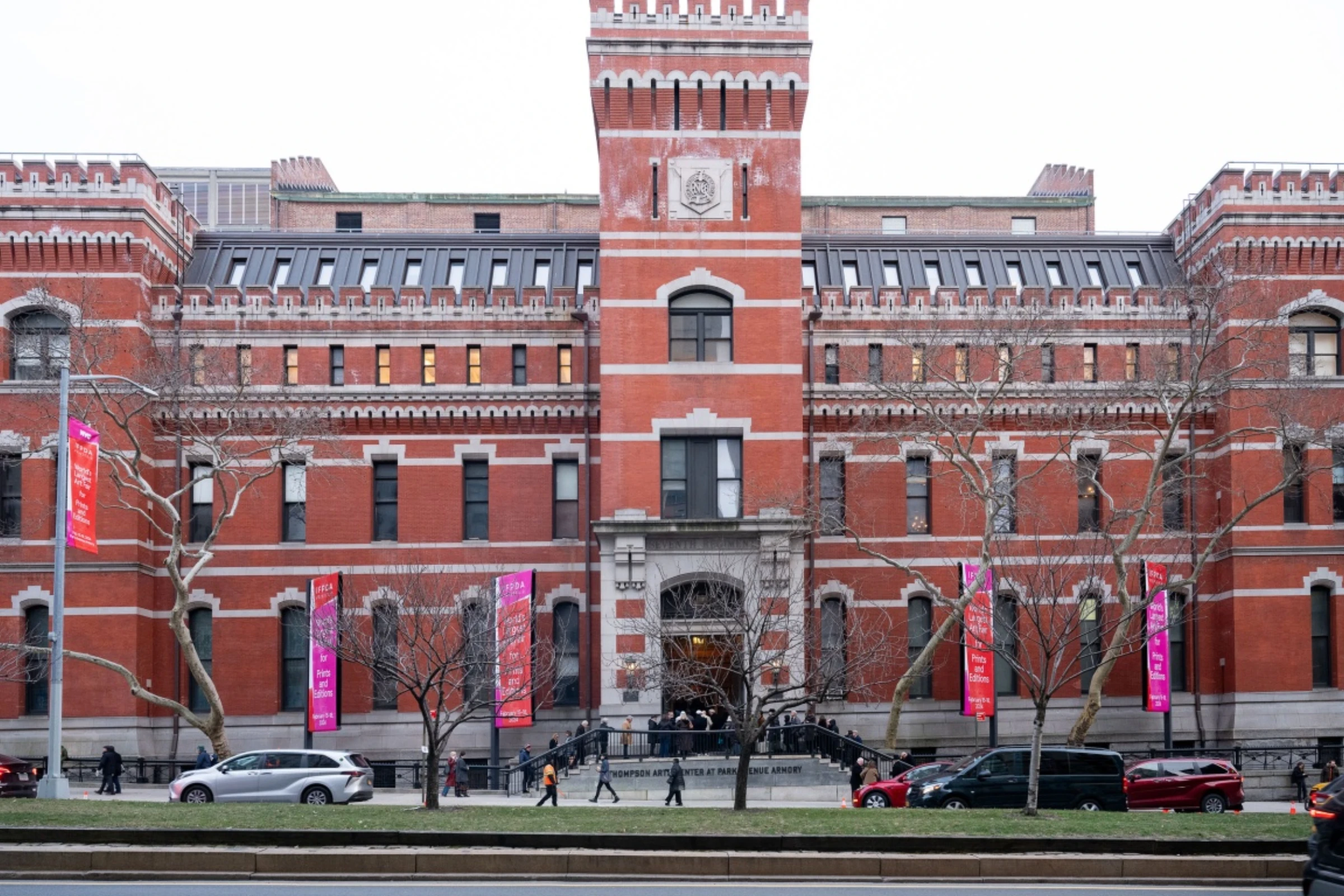
IFPDA Print Fair Returns to Park Avenue Armory as Works on Paper Regain Market Heat
The 2026 IFPDA Print Fair opens in New York with 80 exhibitors and a deliberate push to reposition prints and drawings as core collecting categories rather than secondary entries.
The International Fine Prints and Drawings Association opens its 2026 fair at the Park Avenue Armory from April 9 to 12 with a clear strategic message: works on paper are no longer the side room of collecting culture. The event gathers about 80 exhibitors and frames prints, editions, monotypes, and drawings as an interconnected market category with deep historical roots and current commercial velocity. In a cycle where top-tier painting remains expensive and often supply constrained, this reframing is likely to matter for both first-time buyers and seasoned collectors looking to rebalance risk.
Operationally, the fair benefits from venue scale and institutional optics. The Park Avenue Armory gives exhibitors enough room to present scholarly booths rather than compressed inventory walls, and the location supports crossover attendance from museum trustees, curators, and advisors already active in New York's spring calendar. Ticketing and public-hour structure posted by the fair indicate a familiar VIP-first rhythm, but this year's programming language points beyond transaction volume toward connoisseurship and medium literacy.
That emphasis is visible in the fair's own communication through the official 2026 event listing and broader IFPDA Print Fair platform. The language around the relationship between drawing and printmaking is not rhetorical decoration. It is market positioning. Dealers know collectors increasingly care about process, edition structure, condition, and art-historical placement, not only artist name recognition. A fair that can teach while it sells is better insulated from short-term sentiment swings.
For galleries, this format offers a defensible way to surface material that can be overshadowed at larger brand-driven fairs. Works on paper often carry stronger comparative value at lower entry points, and they allow collectors to build focused, academically coherent holdings without competing for the most aggressively priced trophy lots. The shift is especially relevant for younger patrons and institutional acquisitions committees that need to justify spend against educational and curatorial objectives.
The fair's rebrand emphasis, from prints alone toward prints and drawings, also tracks a broader correction in medium hierarchy. For years, many buyers treated works on paper as preliminary objects or lower-intensity alternatives to painting. That hierarchy has never fully matched historical practice, and it is increasingly out of step with how major museums collect and exhibit. When dealers present monotypes, experimental print processes, and hybrid paper works in tightly argued contexts, the medium distinction becomes an analytic tool rather than a status ranking.
That shift also has curatorial consequences, since paper-based acquisitions can expand institutional narratives quickly while preserving budget flexibility for future programming and conservation commitments.
Collectors approaching the fair this cycle should watch for three actionable signals. First, booth-level scholarship, including publication history and condition transparency, which often predicts long-term value retention better than social buzz. Second, consistency of pricing across editions and related works, which helps identify whether a gallery is building a stable market for an artist on paper. Third, institutional resonance, meaning whether the work aligns with museum acquisition patterns and curatorial discourse rather than only short-horizon demand. If those signals hold, the 2026 edition could mark a durable step in repositioning prints and drawings at the center of serious collecting strategy.