Helen Legg Appointed Artistic Director of the Royal Academy
The Royal Academy has named Tate Liverpool director Helen Legg as artistic director, a leadership move that lands as the institution balances program ambition with financial pressure.
The Royal Academy of Arts has appointed Helen Legg as artistic director, placing one of the UK's most experienced institutional operators into one of London's most exposed cultural roles. Legg is due to begin in June and will oversee exhibitions, the collection, and public programming at an institution whose reputation is global but whose economics are unusually fragile for its scale.
Legg arrives from Tate Liverpool, where she has led a complex redevelopment cycle while keeping a public-facing curatorial profile. Before Tate, she directed Spike Island and previously held curatorial roles at Ikon Gallery, giving her an unusual mix of large-institution governance and artist-centered programming experience.
At the Royal Academy, that blend is not optional. The institution combines a major exhibition platform, an active schools structure, and a membership-driven revenue base, all while competing in one of the most expensive exhibition markets in Europe. Legg's appointment reads less like a ceremonial hire and more like a practical bet on managerial depth under pressure.
The timing is significant. The Academy has been navigating financial strain, including recent workforce reductions and intensified fundraising needs. Its model differs from many peer institutions because it does not rely on standard direct public subsidy in the way national museums often do. That leaves programming quality directly tied to ticketing strength, sponsorship confidence, and execution discipline.
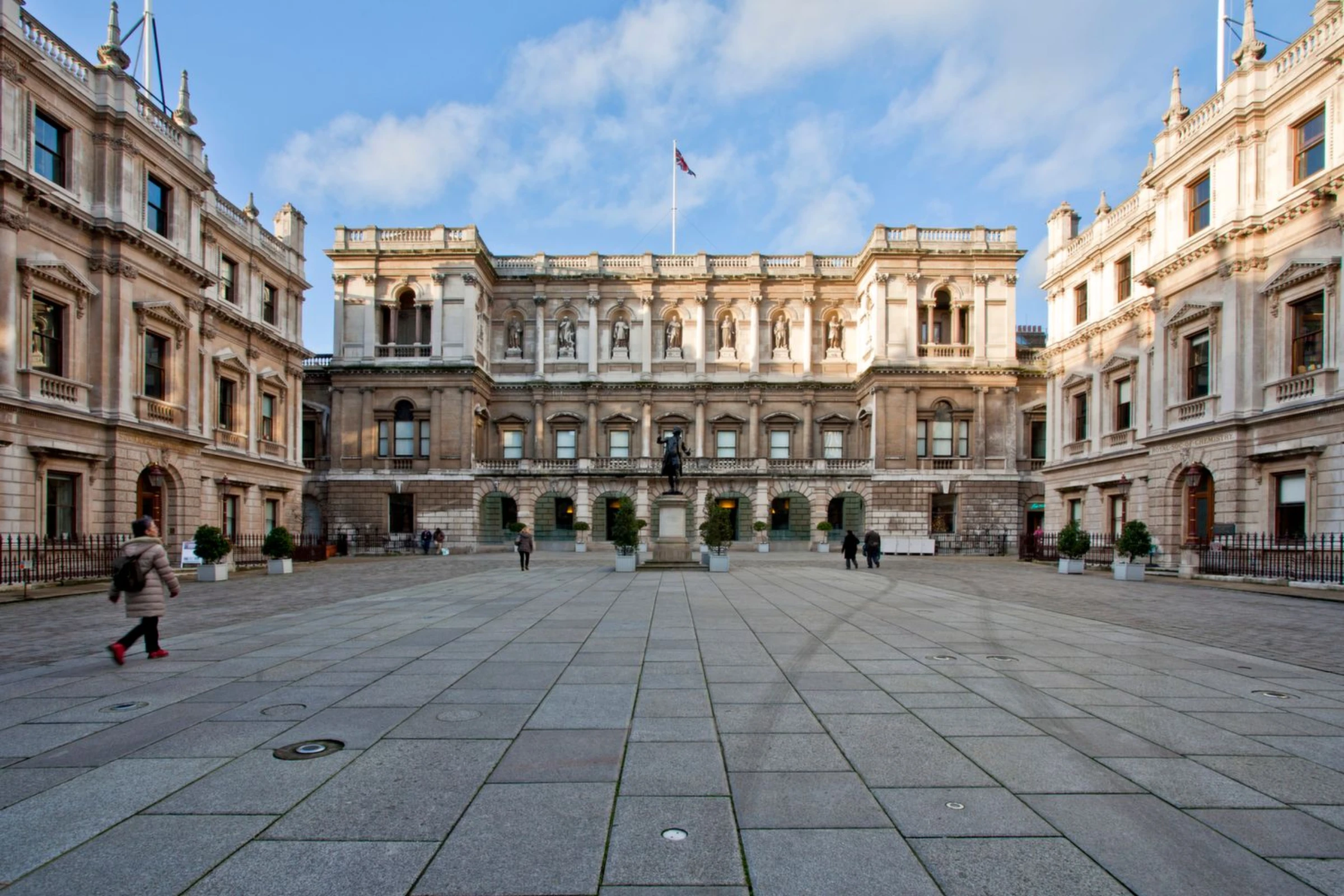
Legg has publicly emphasized the Royal Academy's architecture, education mission, and expanded collection presentation as core opportunities. That focus suggests a program strategy built around institutional assets rather than trend chasing. In practical terms, this means fewer speculative swings and more coherence between exhibition design, audience development, and long-range collection visibility.
The leadership package around her also matters. New senior appointments in commercial and audience roles point to a structure in which curatorial direction is expected to work in tandem with income generation, not in isolation from it. For institutions under margin pressure, that integration can be the difference between a strong season and a budget emergency.
For artists and lenders, the key test will be whether the Academy can maintain curatorial authority while tightening operational controls. The Royal Academy's brand has been built over decades by balancing institutional gravitas with periodic risk. Legg's track record indicates she understands how to keep that balance without diluting identity.
For the London ecosystem, the move may signal a broader cycle of leadership realignment in which institutions prize directors who can steer capital projects, audience shifts, and public accountability at the same time. That profile is harder to find than the market sometimes admits. It also tends to be undervalued until budgets contract.
Observers tracking this transition can monitor institutional updates directly through the Royal Academy, alongside sector signals from Arts Council England and comparable strategic shifts at Tate. The issue is not whether Legg can curate. It is whether she can hold institutional standards steady while the operating environment keeps tightening.
Early signs suggest the appointment was designed exactly for that challenge. If execution matches intent, the Royal Academy could use this transition not only to stabilize its model but also to clarify its public role in a market where many major institutions are still reacting rather than leading.