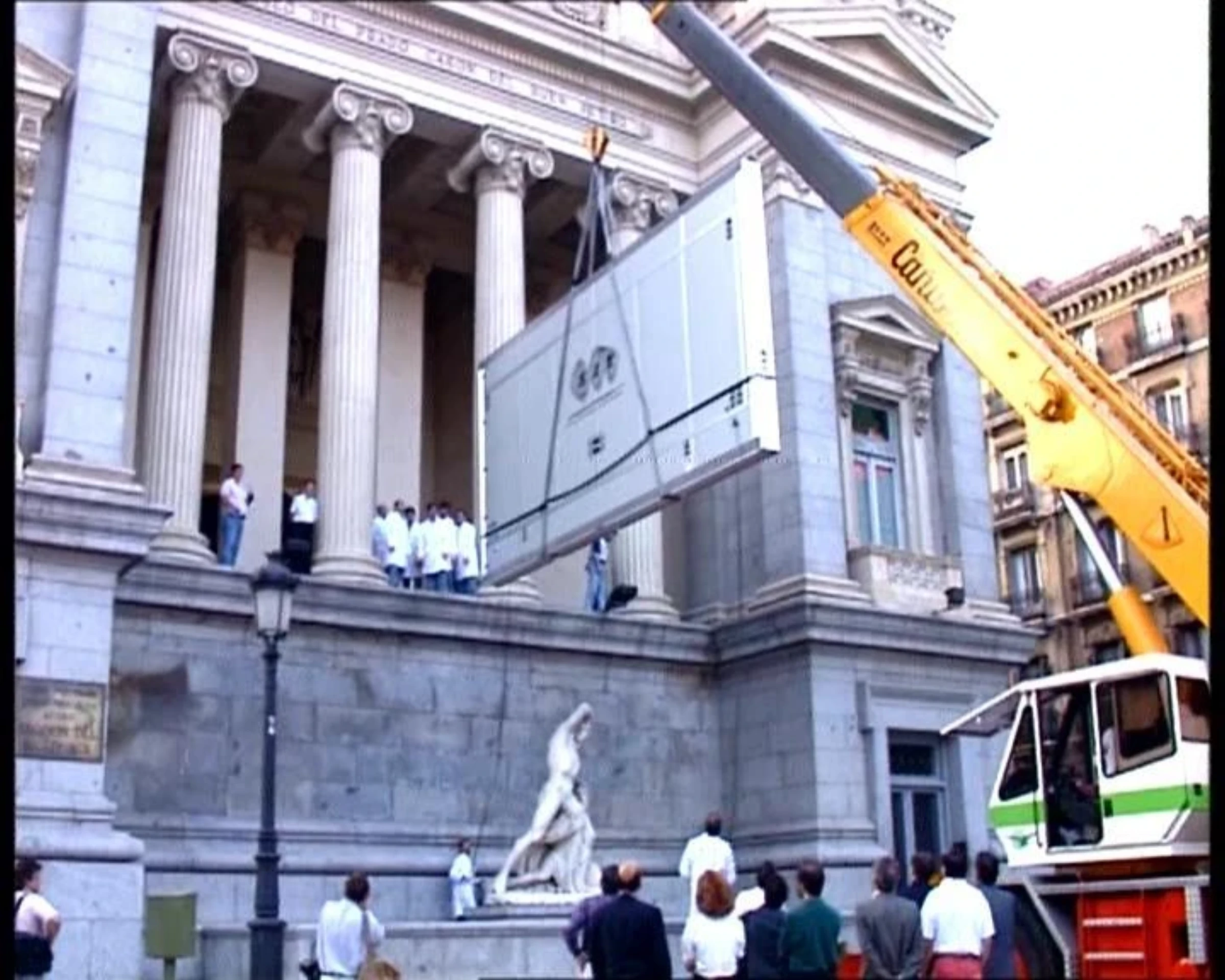
Basque Push to Loan Picasso’s Guernica Reopens Spain’s Deepest Museum Governance Fault Line
A formal request to move Guernica from Madrid to Bilbao has revived disputes over conservation risk, regional cultural sovereignty, and the political meaning of museum custody.
The proposal to temporarily move Picasso’s Guernica from Madrid to Bilbao has reignited a question Spain never fully settles: who gets to steward the country’s most politically charged artworks, and on what terms? A formal request from Basque authorities for a Guggenheim Bilbao loan puts conservation policy, regional identity, and national symbolism on the same collision path. With Guernica, no logistical decision is merely logistical.
At one level, the issue is conservation. Large-format, historically fragile works carry strict transport thresholds, and any movement requires high-certainty technical justification. Institutions responsible for long-term care are naturally risk-averse, especially when the object is both materially sensitive and politically singular. The Museo Reina Sofía has effectively functioned as Guernica’s stabilizing framework since 1992, integrating conservation strategy with curatorial interpretation and public history.
At another level, the issue is representation. For Basque constituencies, the argument for Bilbao is not only access geography. It is historical proximity to the violence the painting memorializes and to the civic memory cultures that continue to process that history. A loan, in this reading, becomes a symbolic rebalancing of where national trauma can be narrated. That is why the request carries political weight beyond standard inter-museum circulation.
The Ministry of Culture’s eventual position will therefore be read as a doctrine case. If it refuses, the rationale must be technically robust and publicly legible, not simply custodial instinct. If it accepts, the transport and display framework must exceed ordinary loan standards and address the precedent it sets for future claims on nationally central works. Either way, the decision will shape expectations around what constitutes legitimate redistribution of cultural authority inside Spain.
For museum leaders elsewhere, the Guernica debate is a reminder that masterpiece governance now sits at the intersection of conservation science and territorial politics. Institutions can no longer treat these as separate lanes. The strongest decisions integrate condition data, legal mandate, and social context in one transparent argument. That is especially true when artworks function as civic memory objects, where public interpretation can be as consequential as physical preservation.
In immediate terms, the request may or may not result in movement. In strategic terms, it has already succeeded in reopening the governance conversation around who owns narrative power over canonical anti-war art. Guernica remains in Madrid for now, but the terms of its custody are once again an active political question.
There is also an international governance dimension. When countries debate movement of politically charged masterpieces, other institutions watch closely because precedent can reshape expectations for similar claims elsewhere. Decisions around Guernica will be read not only inside Spain but across European museum networks where questions of regional access and symbolic custody are intensifying.
Any final ruling will need to bridge technical evidence and democratic legitimacy. Core reference points are the current artwork dossier at Museo Reina Sofía’s Guernica page, destination readiness at Guggenheim Bilbao, and ministerial competence under Spain’s Ministry of Culture. This is now a governance referendum as much as an art-loan request.