Grand Palais Reframes Matisse’s Late Years as a Period of Radical Reinvention
A major Centre Pompidou co-production in Paris argues that Matisse’s final decade was not a graceful epilogue but a high-pressure laboratory of new form.
Paris has opened a large-scale corrective to one of modern art’s most persistent simplifications. Matisse 1941-1954, staged at the Grand Palais and organized with the Centre Pompidou, assembles more than 300 works from the artist’s final years and rejects the idea that late Matisse can be reduced to decorative calm. The curatorial argument is sharper: this period was a crisis-driven reinvention in which illness, limited mobility, and historical rupture forced Matisse into one of the most inventive episodes of twentieth-century art.
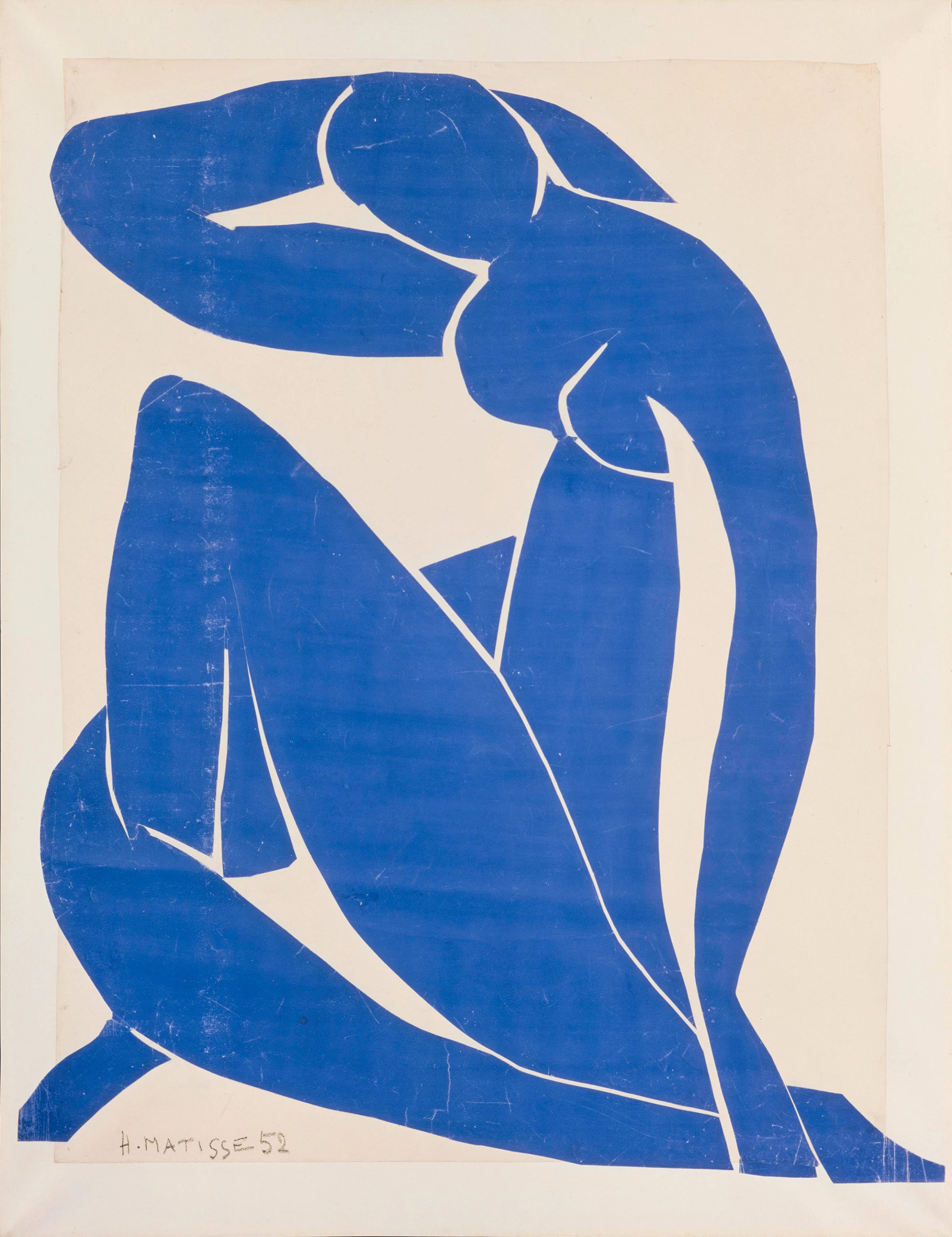
The show’s chronology begins after Matisse’s 1941 operation and follows the years in which he repeatedly worked through severe physical fragility. Seen in sequence, the familiar categories become less stable. The cut-outs are not simply cheerful abstractions, they are part of a studio method that merged drawing, painting, sculpture, and spatial construction. The Jazz maquettes, late interiors, brush-and-ink sequences, and chapel studies appear as components of one experimental system, each format testing what could still be done with line, color, and scale under bodily constraint.
The institutional significance is equally important. By bringing this material together in Paris, the exhibition recalibrates national memory around an artist frequently flattened in French public discourse into the easy master of decorative odalisques. The curatorial team argues for a more difficult Matisse, one who treated process as disciplined struggle and used repetition as research. That proposition aligns with current museum debates about late style, where museums are increasingly interested in how artists revise medium conventions under pressure rather than how they settle into signature branding.
For visitors and collectors, the key lesson is material intelligence. In the late period, Matisse’s paper cut-outs are often discussed as visual icons, but the exhibition emphasizes their spatial and procedural logic. Cut paper was pinned, moved, re-scaled, and recomposed in environments that functioned as active thinking spaces. The studio itself became a mutable field where composition happened over time, through adjustment, rather than through a single decisive draft. This is one reason the final works retain such structural energy despite their apparent simplicity.
The show also arrives within a broader institutional cycle. Parallel programming at the Museum of Modern Art, the Baltimore Museum of Art, and the Art Institute of Chicago underscores how central late Matisse has become to current curatorial and scholarly work. Institutions are less interested in mythologizing the artist as a solitary genius and more focused on methods: how image systems evolve, how studios operate, and how physical limitation reshapes formal invention.
For Paris specifically, this is also a political exhibition in cultural terms. It reinforces the role of the Grand Palais and Centre Pompidou as co-producers of international modernism narratives at a moment when museum authority is increasingly distributed across global networks of lenders, foundations, and private collections. A show of this scale, dependent on complex loans and conservation logistics, demonstrates institutional capacity as much as curatorial ambition.
The risk, as always with canonical figures, is reverence without interpretation. This exhibition mostly avoids that trap by foregrounding contradiction: fragility and force, pleasure and discipline, elegance and labor. It does not deny the beauty of the late works, it reframes that beauty as the visible surface of intense technical and conceptual pressure.
That reframing matters beyond Matisse scholarship. It offers a more useful model for reading modern masters generally: not as fixed monuments, but as artists whose late periods can be sites of structural invention, historical anxiety, and formal risk. In this reading, the final decade is not an ending. It is a strategic restart.