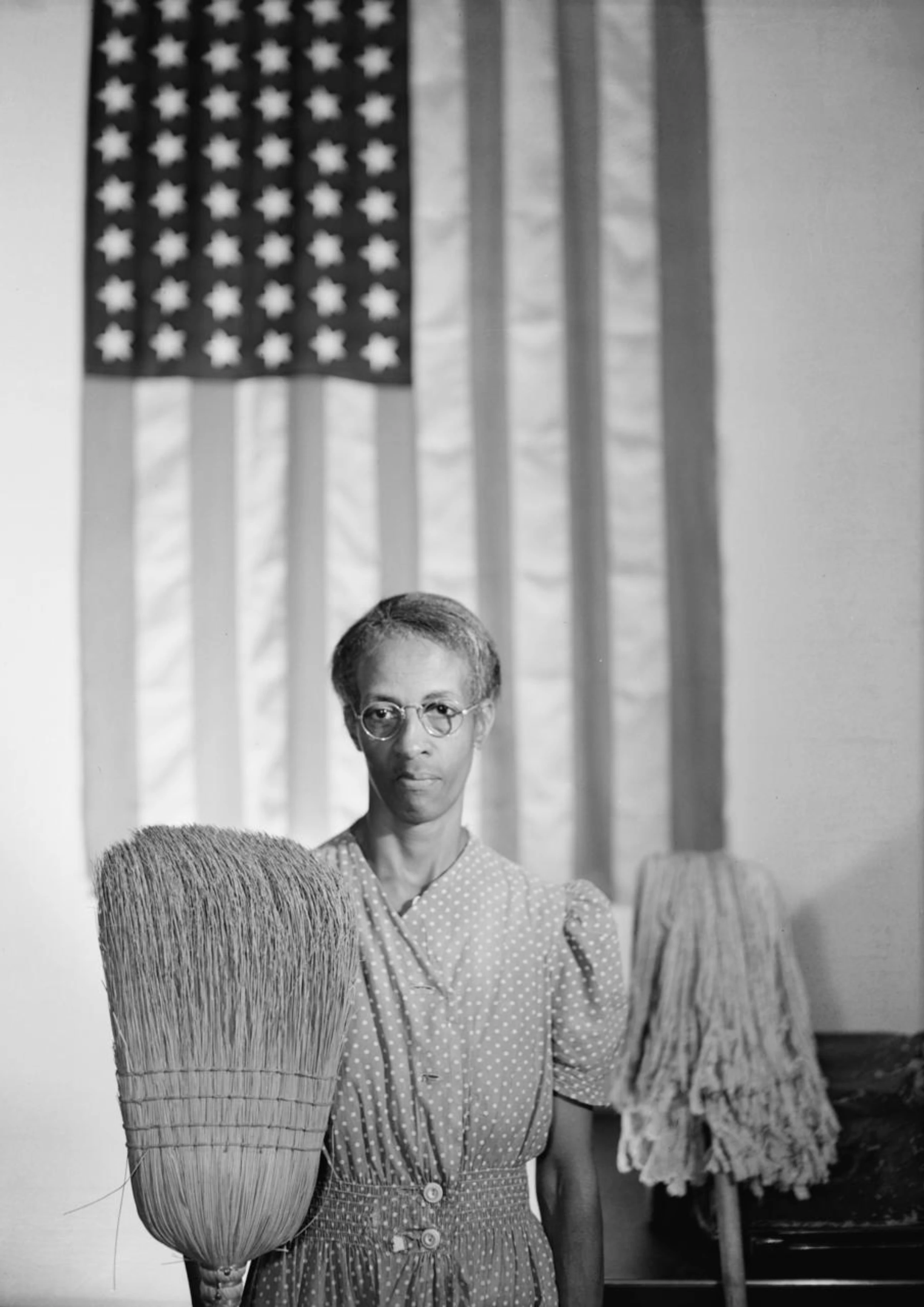
Gordon Parks Survey in London Reframes Civil Rights Image Politics for 2026
A new London exhibition of Gordon Parks photographs, curated by Bryan Stevenson, revisits segregation-era documentation as a tool for present-day historical accountability.
A new survey of Gordon Parks’s photography is opening in London at Alison Jacques gallery, bringing together works from 1942 to 1967 selected by civil rights attorney Bryan Stevenson. In reporting on the exhibition, The Guardian emphasizes Parks’s Alabama images from 1956 as the show’s backbone: color photographs made in the wake of the Montgomery bus boycott that captured the everyday violence of segregation alongside the dignity of families living through it.
Parks was Life magazine’s first Black staff photographer, and the Alabama assignment remains one of his defining projects. Rather than reducing Jim Crow to spectacle, his work repeatedly centers people in context-parents, children, workers-showing exclusion not as abstract policy but as embodied daily reality in restaurants, stores, schools, and civic spaces.
Stevenson’s curatorial framing connects those images to current struggles over historical erasure and civic memory, arguing that Parks developed visual strategies for confronting exactly the kinds of revisionism now resurging in public institutions. That link between archive and present tense gives the exhibition a sharper political edge than a conventional mid-century retrospective.
The argument of this exhibition is simple and sharp: documentary photography is not passive memory, it is an active method of refusing political amnesia.
The selection reportedly extends beyond Alabama into Parks’s Harlem assignments, his documentation around Malcolm X, and his images from the 1963 March on Washington. Seen together, the works map a broader proposition: photography can hold structural critique and intimate human narrative in the same frame without collapsing either one.
What remains striking about Parks in 2026 is formal as much as historical relevance. His use of color during a period dominated by black-and-white press distribution changed emotional legibility, making scenes of exclusion harder to dismiss as distant or schematic. The visual language carries urgency even when audiences already know the headline history.
The exhibition also underscores the value of cross-sector curation. Stevenson is not a career museum curator but a legal advocate whose memorial and museum work in Montgomery is grounded in public evidence and testimony. Bringing that orientation to Parks’s photographs reframes them as documents in an ongoing civic case, not static canon material.
At a time when cultural institutions face pressure to depoliticize programming, this show takes the opposite route: explicit historical confrontation anchored in rigorous images. If it lands with the force suggested by the preview coverage, London’s Parks survey will be remembered less as a commemorative display and more as an intervention in how democratic memory is contested right now.
For younger audiences encountering Parks outside textbook references, the show may function as a visual primer on how state-sanctioned inequality looked in ordinary places, not only at famous flashpoints. That matters in an era where algorithmic attention often fragments historical understanding into disconnected clips. Parks’s sequences restore continuity, showing systems rather than incidents.
It also reminds curators that photography-led exhibitions can still produce strong public argument when sequencing, captioning, and contextual framing are handled with precision. Parks’s work does not need overproduction; it needs clarity and moral confidence. The London survey, as described, appears to understand that balance and may become a benchmark for how institutions present politically charged photographic archives without diluting their stakes.