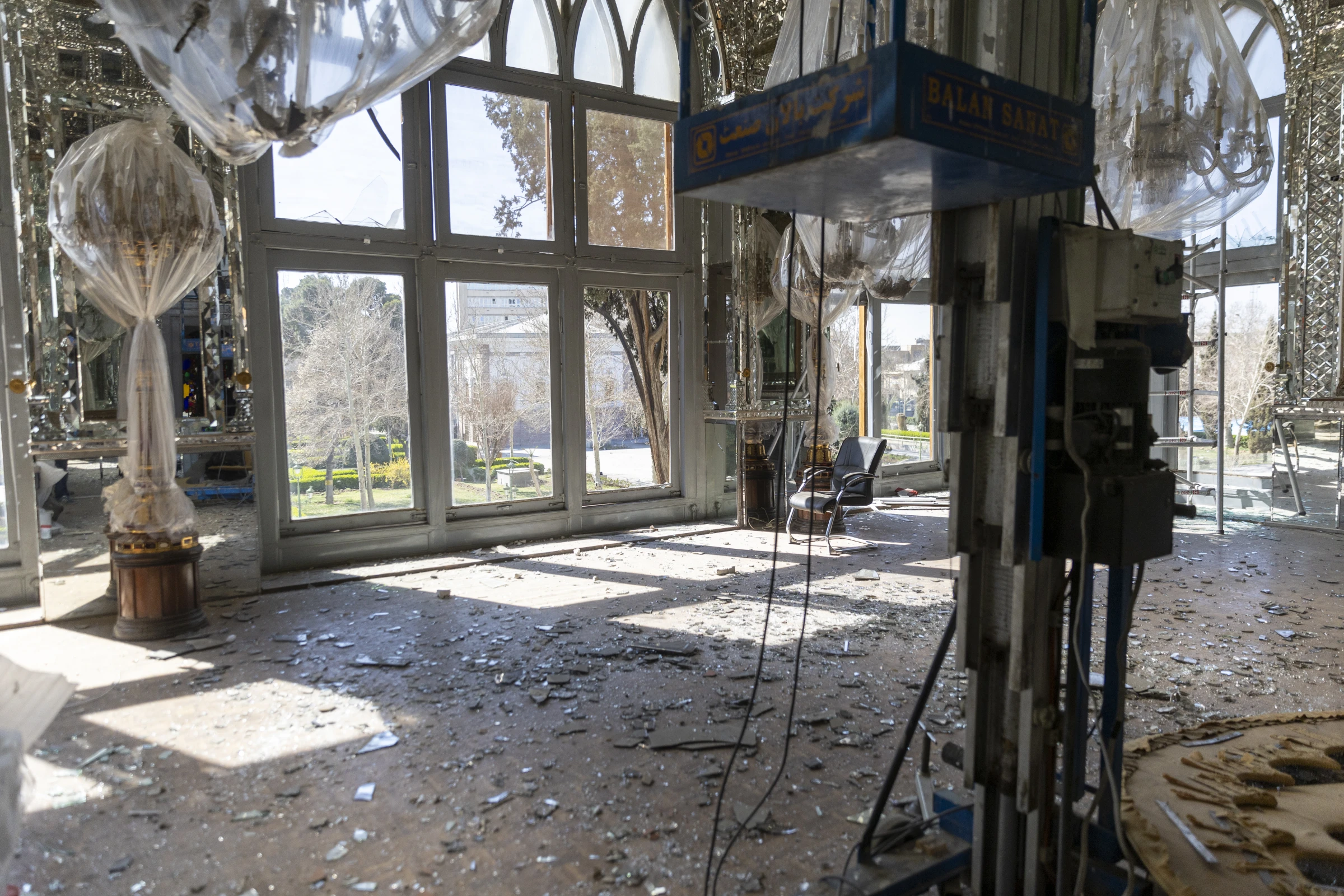
Golestan Palace in Tehran Damaged as UNESCO Raises Alarm Over Heritage Sites
Iranian agencies report damage at Tehran’s UNESCO-listed Golestan Palace after nearby strikes, renewing scrutiny of cultural-property protections in armed conflict.
Golestan Palace, Tehran’s only UNESCO World Heritage site, sustained damage following a March 2 missile strike in the surrounding area, according to reports cited by Artforum from Iran’s ISNA and Mehr agencies. Images circulating after the strike show interior glass breakage and debris across historic rooms.
The palace carries unusual historical density for a single compound. Originating in Safavid-era fortifications and rebuilt extensively in the nineteenth century under the Qajar dynasty, the site has served both as ceremonial architecture and as a material archive of changing Iranian state aesthetics.
UNESCO said it had communicated the coordinates of Iran’s designated sites to relevant parties and reiterated concern about harm to protected cultural property. The legal framework is straightforward on paper: both the 1954 Hague Convention and 1972 World Heritage Convention establish obligations to safeguard such locations. Enforcement, as always, depends on military behavior in real time.
When a heritage site is hit, the loss is not symbolic collateral, it is the destruction of shared historical evidence.
The damage at Golestan also brings back a debate that resurfaces whenever conflict escalates around major monuments: whether deterrence language around cultural targets has any practical force once command priorities shift. Public condemnation can be immediate, but restoration timelines can run for years, and certain losses are irreversible even when structural repair is possible.
For the art world, this is not a peripheral geopolitical story. Heritage destruction affects scholarship, conservation funding, museum diplomacy, and long-term access to primary material for historians and the public. It also creates pressure on international institutions to move from statements to coordinated technical support.
What happens next will depend on documentation quality and access. If conservation teams can secure clear condition records now, recovery plans have a chance. If access is delayed or politicized, reconstruction becomes slower, more expensive, and less certain. Either way, Golestan has already entered the growing ledger of cultural sites placed in direct jeopardy by modern conflict.
Conservators and heritage specialists will now focus on triage priorities: stabilizing fragile surfaces, preventing moisture and dust contamination, and documenting impact zones before additional shock events occur. At sites with mirrored interiors and delicate tile programs, even pressure-wave damage that appears superficial can produce cascading deterioration if left untreated.
International response will likely hinge on whether access can be negotiated for technical teams and whether damage reporting remains transparent. Cultural diplomacy has historically performed best when institutions act before narratives harden into propaganda. For Golestan, speed matters. Every week without structured assessment increases both restoration complexity and the risk of losing critical evidence about what was actually destroyed.
The event also exposes a recurring weakness in global heritage protection: treaties are clear, but rapid-response implementation remains inconsistent across conflicts. Where documentation teams are delayed, narratives harden before evidence is stabilized, complicating legal accountability and donor coordination. Protecting sites like Golestan requires not only legal norms but operational playbooks that can be activated immediately when nearby strikes occur.
For museums outside Iran, the responsible next move is coordinated support for documentation and conservation capacity rather than symbolic programming detached from on-site needs. Expertise sharing, emergency material assistance, and transparent condition reporting partnerships can make a measurable difference. In heritage crises, practical cooperation generally does more than statement culture to protect what remains.