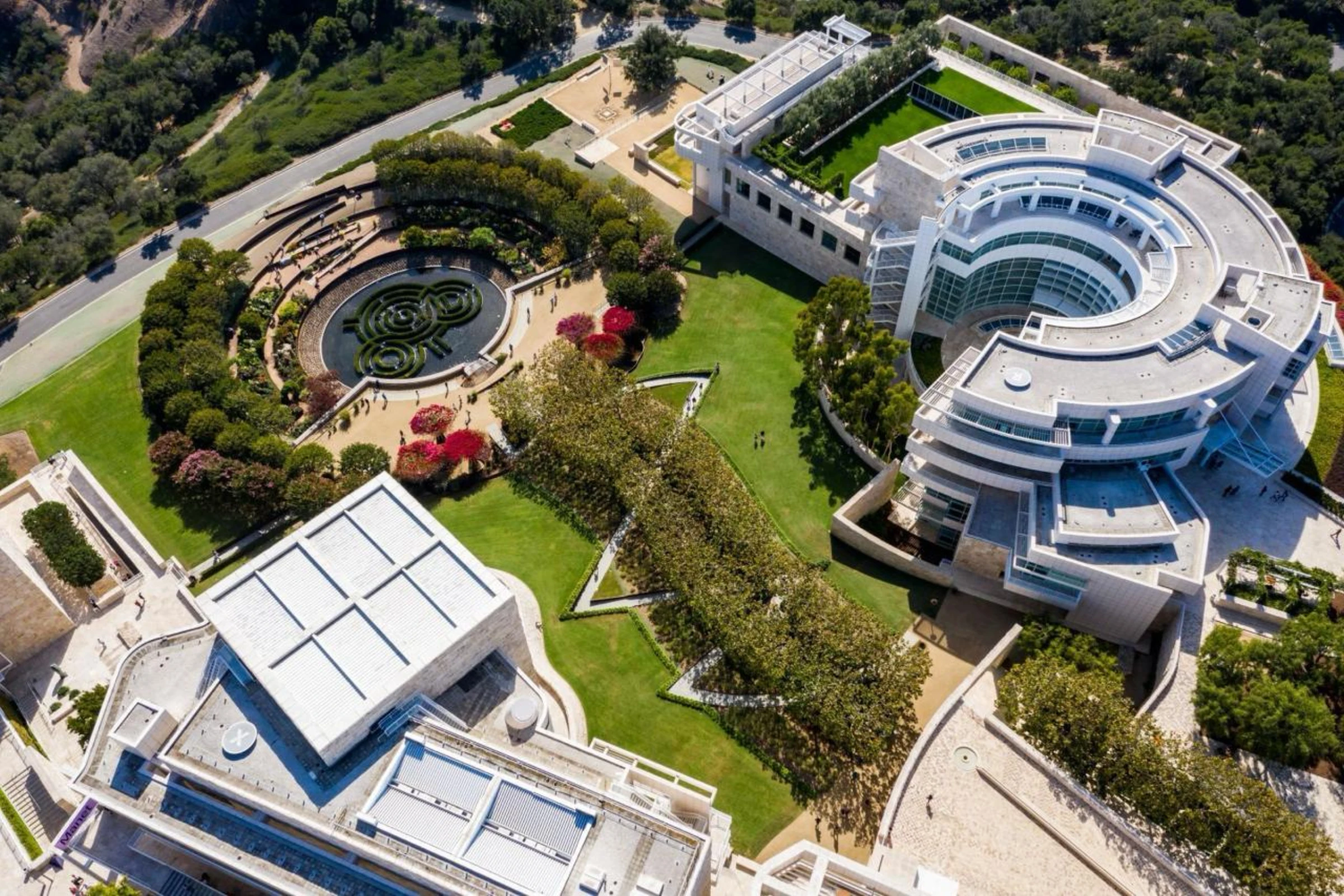
Getty Confirms PST ART 2030 Will Focus on Los Angeles and the Pacific Rim
The Getty has set a new regional frame for PST ART 2030, signaling a citywide cycle built around transpacific exchange, migration histories, and institutional collaboration across Southern California.
The Getty has confirmed that the next edition of PST ART, scheduled for 2030, will focus on artistic exchange between Los Angeles and the Pacific Rim. The announcement matters because PST has become one of the few large-scale platforms that can align museums, universities, kunsthalles, and independent spaces across Southern California under a single curatorial horizon.
Previous PST cycles proved that coordinated regional programming can drive public attention and institutional risk-taking at the same time. By selecting the Pacific Rim as the next frame, Getty leadership is signaling that migration, translation, climate, and maritime histories will likely sit at the center of the next cycle, rather than as peripheral themes.
In practical terms, this gives museums several years to build partnerships with institutions and archives outside the usual Euro-American exchange circuits. Organizations such as the Getty, the Los Angeles County Museum of Art, and Hammer Museum now have a clear strategic signal for long-range commissioning, lending, and research planning. The Pacific Rim frame opens access to networks that have been historically underrepresented in major American museum programming.
The policy consequence is equally important. A Pacific-focused cycle will likely require more complex shipping routes, conservation timelines, and translation support than a domestically concentrated program. Institutions that begin infrastructure planning early will have a major execution advantage by 2029. Those that wait will be forced into narrower, lower-ambition projects. The Getty's announcement functions as a de facto planning deadline for the entire regional museum ecosystem.
For artists, the upside is substantial. PST cycles tend to expand institutional acquisition pipelines and produce durable catalogue records that stay in circulation long after the exhibitions close. If 2030 follows that pattern, artists whose practices engage diaspora histories, oceanic geographies, and cross-border networks may see outsized institutional attention. The timing also matters: an artist's first PST cycle inclusion often accelerates their secondary market trajectory.
For collectors and advisors, the announcement is a forward market signal. Curatorial focus often precedes value repricing in under-collected categories, especially when major museums coordinate around shared research questions. Tracking exhibition development at the Getty and peer institutions over the next eighteen months will be a practical way to identify artists likely to move from discourse into institutional canonization. The Southern California region's unique position as a Pacific gateway gives this cycle geographic specificity that no other American city can claim.
The larger takeaway is simple: PST ART 2030 is already in motion even if the opening year feels distant. The framing choice has been made. The institutions that treat this as an operational deadline, not a press headline, will shape the strongest outcomes. Artists, curators, and collectors who begin research and relationship-building now will be best positioned when the cycle officially launches. Early engagement with archival partners, community organizations, and transnational artist networks will distinguish ambitious programming from reactive exhibition planning.
Regional context can also be tracked through the Museum of Contemporary Art Los Angeles and programming updates from the Broad, where transpacific narratives have become increasingly visible in exhibitions and collection strategy over the past five years. The Hammer Museum's programming around Asian American artists and the Institute for Studies on Latin American Art also provide relevant context for understanding the thematic territory this PST cycle is likely to explore.