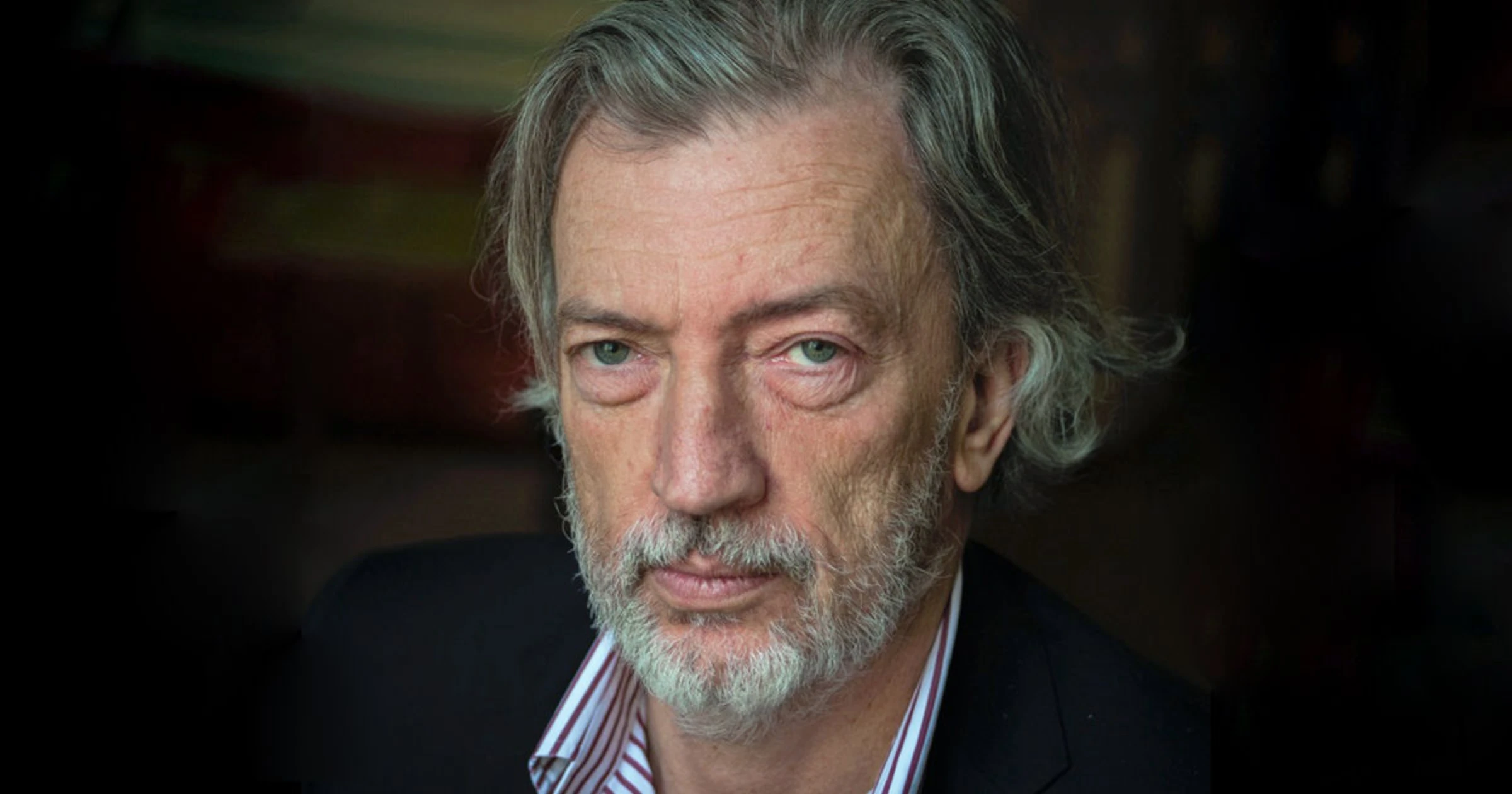
Georg Baselitz Dies at 88, Ending a Career That Rewired Postwar Figuration
Baselitz, the German painter whose inverted canvases recast figurative painting after war, has died at 88 as a major Venice exhibition was set to open.
Georg Baselitz has died at 88, closing one of the most consequential careers in postwar European painting. Born Hans-Georg Kern in 1938 and raised in the wreckage of Nazi Germany, Baselitz built a practice that kept returning to the question of what painting could still do after historical catastrophe. His death comes as a major presentation of his late work is due to open in Venice.
Baselitz’s early trajectory was marked by institutional friction. Expelled from the East Berlin Academy for what authorities called sociopolitical immaturity, he moved to West Berlin and developed a language that resisted both official doctrine and stylistic conformity. He studied abstraction and expressionist precedent closely, but pursued a figurative mode that was neither nostalgic nor illustrative. From the beginning, his paintings staged conflict in the body and in paint handling itself.
That conflict became public in 1963, when authorities seized works from his first solo show on obscenity grounds. The episode clarified how his art would function in public life, not as consensus, but as provocation structured by form. In 1969, he introduced the inverted figure that became his signature device. The inversion was not a gimmick. It disrupted conventional reading and forced attention onto composition, weight, and surface, while still retaining the charge of human presence.
Across subsequent decades, Baselitz expanded into monumental carved sculpture, often using axes and chainsaws to preserve a blunt, resistant materiality. His influence on later German artists, especially those working through historical burden without abandoning figuration, has been extensive. The arc of his practice also shaped market and museum behavior, helping sustain an institutional appetite for painting that was formally aggressive but historically explicit.
In recent years, his late cycles drew renewed institutional attention, including major exhibitions at the Kunsthistorisches Museum and the Centre Pompidou. The final chapter, centered on recurrent portraits of his wife Elke, carried unusual emotional concentration while preserving the structural severity that defined his earlier work.
For collectors and curators, Baselitz’s death arrives at a pivotal moment in reassessment of postwar canon formation. His market has long been global, but the institutional conversation now shifts from periodic retrospection to longer-horizon placement, especially around late paintings and sculptural bodies that remain unevenly represented in public collections outside Europe. The coming Venice presentation at the Fondazione Giorgio Cini will likely become the first major site where that reassessment is staged in real time.
Baselitz often framed his work as inseparable from biography, but the larger significance lies in method. He proved that figuration could remain intellectually hard, politically alert, and formally unstable across six decades. In a period when painting repeatedly cycles between revival and fatigue, his oeuvre remains a demonstration that the medium can still produce new pressure when handled without compromise.
His death also reframes how institutions will present late-period Baselitz. The Venice-linked Eroi d’Oro presentation now shifts from a current-practice exhibition to an immediate posthumous context, with curatorial stakes around sequencing, interpretation, and archival framing. Museums with works on loan or pending acquisitions will likely revisit wall text, catalogue language, and conservation planning to account for this shift in historical position.
Market consequences are predictable but secondary. The more important question is distribution of scholarship and public access. If the next cycle of major exhibitions concentrates only in blue-chip institutions, the historical picture will narrow. A better path is broad institutional circulation paired with deeper research partnerships between museums, archives, and academic centres that can contextualise Baselitz beyond the simplified inversion narrative.