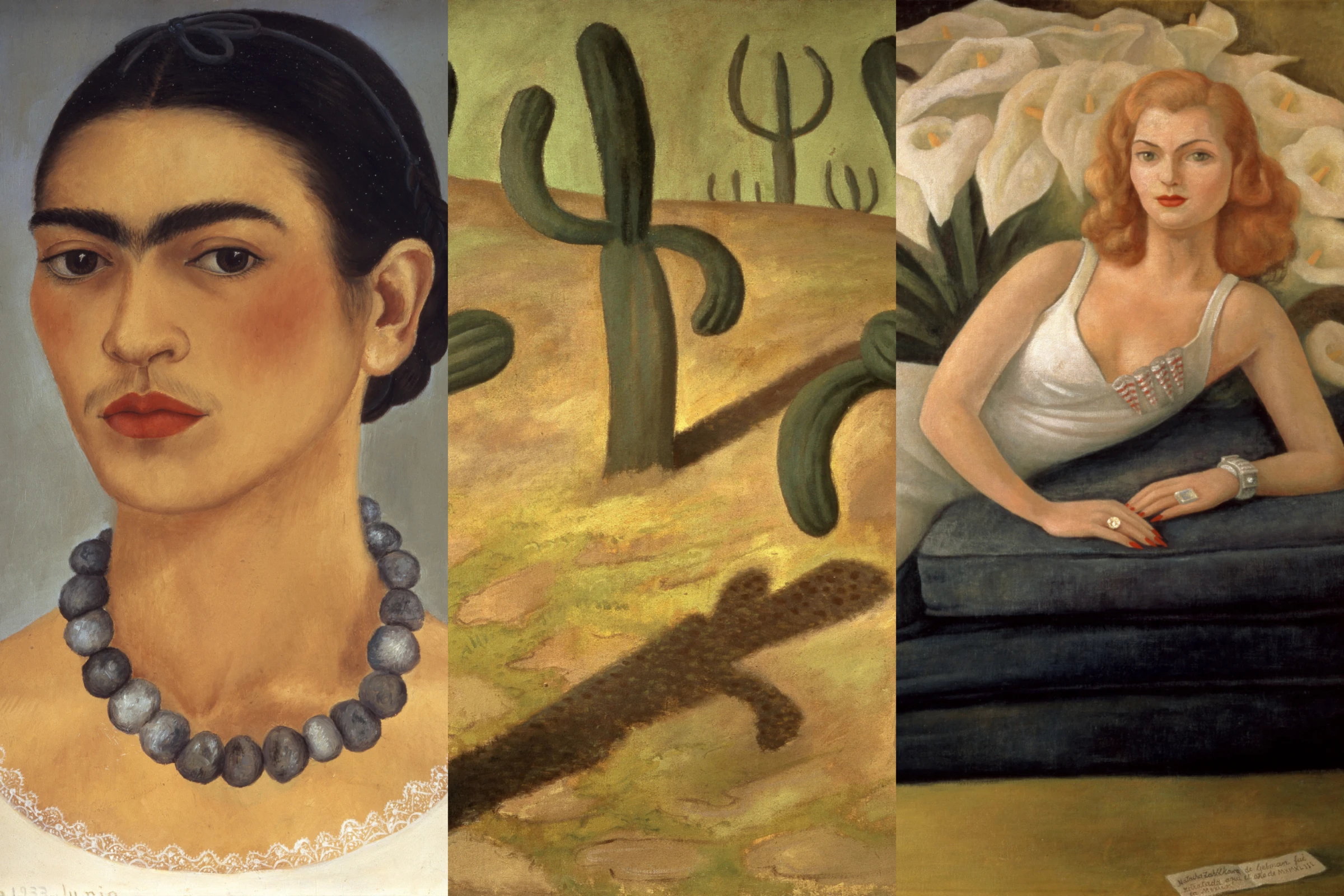
Mexican Art Community Presses Authorities for Clarity on Gelman Collection Export Terms
A broad coalition of artists, curators, and historians is demanding transparency over the temporary export and long-term stewardship of the Gelman Santander Collection, including heavily regulated Frida Kahlo works.
Pressure is mounting in Mexico over the governance of the Gelman Santander Collection, one of the most consequential private holdings of twentieth-century Mexican art. More than 300 cultural professionals have signed public letters calling on authorities to disclose the legal and administrative terms under which works, including major paintings by Frida Kahlo, may circulate abroad under temporary export arrangements. The immediate trigger is a sequence of announcements around stewardship, touring plans, and exhibition timelines that many in Mexico’s art field view as fragmented and insufficiently transparent.
The stakes are unusually high because the collection sits at the intersection of private ownership and protected national patrimony. Under Mexican law, certain works in the corpus carry monument status and require direct oversight by the Instituto Nacional de Bellas Artes y Literatura (INBAL). Kahlo works, in particular, are treated with heightened restrictions compared with other artists in the collection. In practical terms, the debate is not simply whether works can travel, but under what duration, under what renewal logic, and with what enforceable return commitments.
At the center of current scrutiny is the relationship between the collection’s owners, Banco Santander’s announced management framework, and public-facing Mexican institutions now presenting portions of the holdings. The exhibition of selected works at Museo de Arte Moderno in Mexico City has been celebrated by audiences, yet it has also sharpened calls for publication of the precise terms governing subsequent international display. Critics argue that confidence in lawful stewardship requires more than verbal assurances, it requires full documentation and clear timelines.
Officials have publicly reiterated that permanent export of Kahlo works will not be authorized, and that all movements are subject to heritage law. But that assurance has not settled concern among signatories who fear that renewable long-term loans could function as quasi-permanent displacement in practice if review thresholds are weak or if renewal criteria remain opaque. For historians and curators, this is not an abstract procedural question. It goes directly to public access in Mexico, to interpretive context for the works, and to precedent for future cross-border treatment of culturally central collections.
The controversy has also widened beyond domestic institutions. European museums expected to show works from the collection are now being asked to state publicly how they evaluate cultural-property obligations when partnering with private lenders under contested or politically sensitive conditions. This places receiving institutions in a familiar but difficult position: balancing scholarly and public value against legal complexity, diplomatic sensitivity, and reputational risk.
For the market and museum sectors, the Gelman case is likely to become a reference point for how major Latin American collections are managed across jurisdictional boundaries. If authorities release fuller documentation and establish transparent review mechanisms, the episode could set a stronger standard for cooperative stewardship. If ambiguity persists, it may deepen distrust and harden demands for stricter export oversight. Either outcome will influence how future agreements are negotiated between private collectors, financial institutions, and public agencies tasked with protecting national artistic heritage.
What is clear now is that the conversation has moved beyond one exhibition cycle. The question is whether legal protections designed to preserve cultural patrimony can remain robust under global circulation pressures, especially when iconic artists with limited available works are involved. Mexico’s art community has made its position explicit: visibility abroad is not the problem in itself, opacity is.