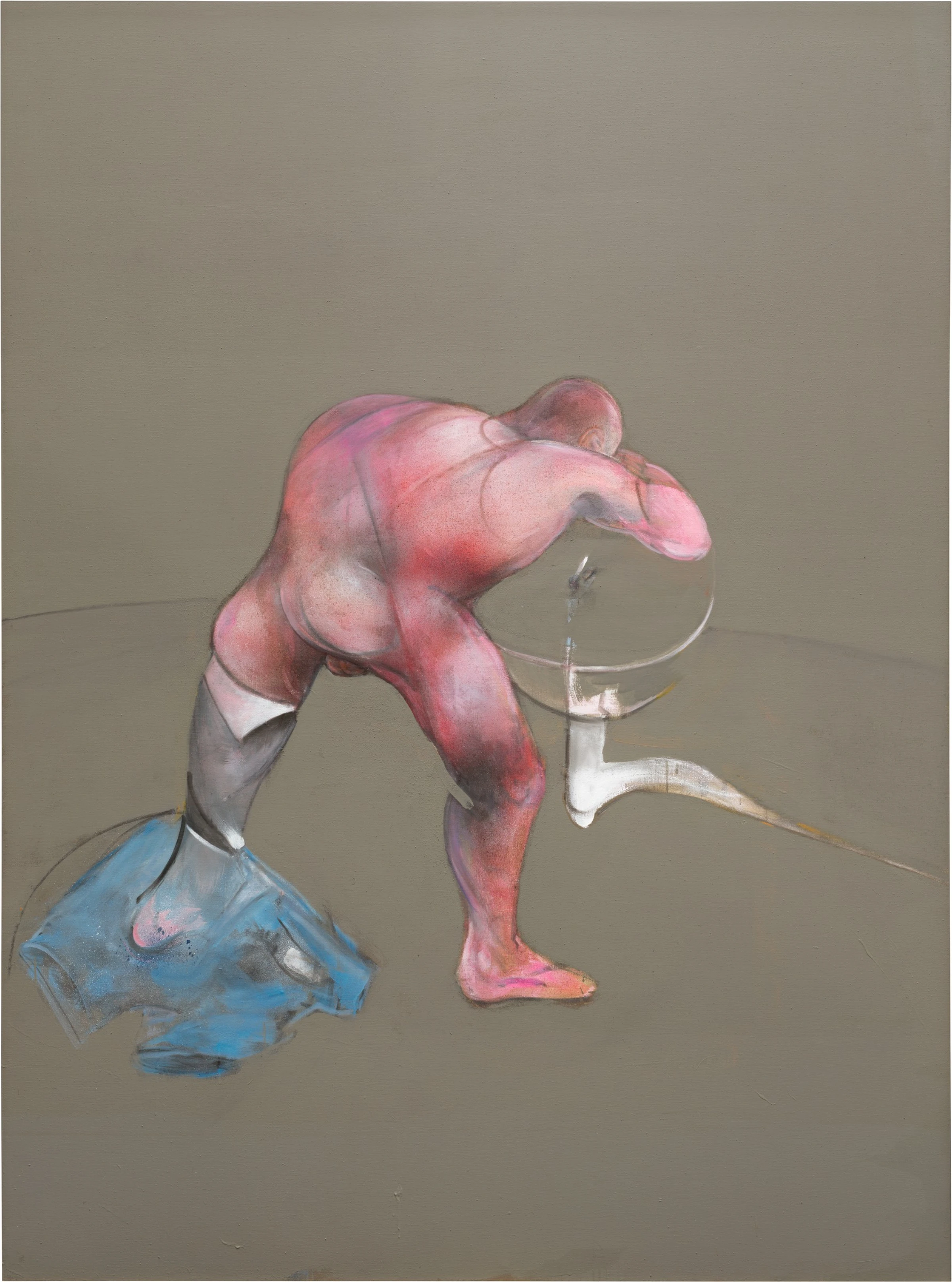
Gagosian Brings Three Late Francis Bacon Paintings to Paris, Reframing the City’s Role in the Artist’s Final Decade
A focused Paris presentation of three late Bacon canvases sharpens market and curatorial attention on how the artist’s late works are being positioned in Europe.
Gagosian’s decision to stage three late Francis Bacon paintings in its Rue de Castiglione space is less a routine commercial presentation than a calibrated argument about the artist’s final period. By isolating three works from the 1980s and early 1990s, the gallery narrows the interpretive field and asks viewers to read Bacon’s late practice on its own terms, not as an epilogue to the more frequently reproduced 1950s and 1960s images.The exhibition sits within a deep Paris context. Bacon’s relationship to the city, from his historical reception in French institutions to his personal history there, makes Paris an analytically loaded site for this grouping. At Gagosian’s exhibition page, the three paintings are framed as a concentrated view of late-period figuration where gesture, distortion, and interior architecture are pushed toward a colder precision than in many earlier works.What matters for the broader field is how this presentation may influence the immediate ecosystem of loans, institutional demand, and price narratives. Bacon remains a blue-chip market anchor, but late works are often unevenly understood outside specialist circles. A tightly controlled Paris show can recalibrate that reading by presenting formal continuities between these canvases and the artist’s long-running obsessions with movement, bodily instability, and photographic derivation.There is also a strategic venue logic. Gagosian’s Paris footprint, close to major museum and collector routes, gives the show visibility beyond a local audience and places it in active dialogue with institutions such as the Centre Pompidou and the city’s dense ecosystem of private foundations and estates, including visibility corridors around Musée d'Orsay. For collectors, that means the show is as much about historical positioning as acquisition momentum.The selected paintings, including works tied to Bacon’s late human-body studies, emphasize a period where color fields flatten and spatial cues become psychologically charged rather than narratively descriptive. This is one reason late Bacon can feel simultaneously direct and opaque. The figure remains present, but the painting’s drama shifts from scene to pressure, what happens when body, mirror, frame, and void are forced into unstable coexistence.For curators, the Paris show may function as a practical prompt. Institutions planning Bacon-related programming now have a fresh precedent for scale: concise, thesis-driven, and materially focused. Not every museum needs another encyclopedic retrospective. In the current attention economy, a small exhibition with clear stakes can produce stronger scholarly traction than a broader but softer survey.The immediate result is a high-profile seasonal show. The larger consequence may be subtler, a renewed argument that Bacon’s late paintings are not supplementary objects in a famous career, but central documents for understanding how twentieth-century figuration absorbed trauma, spectacle, and intimacy without resolving any of them. Paris is not incidental to that argument. It is part of its evidence.Market participants will also watch how this show influences comparable works in private hands. When late-period paintings are publicly recontextualized with scholarly confidence, pricing narratives often move from rarity language to historical-importance language, a shift that can alter both estimate strategy and lending willingness. That process can be gradual, but exhibitions like this one provide the intellectual scaffolding.