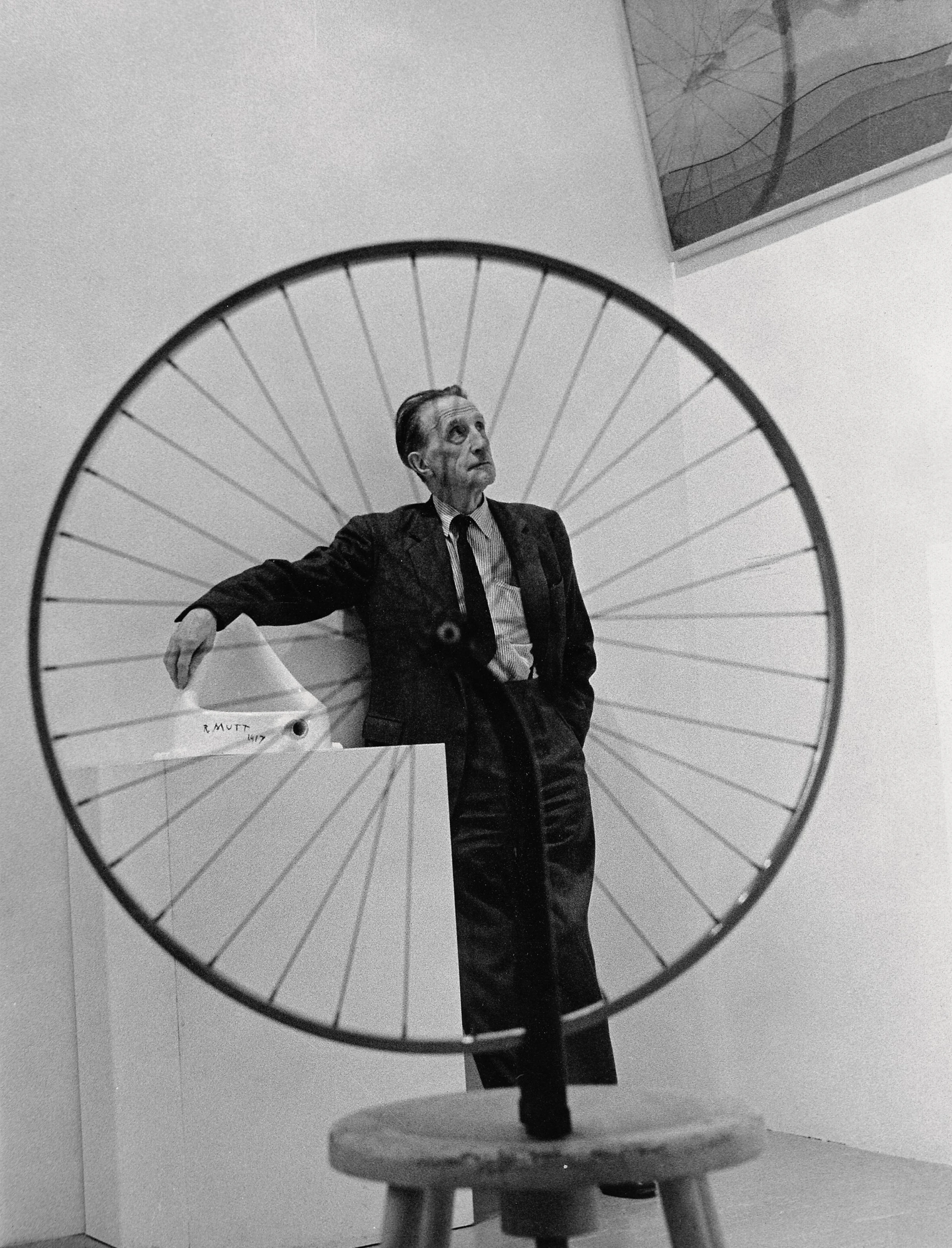
Gagosian Opens Rebuilt Madison Avenue Space With a Focused Marcel Duchamp Survey
The dealer launches a redesigned ground-floor gallery at 980 Madison with a compact presentation of Duchamp readymades timed to New York’s renewed attention on the artist.
Gagosian is reopening the ground floor of 980 Madison Avenue with a tightly framed Marcel Duchamp exhibition that arrives at a moment when New York institutions and dealers are re-testing how canonical twentieth-century art can be staged for a contemporary market. The presentation, announced to open April 25, puts Duchamp’s readymade logic at the center of the gallery’s next chapter in the building.
The timing matters. The exhibition is aligned with broader attention around Duchamp in New York and with renewed traffic through the Upper East Side corridor between museums, auction houses, and blue-chip galleries. By choosing Duchamp as its first move in the reworked space, Gagosian signals that this is not a neutral real-estate shift. It is a curatorial and market position: historical rigor as a commercial strategy.
The venue itself has symbolic weight. 980 Madison has long functioned as one of the key addresses in the city’s postwar-to-contemporary ecosystem, and a redesigned ground-floor format gives the gallery a different kind of street-level presence. That change may sound logistical, but in practice it alters audience composition, collector pacing, and the relationship between exhibition rhythm and transaction rhythm.
Duchamp’s readymades remain unusually effective in this context because they collapse distinctions between object, argument, and institution. For dealers and advisors, that produces a familiar tension. The works carry deeply institutional meaning while remaining highly legible to a market that prizes historical certainty. In a cycle where collectors are balancing risk against reputation, those conditions are attractive.
The show also emphasizes how gallery programming now competes directly with museum-scale interpretation. A commercial venue can move faster, target a narrower thesis, and still borrow the authority of scholarship through loans, archival framing, and publication. That is one reason New York’s top tier has shifted from broad seasonal overhang to concentrated, argument-driven presentations.
For collectors, the practical takeaway is straightforward: watch how supply is framed, not just how objects are listed. Duchamp editions, replicas, and works with complex production histories demand sharper due diligence around provenance, condition, and historical context. The most disciplined buyers are cross-referencing gallery framing with documentation standards used by Christie’s and Sotheby’s, especially when comparables are thin.
For curators, the opening is a reminder that dealer exhibitions can reset public conversation before institutions respond. A focused, high-visibility display of Duchamp in this location can influence how younger audiences read conceptual lineages, and how peer galleries build nearby programs in response. In practice, that means this opening is less a standalone event than a marker in a larger programming contest across Manhattan.
What comes next will matter more than the opening week: whether Gagosian sustains this level of curatorial specificity in the rebuilt space, and whether the market rewards depth over spectacle through the summer season. On current evidence, the gallery is betting that a historically grounded program can still move quickly, command attention, and set terms for the neighborhood around it.
Institutional adjacency is part of the strategy here. As audiences circulate between the Upper East Side museum corridor and nearby galleries, works gain layered readings from different publics in the same week. That dynamic can accelerate both critical discussion and commercial confidence when a show is this tightly authored.
"