Gagosian Brings Three Late Francis Bacon Paintings to Paris in a Focused Market Test
A tightly scoped Gagosian exhibition in Paris reframes Francis Bacon’s late work as both historical material and active market signal.
Gagosian will stage a compact but high-impact Francis Bacon presentation in Paris from 11 April to 30 May, centered on three late canvases: Study from the Human Body, Figure in Movement (1982), Study from the Human Body (1986), and Man at a Washbasin (1989-90). In a market that still rewards rarity and focused narratives over sheer volume, the decision to show only three works is strategic. It turns each painting into an event and places attention on Bacon’s late period, where collectors still see room for price differentiation and curators still see room for revised interpretation.
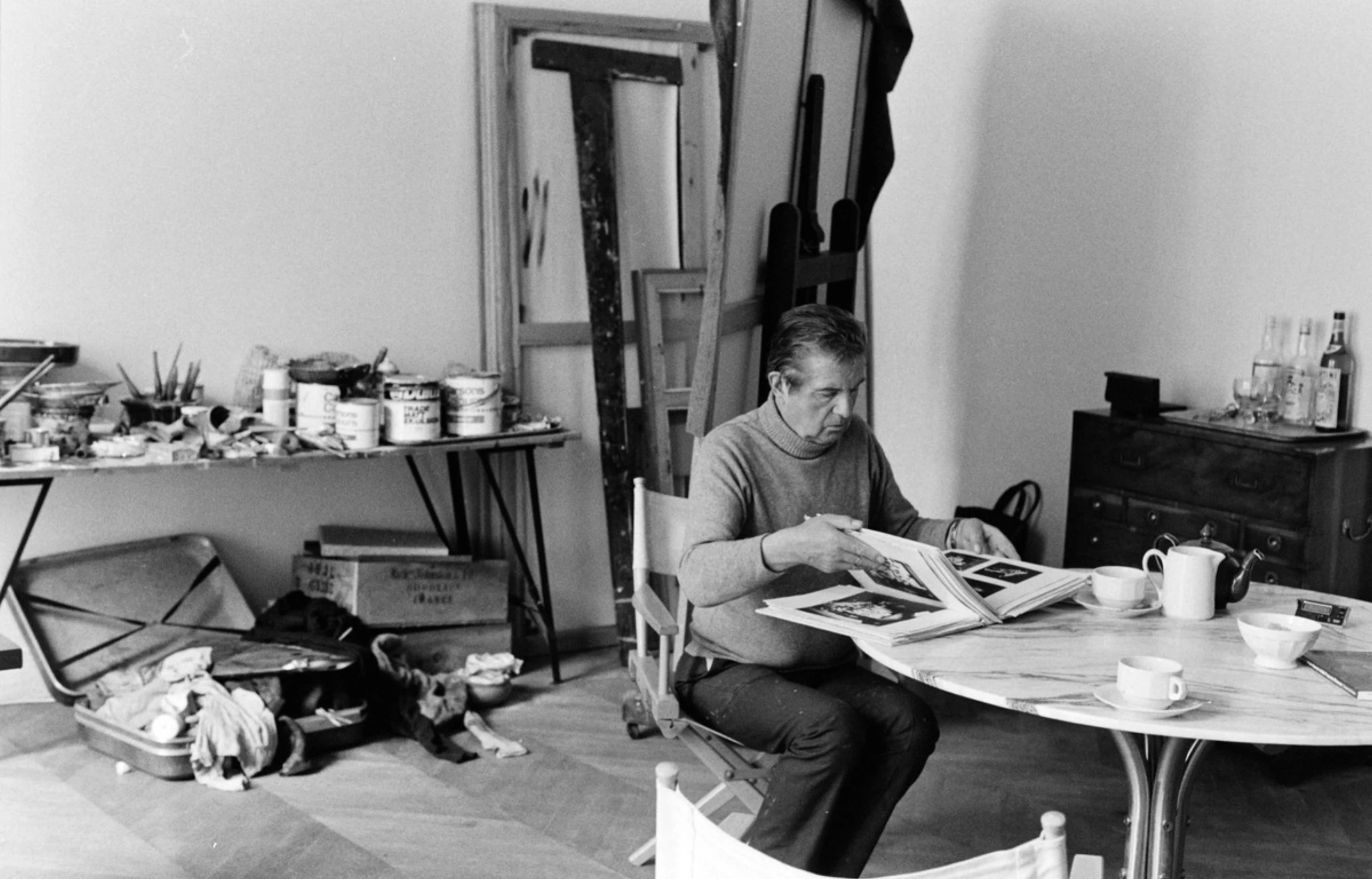
The Paris framing matters. Bacon’s relationship to the city is not decorative context, it is part of the argument for the show. During the 1970s and 1980s he maintained a recurring working and social life in Paris, including stays in Saint-Germain-des-Prés and use of a studio in the Marais. Gagosian’s current venue near Place Vendôme leverages that history and places these works in a district where museum audiences, blue-chip collectors, and global advisors overlap daily. In practical terms, this is exactly where a gallery wants to test how late Bacon reads across institutional and transactional audiences in 2026.
For curators, the show’s value is in how it isolates formal decisions often buried in larger surveys. The 1982 picture sustains Bacon’s ongoing treatment of the body as a pressured object rather than a stable figure, with a hot field color that refuses psychological neutrality. The 1986 canvas pushes that logic further with mirror space and altered orientation that destabilize fixed viewpoint. The 1989-90 painting reworks a motif Bacon had used decades earlier, but with a different emotional register and a different chromatic temperature. Seen together, these works argue that late Bacon is not simply repetition at a higher market altitude, it is a distinct technical and affective phase.
The gallery is also activating a wider scholarly frame. Current discourse around Bacon increasingly intersects with archival material and foundation-led research, including recent publication projects tied to the Francis Bacon MB Art Foundation. That research pressure tends to sharpen provenance scrutiny and exhibition claims. For private buyers, this usually means stronger documentation expectations and less tolerance for loosely framed comparables. For institutions, it can support tighter borrowing rationales and clearer wall text around chronology and motif evolution.
From a market standpoint, the show lands in a year when top-tier postwar painting remains selective rather than broadly expansionary. Buyers are still active, but they are concentrating on quality, condition, provenance, and scarcity, not just artist brand. A three-work display by Gagosian addresses exactly that behavior. It minimizes noise, narrows decision-making, and lets advisors benchmark each work against prior institutional appearances and known exhibition histories. That is especially relevant for Bacon, where late works can trade on both museum legitimacy and collector appetite for psychologically loaded figuration.
The show also reopens a curatorial question: how should museums stage Bacon now that global audiences are less interested in mythic biography and more interested in method, context, and consequence? A small presentation can model one answer. Instead of a biographical sweep, it prioritizes a technical conversation about motif persistence, bodily fracture, and the tension between private trauma and public spectacle. For institutions planning future Bacon projects, this is a reminder that precision can outperform scale.
At the level of public access, the exhibition is expected to be highly visible in central Paris, which strengthens its role as both gallery program and city-level cultural signal. For collectors, the message is straightforward: late Bacon remains a live category with room for curatorial framing and market competition. For curators, the message is equally clear: these paintings still demand close looking, and they reward exhibitions built around exact choices rather than comprehensive ambition.