Expo Chicago’s Midwestern Strategy Delivers Fast Institutional Sales
The first Expo Chicago edition under director Kate Sierzputowski turned regional curatorial networks into measurable opening-day sales and museum acquisitions.
Expo Chicago’s 2026 edition opened with a clear strategic shift, and the numbers reported in early sales suggest it is working. Under director Kate Sierzputowski, the fair doubled down on Midwestern institutional connectivity rather than chasing pure spectacle. That translated into brisk placements, museum acquisitions, and stronger attention on curated sections. The result matters beyond one week in April, because it offers a practical model for fairs trying to hold relevance in a market that is more selective, more regional, and less forgiving of bloated formats.
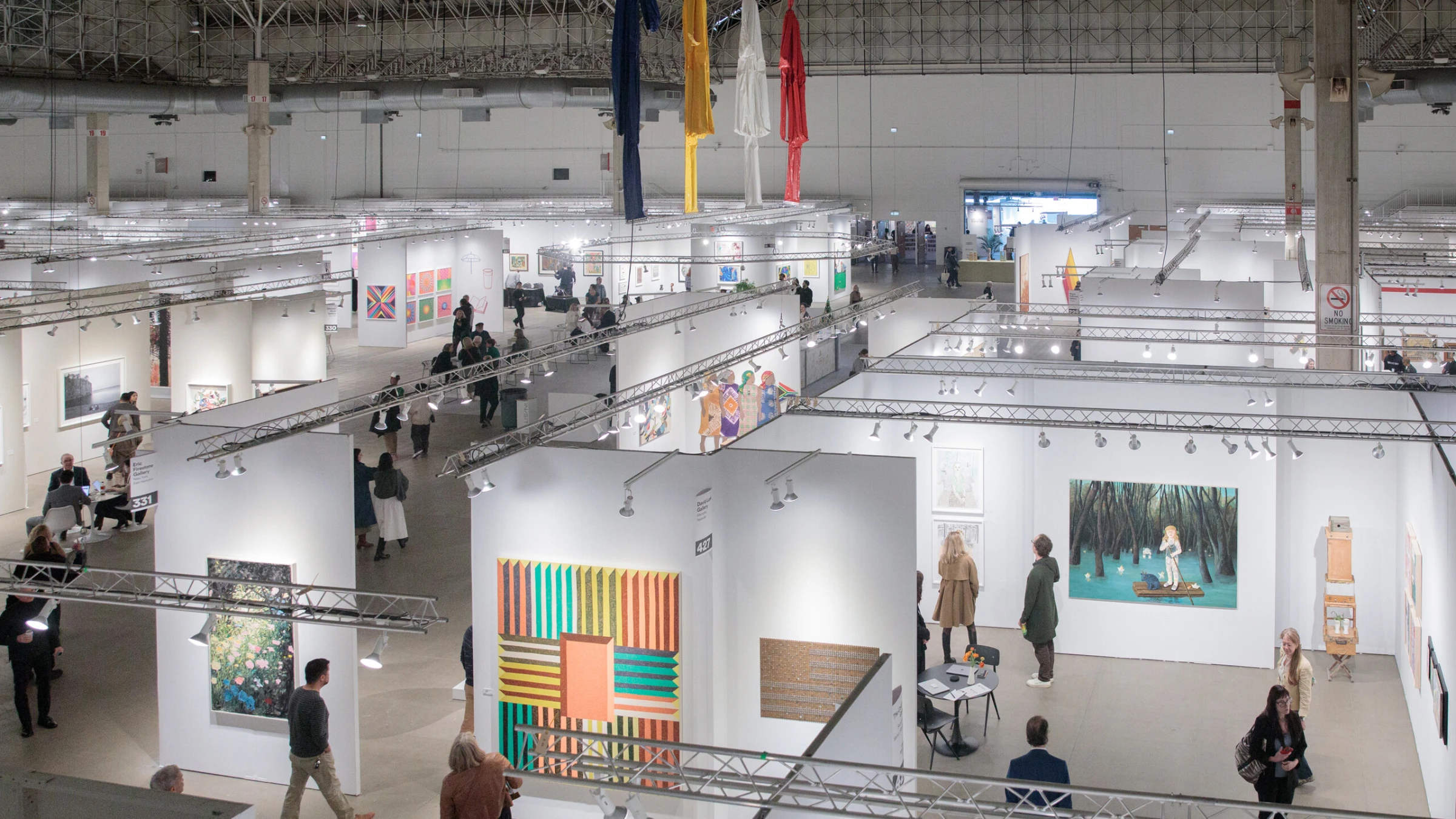
At EXPO CHICAGO, more than half of this year’s presentations were organized through themed or curated frameworks, including Profile and Focus. That structural decision changed how buyers moved through the hall. Instead of treating the fair as a flat inventory field, collectors and museum teams encountered tighter curatorial propositions and clearer artist arguments. In practical terms, that improves conversion at multiple price points, from emerging ceramics and works on paper to six-figure installations that need institutional conviction before private demand follows.
The Embodiment section, curated by Louise Bernard of the Obama Presidential Center museum team, became one of the fair’s clearest examples of that strategy. Work connected to artists commissioned for the center received concentrated attention, and galleries reported meaningful day-one transactions. That is a specific ecosystem effect, not a mood-based reading: institutional framing produced buyer confidence. For galleries, that confidence shortens the sales cycle and reduces the amount of post-fair follow-up needed to close collectors who are still testing a market direction.
The reported sales spread also tells a broader story. Mid-range and upper-mid-range placements remained active, with multiple transactions in the $20,000 to $100,000 corridor, while selected works moved beyond that band where curatorial narrative and presentation quality aligned. That is the segment many dealers currently need to protect. Trophy demand can still appear, but fair sustainability now depends on whether galleries can place work consistently in the ranges where private collectors and institutions overlap. Expo appears to have strengthened that overlap this year.
Museum acquisitions reinforced the same pattern. Buyers from institutions including the Nelson-Atkins Museum of Art and the Detroit Institute of Arts were active around the fair’s curated sectors. For participating galleries, that has downstream value beyond a single invoice. Institutional placements shape artist trajectories, validate pricing discipline, and often support future publication, touring, and acquisition conversations. In a cautious market, those effects are as important as headline totals.
Layout and scale changes likely helped. Expo reduced overall booth count compared with recent years and improved floor legibility. That sounds cosmetic, but it affects transaction behavior. Overpacked fairs produce fatigue, and fatigue suppresses thoughtful purchasing. A more navigable floor gives collectors time to compare propositions, revisit stands, and commit without the panic dynamic that often favors only entrenched names. In that sense, Expo’s “smaller but sharper” structure is both an aesthetic and commercial intervention.
The Midwestern focus is the critical differentiator. Rather than imitate the global fair circuit’s generic formula, Expo appears to be leveraging regional density, collector continuity, and institutional relationships across Chicago, Detroit, St. Louis, Louisville, and Kansas City. That network effect is hard for larger fairs to replicate quickly. It also offers artists a clearer path from booth exposure to institutional context, which remains one of the strongest signals for sustained market durability.
For the spring fair calendar, the takeaway is concrete. When a fair aligns curation, institutional participation, and floor design, it can produce healthier sales quality without relying on volume theater. Expo Chicago’s opening results do not rewrite macro conditions, but they do show that regional intelligence, if executed precisely, can still generate decisive market outcomes.