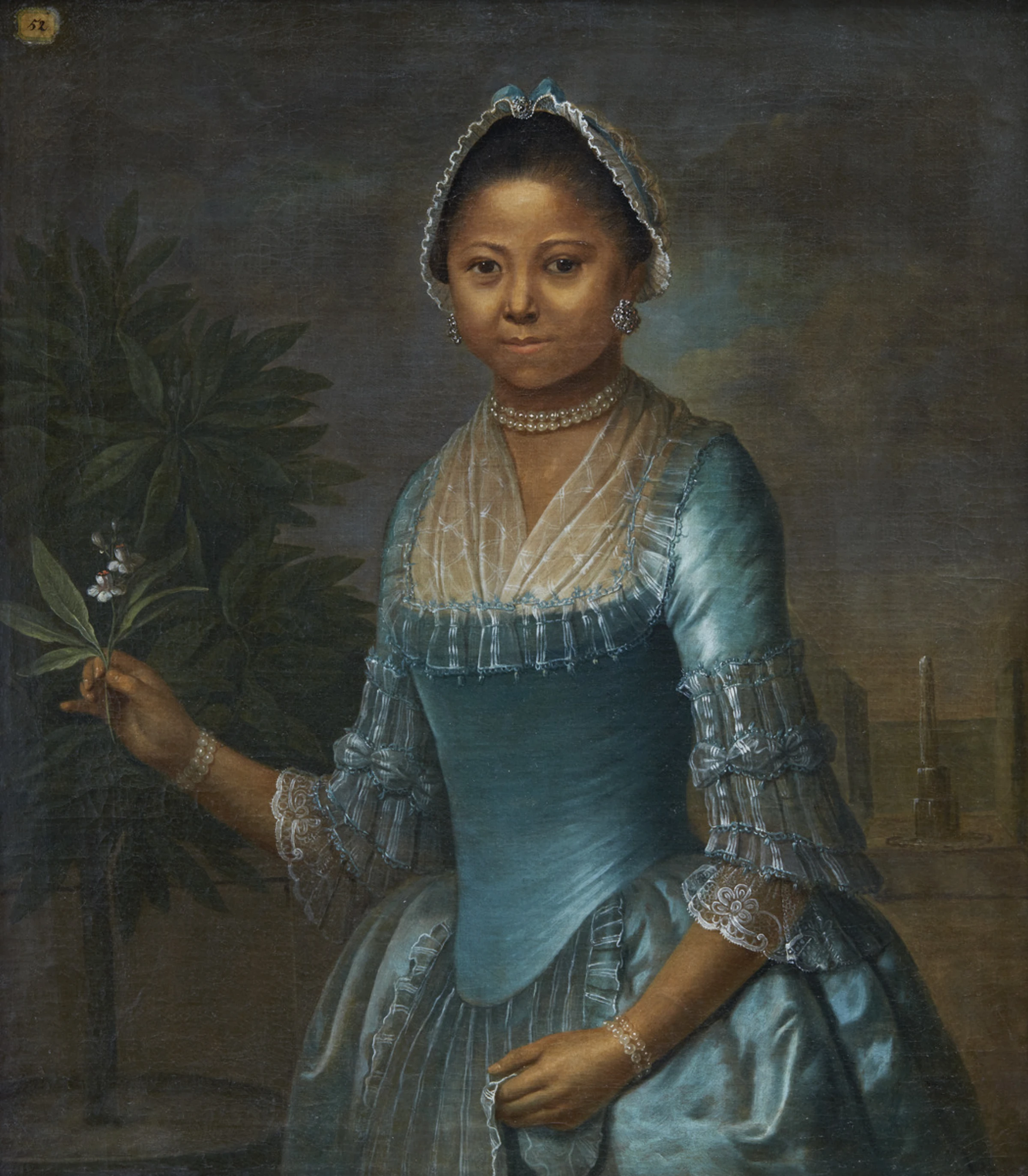
After Six Years of Research, AGO Identifies Eleonora Susette and Reframes an 18th-Century Portrait
The Art Gallery of Ontario has identified both the painter and subject of a 1775 portrait, shifting a formerly generic attribution into a documented colonial history.
The Art Gallery of Ontario has announced one of the most consequential curatorial identifications of the year: the subject of a portrait long known only as a lady holding an orange blossom has been identified as Eleonora Susette, and the artist as Jeremias Schultz. The painting is now retitled Portrait of Eleonora Susette (1775), replacing a generic descriptor with a named person whose life can be traced across Dutch colonial routes between Berbice and Amsterdam.
This shift is more than a cataloging correction. In provenance and interpretation terms, naming the sitter changes the ethical frame of display. A portrait that might once have read as an elegant but context-light example of 18th-century portraiture now operates as documentary evidence of enslavement, forced migration, and social staging within colonial wealth networks. The painting’s formal confidence, including pose, dress, and bearing, can now be read against specific historical conditions rather than as an abstract style marker.
According to AGO curators, the research process required cross-disciplinary work that many museums still under-resource: archival investigation, social history, genealogical triangulation, and comparative object study. A partial signature, links to another related portrait, and a crucial email from descendants connected to the artist’s family helped break open a long stall in the investigation. For institutions debating whether deep object research is sustainable under current budgets, this case offers a blunt answer. It is slow, and it is indispensable.
The identification also demonstrates why title language matters. The old title encoded uncertainty while flattening personhood. The new title anchors the work to an individual history and invites public audiences to ask better questions about who was visible, who was recorded, and who was obscured in European collections. At a time when many museums are revising labels for colonial-era material, AGO’s move shows how scholarship can alter not only interpretation but institutional accountability.
Importantly, the museum has placed the work in public view rather than holding the reattribution in a specialist silo. The painting is now displayed in AGO’s European galleries, and the institution has published expanded context through its editorial platform, Foyer. Without a public-facing narrative, provenance breakthroughs often remain legible only to registrars, curators, or auction researchers. Bringing this story into open circulation gives the work a civic life proportionate to the research labor behind it.
For collectors and advisors, the case is an instructive reminder that attribution certainty is not static and that social history can materially reshape value, relevance, and institutional interest. Works with unresolved sitter identities or partial signatures are not simply connoisseurship puzzles, they can contain suppressed histories that become newly legible as archives are digitized and collaborative research models expand.
For curators, AGO’s result underscores the value of comparative method. Linking this painting to another portrait and then to mobility records allowed the team to move from formal resemblance to historical claim. That method, applied systematically, could improve interpretation across European holdings where nonwhite subjects have often been under-identified, misnamed, or described through racialized shorthand inherited from older catalog standards.
The wider implication is straightforward. Museums are no longer judged only on what they collect or display. They are judged on whether they can produce historically serious knowledge from what they already hold, and whether they are willing to revise public narratives when new evidence emerges. AGO’s identification of Eleonora Susette is exactly that kind of revision, overdue, rigorous, and institutionally useful well beyond Toronto.