Dallas Art Fair Shows How a Relationship-Driven Market Is Rewriting Dealer Strategy
Dallas Art Fair's 2026 edition showed stable exhibitor retention, slower but credible sales rhythms, and stronger institutional acquisition activity.
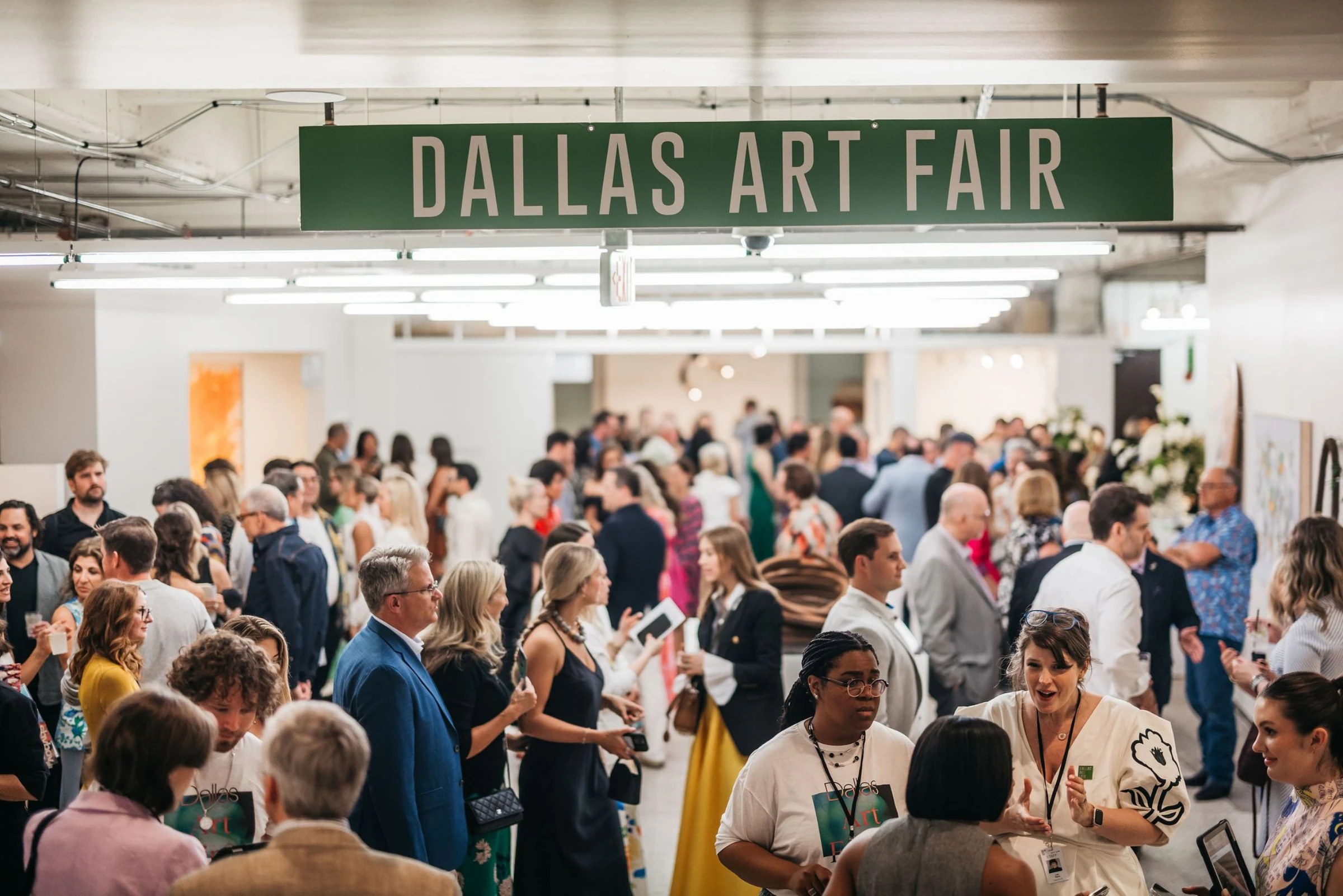
The 2026 edition of Dallas Art Fair delivered a useful correction to the standard fair narrative that speed equals strength. By the end of VIP day, dealers reported steady engagement rather than a single headline frenzy, and that pattern matched what many participants now describe as the city’s defining market behavior: deliberation first, commitment later. For galleries trying to build durable US collector bases, Dallas is becoming less of a speculative outpost and more of a strategic relationship market.
According to fair reporting, overall exhibitor volume stayed near the recent norm while churn declined versus prior cycles. That matters because low turnover is often a better health indicator than one dramatic sales statistic. A fair with stable return rates can support repeat conversations between galleries and collectors, and that continuity is exactly what mid-sized dealers need when they are not trading only in trophy lots.
The institutional layer was also visible. The Dallas Museum of Art acquired six works through combined support from the fair foundation and museum funds, including works sourced through Anton Kern Gallery, Andrew Kreps Gallery, and other participating dealers. In practical terms, this is how a fair ecosystem compounds over time: private buying and institutional collecting reinforce each other rather than operating in separate lanes.
The sales mix itself was broad, from six-figure historical material to younger-program inventory in the low five-figure and four-figure ranges. The point is not just price diversity. It is pacing diversity. Dallas still rewards dealers who can hold a conversation over multiple visits rather than forcing decisions inside the first hour. That is structurally different from high-velocity fair models where a booth can peak before noon and cool immediately.
For collectors, this environment can produce better outcomes if used correctly. Slow markets allow for comparison, condition diligence, and price calibration across booths before final commitment. For galleries, the tradeoff is patience: staffing and follow-through after preview day matter as much as opening theatrics. Dealers who treat the fair as a four-day relationship process rather than a one-day sprint appear to capture more of the city’s real buying behavior.
Another layer in this year’s reporting was local platform building. Dealers and project spaces described Dallas as a place where regional history, zoning constraints, and real estate realities all affect how contemporary ecosystems form. That context changes how one should read fair results. A measured transaction tempo here is not automatically weakness; it can be an expression of a collector culture that values repeated contact and trust signals over speed.
For the broader US fair calendar, Dallas now sits in an important position. It offers a test case for whether post-pandemic market normalization means fewer spikes and more resilient middle-market circulation. In that frame, 2026 looked less like a comeback story and more like a maturing one: stable exhibitor participation, consistent institutional engagement, and collectors willing to buy, but on their own timeline.
What should market participants watch next. First, retention into the 2027 cycle. Second, whether museum acquisition participation continues to diversify by gallery profile. Third, whether younger dealers can convert fair visibility into sustained local programs beyond the weekend. If those three lines hold, Dallas will keep strengthening its role as a relationship-first fair city with national relevance.