Copenhagen Contemporary Opens Kengo Kuma Earth / Tree Installation
Copenhagen Contemporary will launch a yearlong Kengo Kuma and Associates installation that turns architecture into a tactile public learning environment.
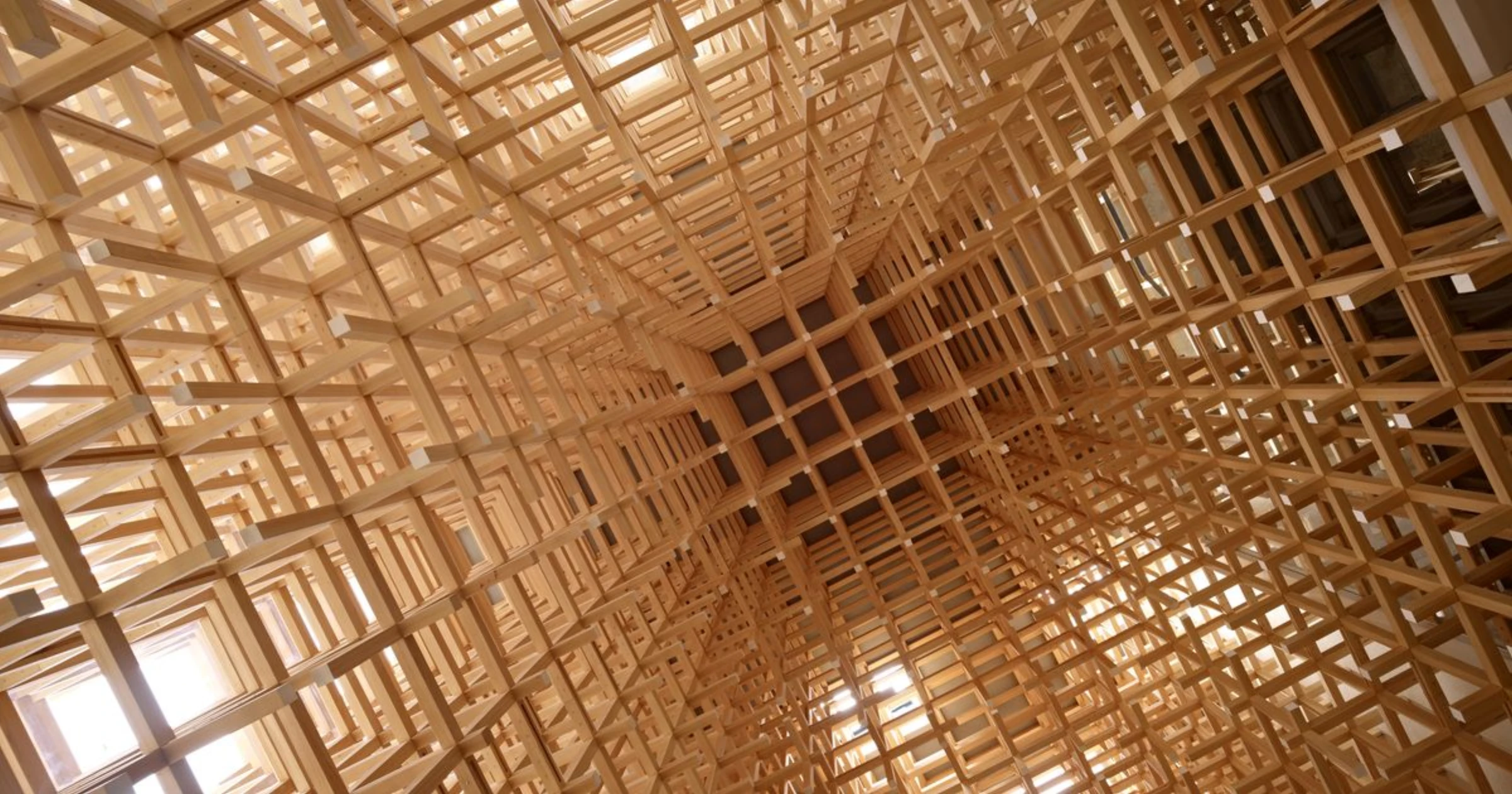
Copenhagen Contemporary has announced Earth / Tree, a site-specific installation by Kengo Kuma and Associates running from late March 2026 through February 2027. Presented as part of the institution’s CCreate series, the project converts Hall 4 into a sensorial architectural environment that emphasizes material touch, embodied movement, and participatory learning rather than static display.
According to the e-flux announcement, the installation is grounded in Kuma’s concept of gentle architecture, where form is generated in dialogue with place, climate, and human scale. The exhibition uses wood and earth as primary materials and draws on the Japanese concept komorebi, the shifting interplay of filtered sunlight through leaves. In the Copenhagen build, that idea becomes a suspended wooden structure that modulates light across stone-like floor elements.
The institutional framing positions this as more than a signature-architect cameo. Copenhagen Contemporary describes the project as an educational platform tied to creative confidence across ages, with a dedicated workshop zone where visitors can build with Tsumiki blocks designed by Kuma, Danish wooden systems, and miniature bricks. That setup turns design thinking into direct public practice.
The project works because it refuses the usual split between architecture as spectacle and architecture as education.
This matters in the current museum landscape because architecture exhibitions often default to representation - models, renders, documentary materials - rather than lived spatial encounter. Earth / Tree appears to prioritize encounter first, documentation second. If executed well, it can narrow the gap between architectural discourse and public accessibility without diluting conceptual depth.
The exhibition also strengthens Copenhagen Contemporary’s longer CCreate strategy, which reactivates a former scenic-painting hall as an annual commission platform across disciplines. By assigning the space to creators from different fields and demanding participatory outcomes, the institution is building a recognizable curatorial identity around process, not only finished objects.
For Kuma’s European footprint, the project arrives at a moment of sustained regional relevance, with his studio also associated with the upcoming water culture house on Papirøen. The Copenhagen installation therefore functions both as a standalone exhibition and as a broader public interface for the studio’s material philosophy in a Nordic context.
The key test will be longevity across its near yearlong run: whether the installation continues to feel alive after opening momentum fades. If programming, facilitation, and maintenance remain strong, Earth / Tree could become a durable model for how art centers can host architectural work as ongoing civic experience rather than event-week spectacle.
There is a wider policy implication here too. As cities invest in design literacy and climate-adaptive thinking, exhibitions that let the public physically engage material systems can function as informal civic education. Earth / Tree, with its emphasis on wood, earth, light, and embodied navigation, has the potential to operate in that register if the institution sustains interpretive depth over the full run.
If this model succeeds, it may influence how other institutions commission architecture for public programs. The shift would be from presentation to participation, with audiences treated as active interpreters of spatial ideas rather than passive viewers of architectural branding.
For Copenhagen Contemporary, the opportunity is to prove that participatory architecture can sustain intellectual rigor while remaining genuinely welcoming to broad publics. That is a difficult but valuable curatorial benchmark.