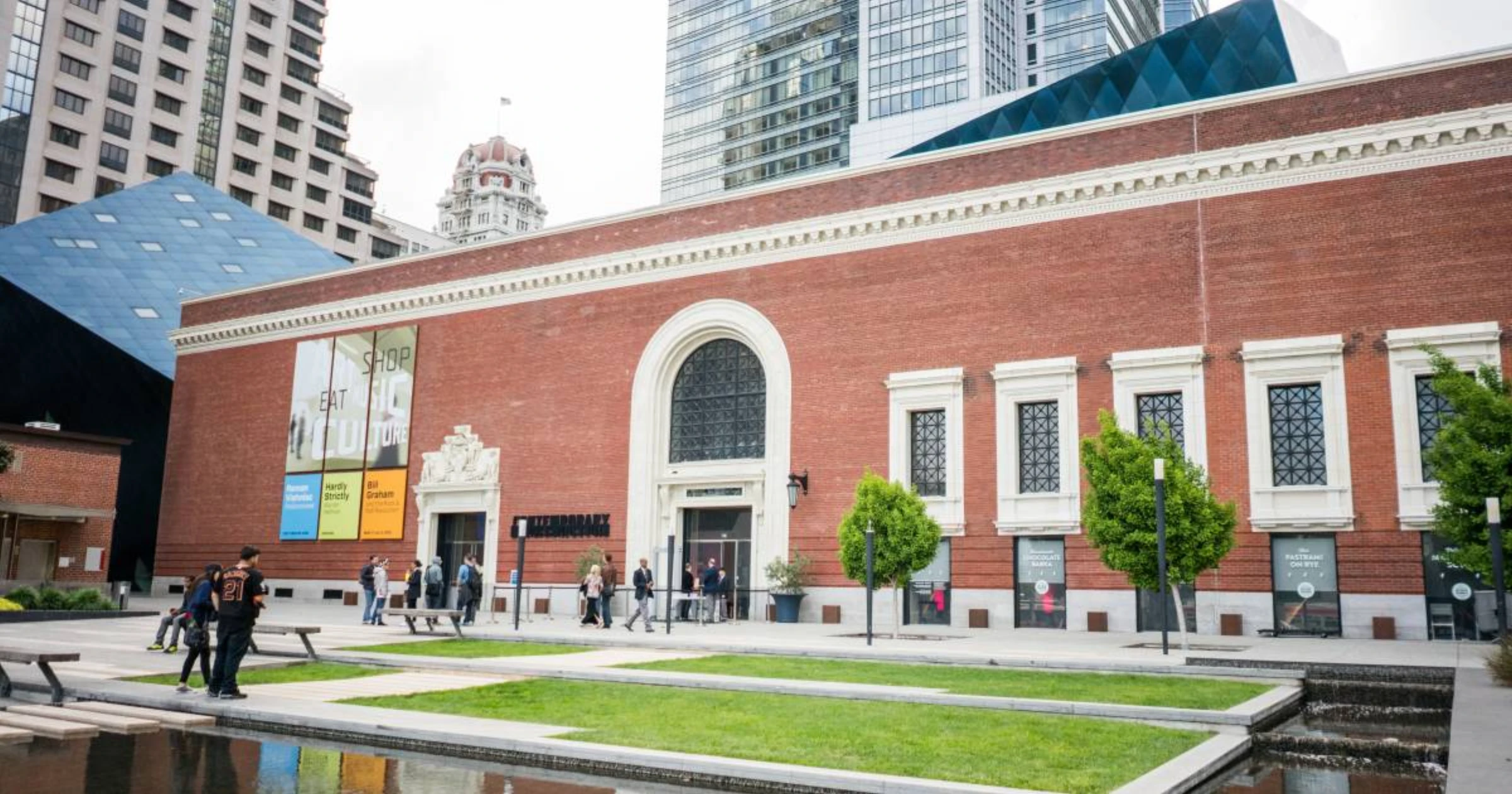
San Francisco’s Contemporary Jewish Museum Plans Sale of Libeskind Building
The Contemporary Jewish Museum is moving to sell its Daniel Libeskind-designed building after deep budget cuts, testing how mission-driven institutions can survive high fixed-cost real estate.
The Contemporary Jewish Museum in San Francisco has announced plans to sell its downtown building, the Daniel Libeskind-redesigned former PG&E substation that has housed the institution since 2008. The move follows a prolonged period of financial stress that culminated in a temporary closure, staffing reductions, and a significant budget reset, detailed by the museum’s press and institutional updates. Museum leadership says the sale is intended to stabilize operations and establish a more viable long-term model. In plain terms, one of the Bay Area’s signature cultural buildings is being converted from mission asset to liquidity strategy.
The immediate numbers explain the urgency. According to recent reporting and public statements around the closure period, the museum reduced annual operating expenditures from roughly $7.5 million to around $3 million and pushed down debt tied to earlier capital financing. Even after that compression, debt service and fixed costs remained heavy relative to current operating capacity. This is a pattern now familiar across US nonprofit arts institutions: real estate and capital projects financed in one philanthropic cycle become difficult to sustain under a different attendance economy and more volatile donor behavior.
The building itself sits inside San Francisco’s Yerba Buena cultural district near SFMOMA, Yerba Buena Center for the Arts, and Museum of the African Diaspora. That proximity made the museum part of a broader urban cultural cluster designed around foot traffic, destination programming, and civic identity. The problem, now visible, is that clustering benefits do not erase individual balance-sheet risk. If one institution carries disproportionate facility burden, adjacency alone does not solve structural deficits.
For curators and trustees, the hard question is how to separate mission from monument. The museum’s public framing emphasizes continuity of purpose, Jewish cultural programming, and convening function regardless of where the organization is physically housed. That framing is strategically necessary. Donors and community stakeholders need confidence that a real-estate transaction is not a de facto wind-down. Still, credibility will depend on what happens next: exhibition pipeline, partnership activity, fundraising narrative, and whether the institution can demonstrate program growth without the symbolic anchor of its Libeskind site.
There is also a governance lesson for peer institutions considering major capital projects. Board enthusiasm for signature architecture often assumes optimistic attendance curves and dependable large-gift cycles over long horizons. The post-2020 environment has challenged both assumptions. Financial resilience now requires stress-testing operating models under conservative scenarios, not only best-case projections. Institutions that fail this test risk moving from expansion rhetoric to emergency asset disposal within a decade.
For the Bay Area ecosystem, the sale is a warning and an opportunity. It is a warning because another institution is publicly acknowledging that legacy cost structures no longer map to current revenue realities. It is an opportunity because transparent restructuring can preserve mission if leadership executes with discipline. The deciding factor will not be the transaction itself, but whether the museum can rebuild a program model that matches contemporary audience behavior and philanthropic conditions while maintaining curatorial integrity. The market for buildings may move quickly. Rebuilding institutional trust takes longer.