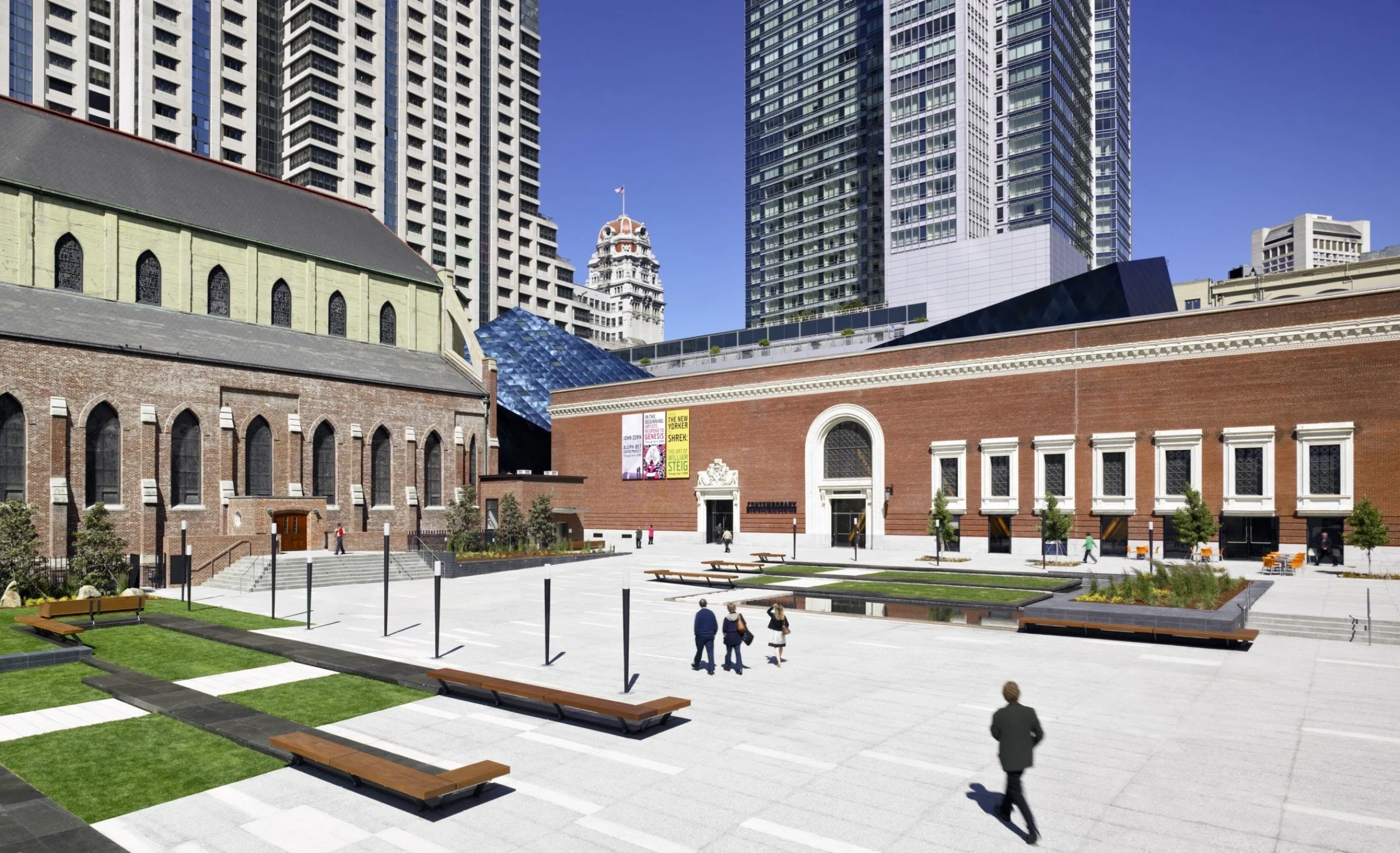
Contemporary Jewish Museum Moves to Sell Its Libeskind Building as San Francisco Pressures Deepen
The Contemporary Jewish Museum says selling its Daniel Libeskind-designed home is meant to stabilize finances while preserving programming through a smaller future footprint.
The Contemporary Jewish Museum in San Francisco is preparing to sell its Daniel Libeskind-designed home, a decision that turns one of the city’s most recognizable cultural buildings into a test case for what museum survival now looks like. According to reporting by The Art Newspaper, the museum says the sale is intended to stabilize finances and preserve programming rather than mark a full institutional retreat.
The stakes are unusually visible because the building itself has functioned as the museum’s public identity since it opened in 2008. The 63,000-square-foot complex combines a historic power substation with Libeskind’s blue steel-clad addition, a structure that helped place the museum firmly inside San Francisco’s cultural-tourism circuit. On Studio Libeskind’s project page, the architect frames the expansion as a symbolic transformation of the existing fabric rather than a tabula-rasa icon. That ambition now collides with a harsher reality: architecture can sharpen an institution’s profile, but it can also become a financial burden when attendance softens and debt remains.
The museum has been closed since late 2024, and its leadership has already made deep staffing cuts. The Art Newspaper reports that the institution is still carrying around $13.5 million in debt, much of it tied to the cost of building and financing its current home. Executive director Kerry King said the museum wants to remain "an essential hub for art, culture and Jewish life" even if its physical home changes. That phrasing matters. It suggests the board is trying to separate mission from address, a distinction more museums may be forced to make in the next few years.
For curators and collectors, the sale is significant not because the CJM is a non-collecting museum, but because it shows how vulnerable program-driven institutions have become when real estate, philanthropy, and audience behavior no longer move in sync. Museums without major encyclopedic collections often have more freedom in their programming, but they can also have less balance-sheet insulation. A landmark building can attract donors and visitors in good years. In lean years, it becomes a fixed cost with symbolic weight attached.
The museum says it will continue planning exhibitions and collaborations and may operate through partnerships rather than a single owned flagship. That puts it closer to models already visible elsewhere in the Bay Area, where flexibility has become more valuable than square footage. The logic is blunt: if ownership of a major building threatens the institution’s long-term viability, then divesting the building can be framed as a cultural preservation strategy rather than a cultural loss.
Still, something real is lost when a museum gives up a purpose-built home. Buildings shape audience habits, donor confidence, and civic memory. The CJM’s site at 736 Mission Street helped place Jewish contemporary culture inside the core of downtown San Francisco, not at its margins. To become more nomadic may be fiscally rational, but it also changes the terms on which the museum meets the public.
The next question is whether the sale becomes a one-off restructuring or part of a broader pattern. Across the US and UK, institutions are experimenting with closures, seasonal programming, partnerships, and asset-light operations. The CJM is simply doing it in a building prominent enough that the move cannot be disguised as routine management. If the museum can preserve curatorial seriousness after surrendering a trophy address, the decision will look disciplined. If it cannot, the sale will read as another warning that architectural prestige has ceased to guarantee institutional durability.