Contemporary Cools Again as Old Masters Regain Market Ground
New Art Basel/UBS figures show the global market back in growth mode, but the recovery is uneven: high-end lots and historical categories are lifting totals while contemporary remains under pressure.
The global art market rose 4% in 2025 to $59.6 billion, according to the latest Art Basel and UBS report. The headline invites relief after two contraction years. But the internal structure of that growth is the real story, and it is stricter than the topline suggests. Activity improved, yet confidence remains highly selective and increasingly concentrated in categories with deep institutional legibility.
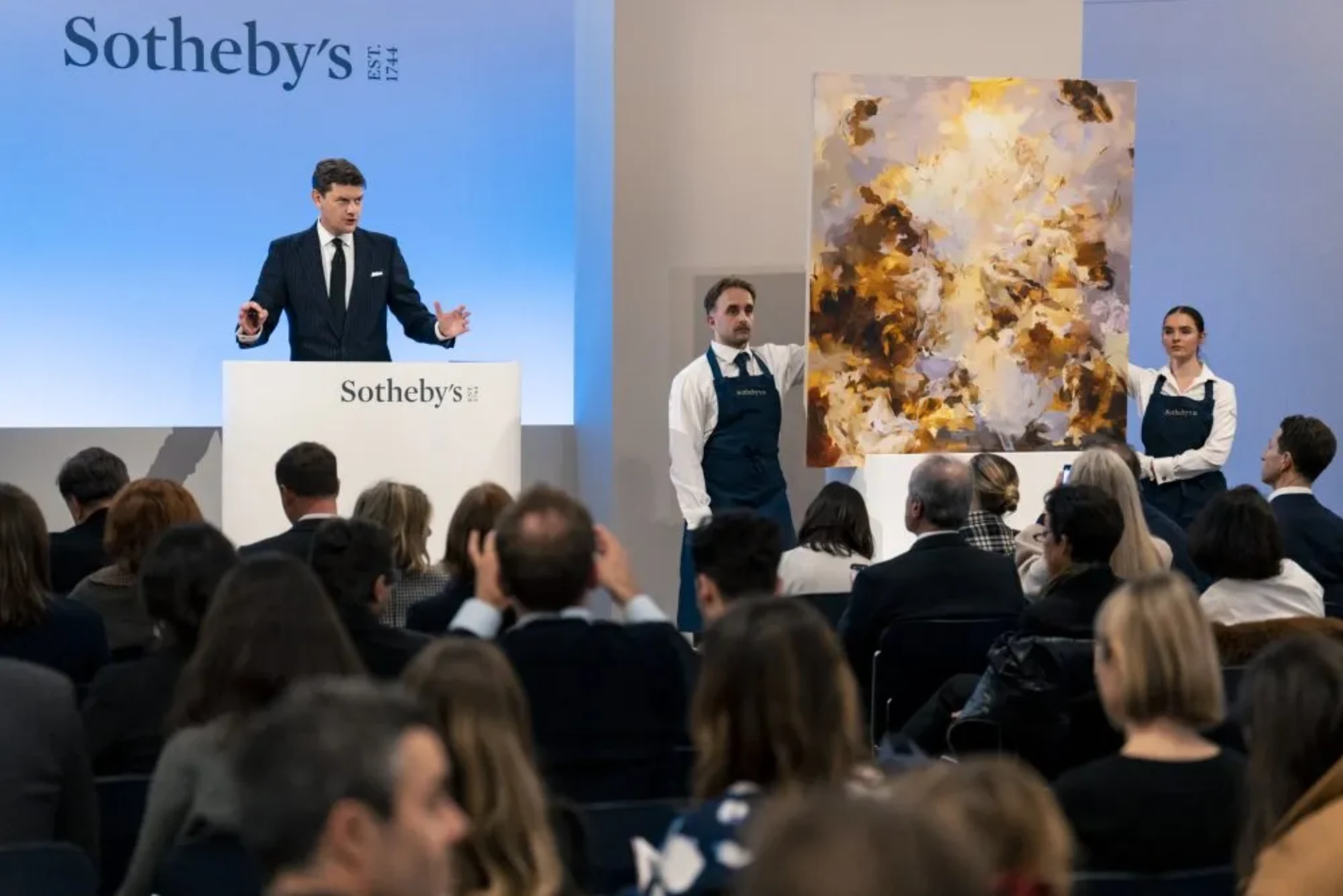
Read against 2022’s higher peak, 2025 does not look like exuberant expansion. It looks like controlled reallocation. Capital is still present, but less patient with speculative narratives that drove post-pandemic contemporary buying. What rose most clearly was public auction performance at the upper end, where proven names and historically grounded works still clear with conviction.
That concentration matters because it resets the operating assumptions of the entire ecosystem. For emerging and mid-career contemporary artists, the old playbook of rapid primary-market escalation, followed by fast secondary validation, has weakened. The market is still buying contemporary work, but it is rewarding curatorial depth, scarcity discipline, and long-horizon institutional framing rather than velocity alone.
The rebound in Old Masters and Impressionist categories is often framed as cyclical nostalgia. It is better read as risk calibration. In uncertain macro conditions, buyers move toward assets with thicker provenance chains, robust scholarship, and a broader consensus architecture among museums, advisors, and collectors. That pattern has historical precedent and is visible again in current sale results.
This also clarifies why public auctions outperformed private channels in the report year. Public sales provide transparent price discovery and social proof in a market where confidence has become more conditional. Private transactions remain essential, but in cautious climates they can lag when counterparties disagree on valuation anchors.
For galleries, the implication is strategic, not cosmetic. Inventory strategy has to tighten. Programmes built around hype-cycle timing will underperform versus programmes built around argument, placement, and museum-grade contextualization. For collectors, the operating question is no longer who is hottest; it is which works remain defensible under scrutiny five to ten years out.
Another signal from the report is geographic resilience under policy stress. The US retained its lead while trade friction and tariff uncertainty continued to pressure cross-border flow. That combination creates a paradoxical market: liquid at the top, fragile in the middle, and operationally complex almost everywhere. Stakeholders who can navigate logistics, compliance, and financing conditions will hold an edge that is as important as taste.
The 2025 data therefore marks neither collapse nor full recovery. It marks a regime shift toward selectivity. If 2026 follows the same contours, successful actors will be the ones who can articulate value in cultural terms and withstand financial due diligence at the same time. The era of easy contemporary momentum is not over forever, but it is over as default.
A final practical implication: boards and advisory committees should treat this cycle as a governance test. Acquisition committees that document rationale, scholarship depth, and long-term care costs will outperform committees that still chase momentum headlines. In a selective market, process quality becomes visible very quickly.
Primary references and context: Art Basel, UBS, Sotheby's, Christie's, and policy context from the Art Fund.