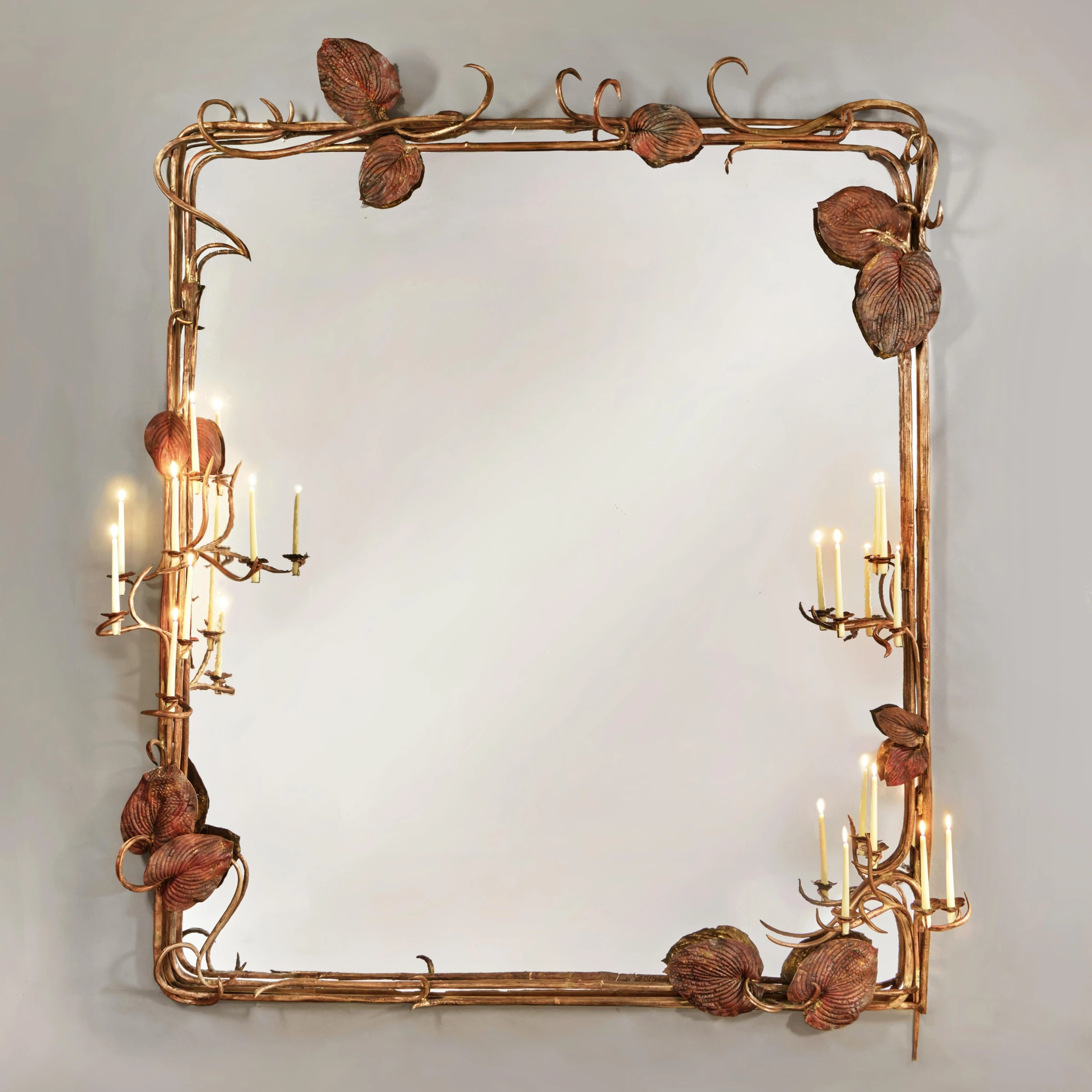
Claude Lalanne Mirror Ensemble Sells for $33.5 Million at Sotheby's, Resetting the Design Ceiling
A 15-piece mirror ensemble commissioned for Yves Saint Laurent and Pierre Bergé doubled its high estimate and reset the market hierarchy inside Les Lalanne.
Sotheby's design sale in New York delivered a result that will ripple through galleries, advisors, and private-sale desks for months: Claude Lalanne's ensemble of mirrors made $33.5 million with fees, more than double the high estimate and a new auction record for the artist. The lot, sold from the collection of Jean and Terry de Gunzburg, was not an isolated decorative object but a 15-part environment first commissioned for Yves Saint Laurent and Pierre Bergé, a provenance line that still functions as hard currency at the top of the secondary market.
The sale matters because it shifts the internal pricing logic of Les Lalanne. For years, the market treated François-Xavier Lalanne as the heavier financial engine while Claude's prices, even when strong, were usually framed as adjacent. This week's result reverses that framing in practical terms. One monumental Claude lot has now crossed above the old benchmarks that shaped advisor conversations for much of the last decade.
At a structural level, the lot had the ingredients collectors compete hardest for: rarity, scale, coherence, and narrative. The mirrors were conceived as a unified commission, then passed through one of the most scrutinized provenances in postwar collecting, then reappeared with museum exhibition history. In an era when buyers are often selective and transactional, this kind of object still compresses hesitation.
Market observers should avoid reducing this to celebrity provenance alone. The critical point is category pressure. Design has been absorbing capital that once defaulted to painting because top buyers now seek sculptural utility, historical authorship, and interior impact in one acquisition. A lot like this one functions almost like architecture: it reorganizes a room, not just a wall.
The relevant institutional context sits in plain view. Sotheby's has continued to professionalize design presentation, borrowing staging logic from contemporary art evening sales. That strategy amplifies confidence among cross-category bidders who already buy postwar and contemporary art. The same bidder who can evaluate a major sculpture can now evaluate a design ensemble through a similar lens of uniqueness and canon formation at Sotheby's Design.
This sale also arrives while estates, foundations, and galleries are refining the scholarship around both Claude and François-Xavier Lalanne. As cataloguing improves, attribution confidence rises, and with it, buyer willingness to stretch. Institutional framing at places like the Musée des Arts Décoratifs has already broadened who sees these works as central, not niche.
For collectors, the immediate takeaway is discipline, not imitation. Record results attract opportunistic consignments, and quality dispersion widens quickly after a headline lot. Buyers need to distinguish between museum-grade works and objects that merely borrow the language of botanical fantasy. The provenance chain, condition reporting, and scale-to-room relationship all matter more now because prices have moved into the zone where mistakes are expensive and public.
For curators, this is another data point in a longer correction. The design market is no longer operating as a side corridor to modern and contemporary art. It is writing its own price history in real time, often with more conviction than sectors weighed down by over-supply. Once a work like this resets expectations, private transaction floors move, loan negotiations change, and institutions that have delayed design acquisitions face steeper entry costs.
The record, in short, is both symbolic and operational. Symbolic because it confirms Claude Lalanne's authorial position at a new level, operational because it changes how the next season will be priced, marketed, and contested. The hammer fell in New York, but the aftershocks will be visible in Paris, London, and every advisory memo written before the June sales.
One final pressure point is supply. Trophy-scale Claude Lalanne works with exceptional provenance do not appear in predictable volume. That scarcity gives auction houses pricing power, but it also raises diligence standards for every adjacent lot that will inevitably come to market in the wake of this headline. The buyers who perform best in this environment will be the ones who separate true rarity from opportunistic substitution.