Christie’s Paris to Offer a Rare Double-Sided Van Gogh Drawing Confirmed by the Van Gogh Museum
An almost unknown double-sided Van Gogh drawing from Auvers-sur-Oise will be offered in Paris with museum-backed authentication, reframing late-period process studies as high-value market objects.
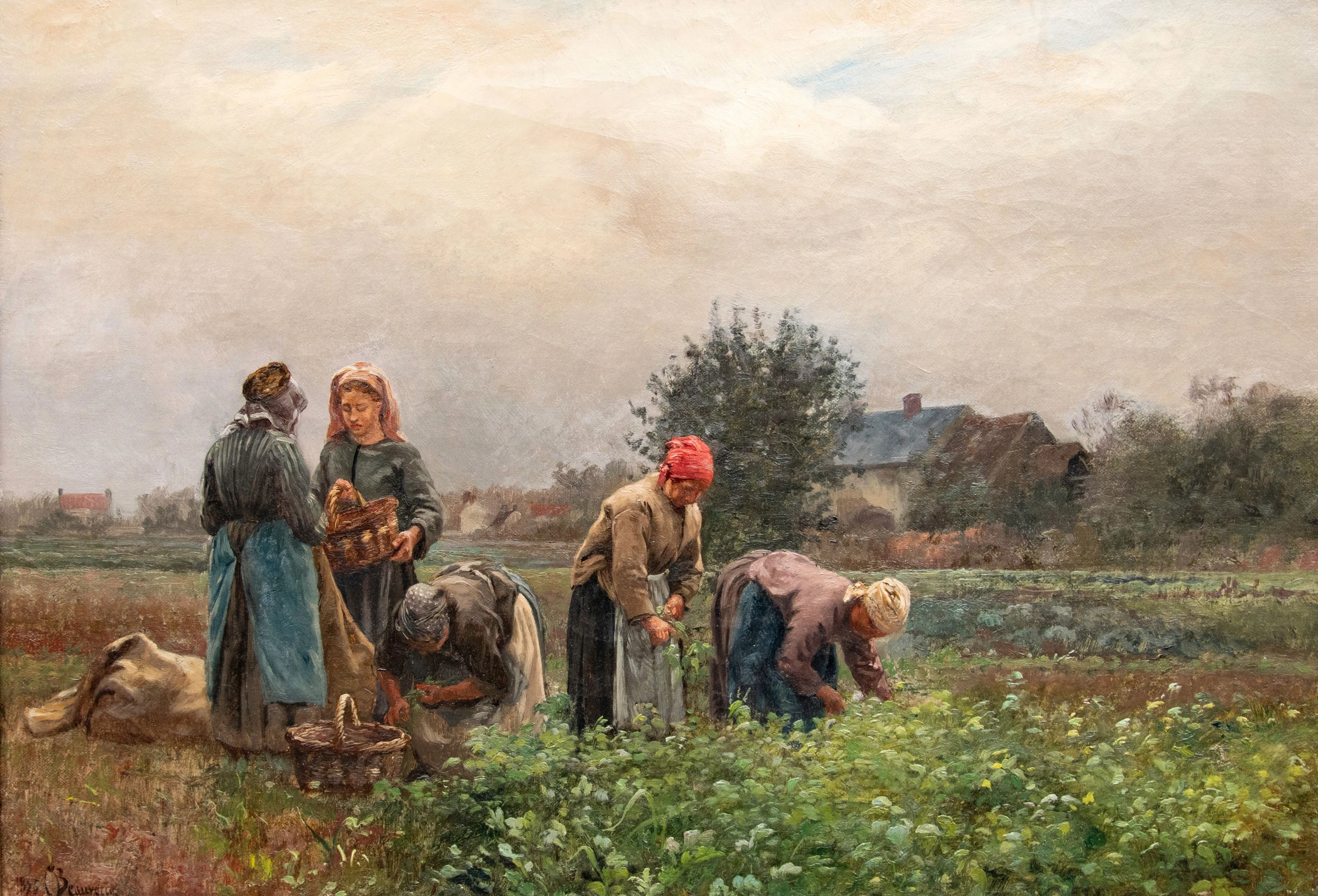
Christie’s Paris is set to offer a double-sided Van Gogh sheet from the artist’s final months in Auvers-sur-Oise, with an estimate of €100,000 to €150,000 and authentication confirmed by the Van Gogh Museum. On one side is a drawing of pea pickers in the field, on the reverse a landscape study with color notation. The work has had exceptionally limited public exposure, reportedly shown only once in 1959 before dropping out of mainstream catalog circulation.
This is a market event with real scholarly stakes. Late Van Gogh works are regularly discussed through paintings, but preparatory sheets with color instructions open a different analytical lane, they expose process. Terms such as “vert bleu,” “jaune,” and “violet,” inscribed directly on the sheet, point to compositional intention at the threshold between observation and oil execution. That makes the object relevant not only to buyers but also to curatorial teams working on late-period narrative and conservation research.
The provenance chain is also unusually legible by current standards. The sheet was reportedly connected to Dr. Paul Gachet, moved through family hands, entered an Argentine collection context, then passed to a Spanish owner whose descendants are now consigning it. For the auction market, that level of narrative continuity does not eliminate risk, but it does reduce ambiguity compared with many works that surface with abrupt postwar gaps.
What makes this sale especially interesting is that the drawings appear tied to unrealized or lost paintings. If no corresponding canvases survive, the sheet functions as a proxy record for compositional ideas that never entered the canonical painted corpus. In practical curatorial terms, this is where works on paper can rebalance period interpretation. They document the artist’s directional choices even when final works are absent, destroyed, or untraced.
For collectors, the estimate reads comparatively modest against blue-chip Van Gogh price levels, but category matters. Drawings operate under different liquidity and audience dynamics than oils. Buyer profiles tend to include institutions, specialist collectors, and research-driven private holdings rather than trophy-focused capital alone. The acquisition logic is often intellectual depth first, headline value second, although those priorities can invert quickly when scholarship amplifies rarity narratives.
The sale also lands in a moment when museums and houses are leveraging technical confirmation as a trust accelerator. Authentication by a major institution does not end debate in every case, but it substantially shifts burden in cataloguing, insurance, and exhibition planning. In that environment, houses capable of pairing object quality with strong documentary framing are likely to outperform on confidence-sensitive consignments.
There is a strategic angle for institutions too. If the sheet enters a private collection, public access may narrow unless loan terms are proactively negotiated. Museums that want these works in research circulation need earlier intervention, either through acquisition, co-acquisition, or structured long-term loan conversations at point of sale. Waiting for post-sale diplomacy often means accepting weaker terms and shorter visibility windows.
Finally, this lot sits within a broader correction in how the market values process evidence. Studies, annotations, and working documents are no longer peripheral to the “real” object; they are increasingly treated as core intellectual assets. In Van Gogh’s case, where myth has often outrun method, that shift is overdue. The sheet heading to Paris is valuable because it is rare, yes, but also because it offers a disciplined record of how an artist built an image before paint touched canvas.