Christie’s Returns South Asian Modern Sales to London as Category Competition Intensifies
Christie’s will stage its first dedicated South Asian Modern and contemporary sale in London in seven years, signaling sustained demand and deeper institutional interest in the category.
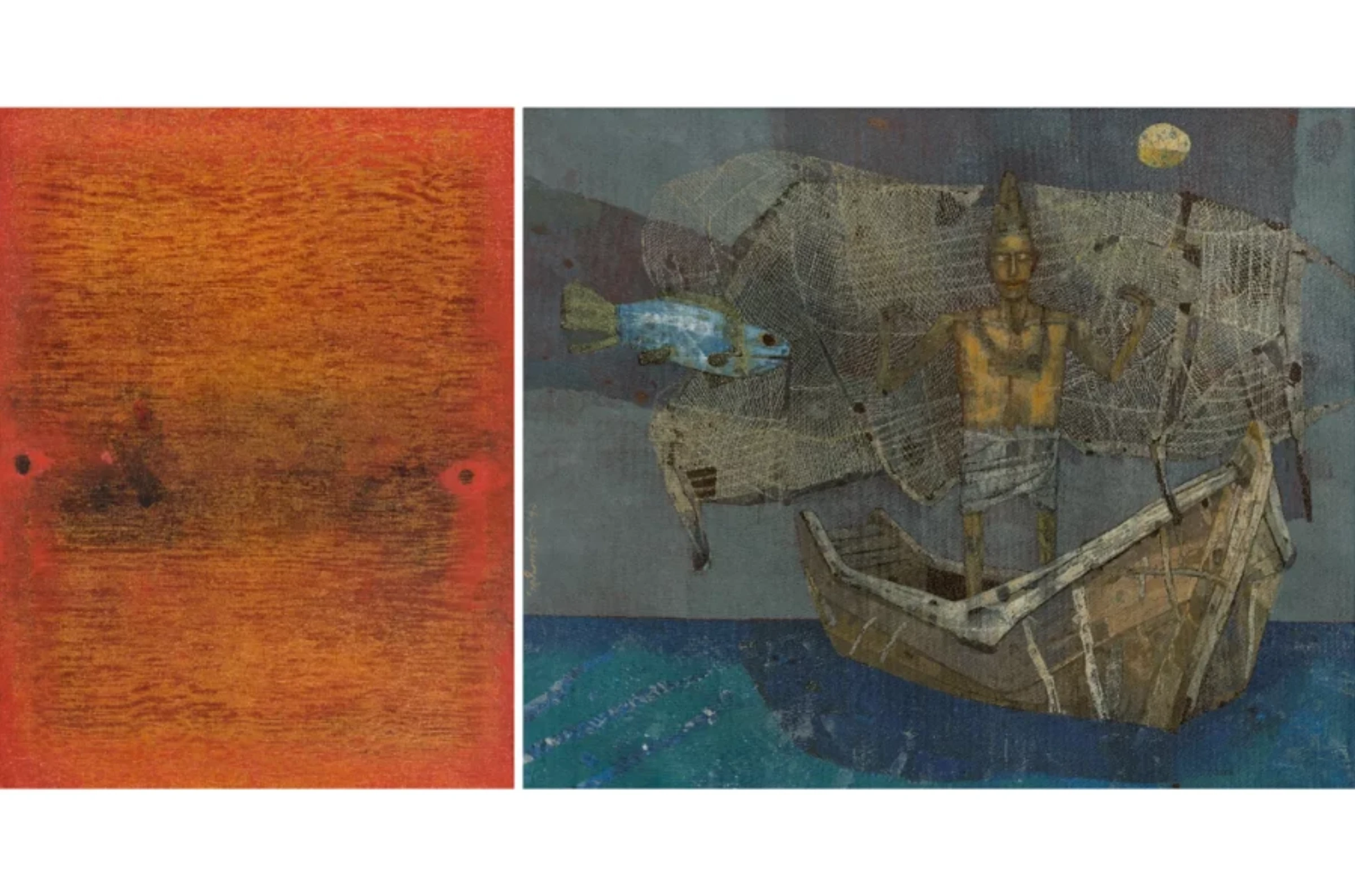
Christie’s decision to hold a dedicated South Asian Modern and contemporary auction in London for the first time since 2019 is more than a calendar adjustment. It reflects a market that has moved from episodic spikes to sustained competitive pressure across houses, geographies, and collecting bases. The June sale, titled Sublime Shadows, is structured around 93 works from a single private collection and arrives after a run of strong totals that have repositioned South Asian categories within the broader postwar and modern field.
The house is not presenting the event as a strategic pivot, but timing and location make its implications hard to miss. London remains a natural crossroads for South Asian collectors, consignors, and advisors, and it offers proximity to summer programming and fair traffic that can reinforce auction momentum. Christie’s is effectively testing whether demand that has been robust in New York can be converted into equivalent confidence in the UK market while rivals are also building market share in the same segment.
Recent sales context supports that bet. Christie’s has already posted a high total for South Asian Modern and contemporary work in New York, while Sotheby’s has expanded its own footprint with record-setting outcomes in London and a broader spread of artist-level breakthroughs. The resulting environment is less about one house dominating and more about which platform can consistently source top-quality material, attract committed bidding at higher estimate bands, and sustain scholarship around artists who were historically under-circulated outside regional collecting circles.
Sublime Shadows appears designed to address exactly that mix of market and historical value. The consignment reportedly includes concentrated holdings in Bengal-linked modernisms and works tied to Santiniketan lineages, including material by artists whose visibility has increased as curators and institutions revisit twentieth-century narratives beyond Euro-American canons. For buyers, this matters because depth within a collection can create stronger price architecture than mixed-owner auctions where quality variance is wider and comparables are less clean.
Institutional context is also shifting in parallel. Over the past two years, major UK institutions including the Royal Academy of Arts, the Serpentine, and the V&A have increased South Asian programming visibility. That curatorial attention does not automatically produce auction results, but it does broaden the interpretive framework around artists entering the secondary market, especially for international buyers who increasingly value provenance, exhibition history, and scholarly context as much as headline estimate narratives.
The London sale also lands as regional competition becomes structurally stronger. Auction firms based in South Asia are scaling operations and marketing internationally, while digital bidding infrastructure has reduced geographic friction for both established and first-generation collectors. In practical terms, that means category leadership will depend less on historical brand prestige and more on execution: consignment quality, specialist credibility, and post-sale confidence among buyers who are now far more selective than during earlier speculative cycles.
For collectors and advisors, the June auction should be read as a market signal rather than an isolated event. If bidding proves deep across estimate tiers, other houses will likely accelerate London and Europe-facing strategies for South Asian material. If not, schedules may retrench around fewer flagship sales in existing strongholds. Either way, the category has entered a phase where pricing, scholarship, and institutional visibility are now tightly linked, and houses that can coordinate all three will define the next stage of growth.