Ch.ACO 16 Bets on Accessible Pricing and Political Edge in Santiago
Chile’s international art fair Ch.ACO opened its 16th edition with a regional mix of galleries, politically sharp booths, and pricing calibrated for first-time buyers.
The 16th edition of Ch.ACO opened in Santiago with a clear proposition: stay international in profile, but keep pricing and scale accessible. In a regional fair circuit dominated by expansion logic, Ch.ACO is taking a different path. It is not trying to replicate the footprint of larger fairs. It is trying to convert attention into durable collecting behavior inside Chile while still attracting curators and dealers from outside the country.
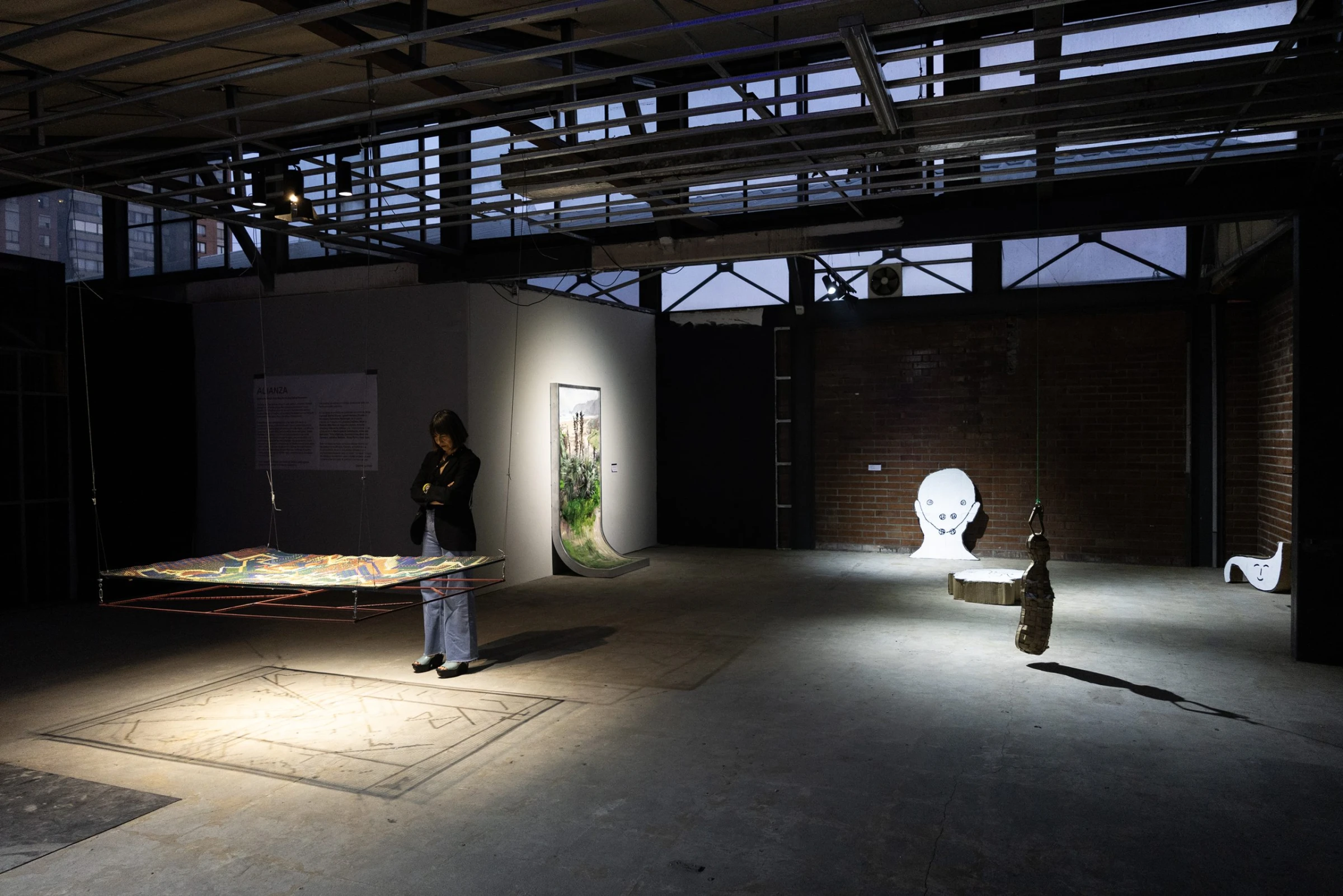
Hosted at Centro Gabriela Mistral, the fair brings more than fifty galleries and project spaces into a compact plan that rewards close looking. The strongest booths lean into material risk and curatorial personality rather than neutral white-cube merchandising. Several presentations foreground installation, political symbolism, and research-driven practice that would often be sidelined in aggressively commercial fair environments.
Organizers have emphasized representation across multiple Chilean regions, not just Santiago. That structural choice matters for institutional buyers who use fairs as scouting infrastructure. Broader regional participation improves discovery and reduces dependence on a small set of capital-city networks. It also gives collectors clearer access to practices that may be underpriced relative to larger market platforms.
Pricing remains the fair’s strategic engine. A meaningful share of works is positioned for entry-level collectors, while larger pieces are often offered at levels far below equivalent asks in larger international hubs. Accessibility here is not branding language, it is market construction. If fairs want to expand collector bases in volatile economies, inventory must support first acquisitions without financial overreach.
Politically inflected work runs across the floor. Rather than isolating social content into a token section, many booths integrate conflict, memory, migration, and civic tension into their core curatorial propositions. The quality is uneven in places, as at any fair, but the signal is clear: galleries believe politically sharp work can convert into sales when presentation is disciplined and pricing is realistic.
Ch.ACO’s smaller scale is a strength, not a limitation. It allows buyers and curators to spend real time with artists and dealers instead of triaging hundreds of booths. That increases the chance of informed acquisitions and serious follow-up. In the current market, Ch.ACO 16 looks less like an event chasing spectacle and more like a fair building long-term collecting infrastructure, which is the smarter play.
The fair’s institutional context inside GAM is not incidental. Venues with strong civic footfall can widen access beyond collector-only audiences and create a pipeline between public curiosity and private patronage. That bridge is crucial for mid-scale markets. Ch.ACO’s model shows how a fair can remain commercial while still operating as cultural infrastructure that feeds museums, residency programs, and long-term artist development.
For buyers entering Latin American contemporary art, Ch.ACO offers a practical advantage: less speculative pressure than at larger hubs, combined with direct access to galleries that understand local production contexts. This can improve due diligence around edition practice, material sourcing, and institutional trajectories. Collectors who do the work now, including follow-up visits to programs like Museo de la Solidaridad Salvador Allende and the Museo de Arte Contemporáneo de la Universidad de Chile, are better positioned to build holdings before broader market repricing catches up.