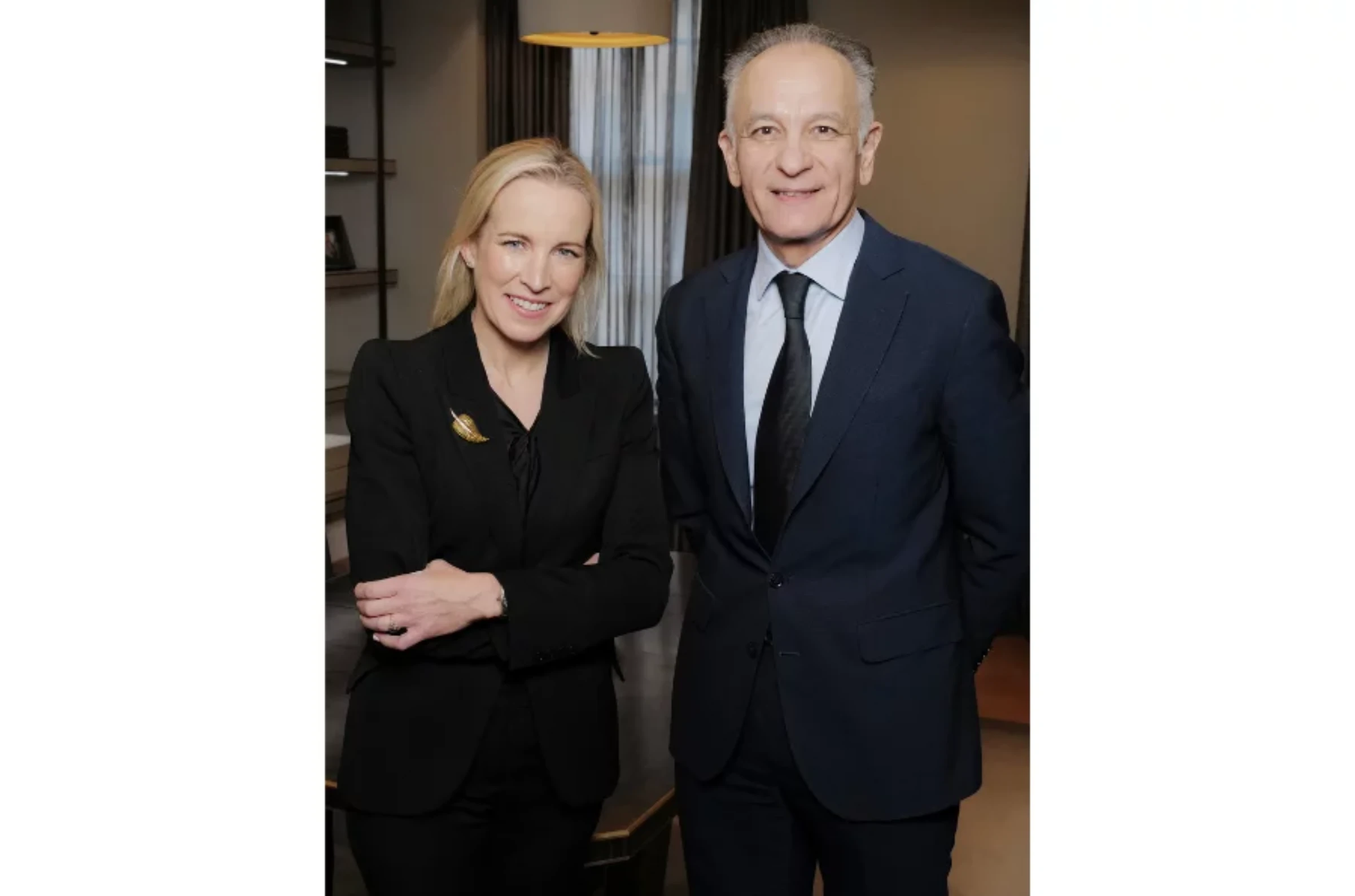
Guillaume Cerutti Leaves Pinault Roles, Resetting Power at Christie’s and the Collection
Guillaume Cerutti’s exit from multiple Pinault-controlled posts concentrates decision-making in the family and signals a new governance phase for Christie’s and the Pinault Collection.
Guillaume Cerutti’s departure from his remaining top roles across François Pinault’s art and sports holdings is more than a personnel change, it is a structural reset at one of the most consequential private power centers in the global art market. According to reporting in The Art Newspaper, Cerutti is leaving not only the Pinault Collection presidency he took in 2025, but also the chairmanship of Christie’s and the board chair role at Stade Rennais. In his place at Christie’s, François-Henri Pinault, chief executive of Kering, assumes direct chairmanship, while François Pinault returns as executive president of the Pinault Collection.
For collectors and consignors, this matters because Christie’s has spent the last decade balancing two competing imperatives: globalized corporate scale and founder-family strategic control. Cerutti’s tenure as chief executive, then chair, coincided with headline-making private collection strategies, including high-visibility sales and deeper competition with Sotheby’s for top estates. His move to the Pinault Collection in 2025 appeared to formalize a transition in which operating authority could be delegated without reducing the family’s broader influence. This week’s reversals suggest the opposite. Authority is not being delegated further, it is being pulled inward.
At a practical level, market participants will watch three things over the next two quarters. First, whether major evening-sale consignments continue to track toward Christie’s at current rates. Second, whether the leadership bench below chair level gains new autonomy or waits for central direction from the Pinault side. Third, how closely programming and relationship management between Christie’s and Pinault-owned cultural assets in Paris and Venice are aligned. The company has already demonstrated that private museums, luxury networks, and auction pipelines can reinforce each other when timing and branding are synchronized.
Cerutti’s own public statement framed the moment as a career transition after a decade that included landmark commercial outcomes, notably the Salvator Mundi cycle and the Paul Allen collection period. Even so, abrupt high-level turnover in tightly held structures tends to produce a short phase of uncertainty for counterparties, especially for galleries and advisors planning cross-season strategy. The question is not whether Christie’s remains powerful, it does. The question is whether its next phase will prioritize managerial continuity or founder-led acceleration in selected categories, geographies, and private-sale channels.
For institutions, there is a parallel implication. Pinault’s museum ecosystem has functioned as a soft-power platform that can influence artist visibility, donor behavior, and the symbolic hierarchy around contemporary collecting. François Pinault returning to an executive role at age 89 is not a ceremonial signal. It indicates the collection remains an active instrument in group strategy. If the family decides to tighten coordination between collection programming, patron networks, and market activity, competitors will need to adapt fast.
The wider lesson is that governance architecture in art-market conglomerates is never neutral. Titles, chairmanships, and succession choreography are often read as administrative details, but they shape risk appetite, timing, and who gets access to decision-makers. Cerutti’s exit closes one chapter of distributed leadership and opens another in which the Pinault family, directly and visibly, sits back at the center of institutional command.