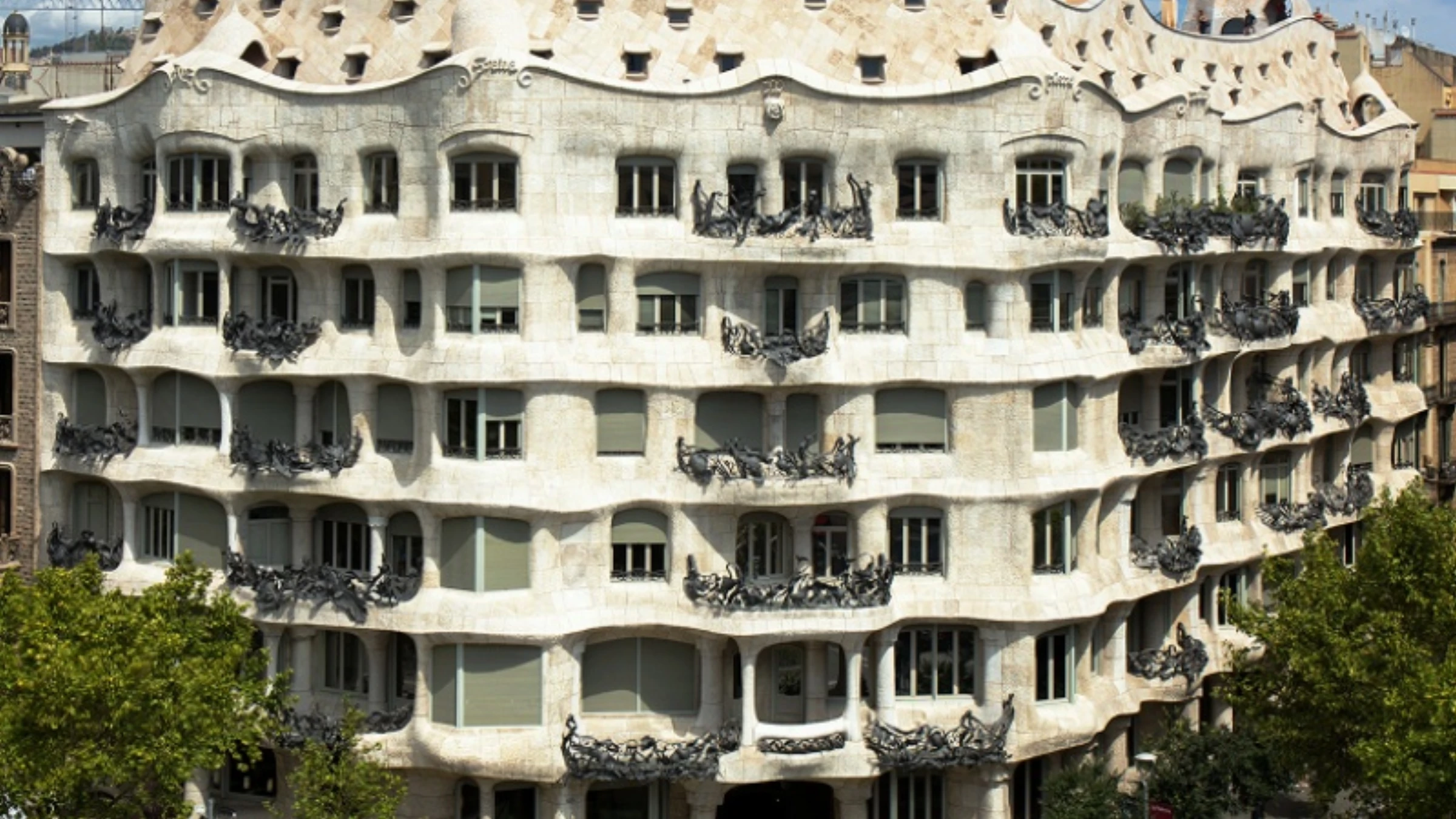
Inside Casa Milà: The Last Residential Holdout in Gaudí’s Landmark
As Barcelona marks Gaudí’s centenary year, Casa Milà’s final long-term tenant reveals the pressure of living inside a global heritage machine.
Barcelona’s Casa Milà is usually discussed as architecture, tourism, and UNESCO branding. A new reported profile of its last resident shifts the frame: it is also housing, tenancy law, and social life under heritage pressure.
Ana Viladomiu remains the final tenant in the building under Spain’s legacy fixed-rent system, a legal structure that predates today’s urban real-estate conditions. Her account describes the daily friction of inhabiting a place consumed by cultural tourism, where privacy is diminished and domestic routines become public spectacle.
The timing is significant. With 2026 marking the centenary of Antoni Gaudí’s death and renewed international focus on Barcelona modernisme, institutions are balancing conservation, programming, and public access. In that context, Casa Milà becomes a case study in what happens when heritage value and residential value occupy the same address.
For curators and planners, the story extends beyond sentiment. Heritage sites are not neutral containers, they are governance systems. Decisions about leases, event use, and visitor flow shape not only conservation outcomes but also the human reality of buildings still tied to everyday life.
The broader takeaway for art-world infrastructure is clear: cultural prestige can hide administrative choices. When institutions speak about stewardship, questions of who gets to remain, who gets bought out, and who defines public use should be treated as central, not peripheral.