Bonalumi Returns to Art Basel as Space-Maker
Mazzoleni’s Art Basel Unlimited presentation revives Agostino Bonalumi’s 1970 Struttura modulare bianca as a serious test of how fairs frame historical work
A Historical Work Enters the Fair on Its Own Terms
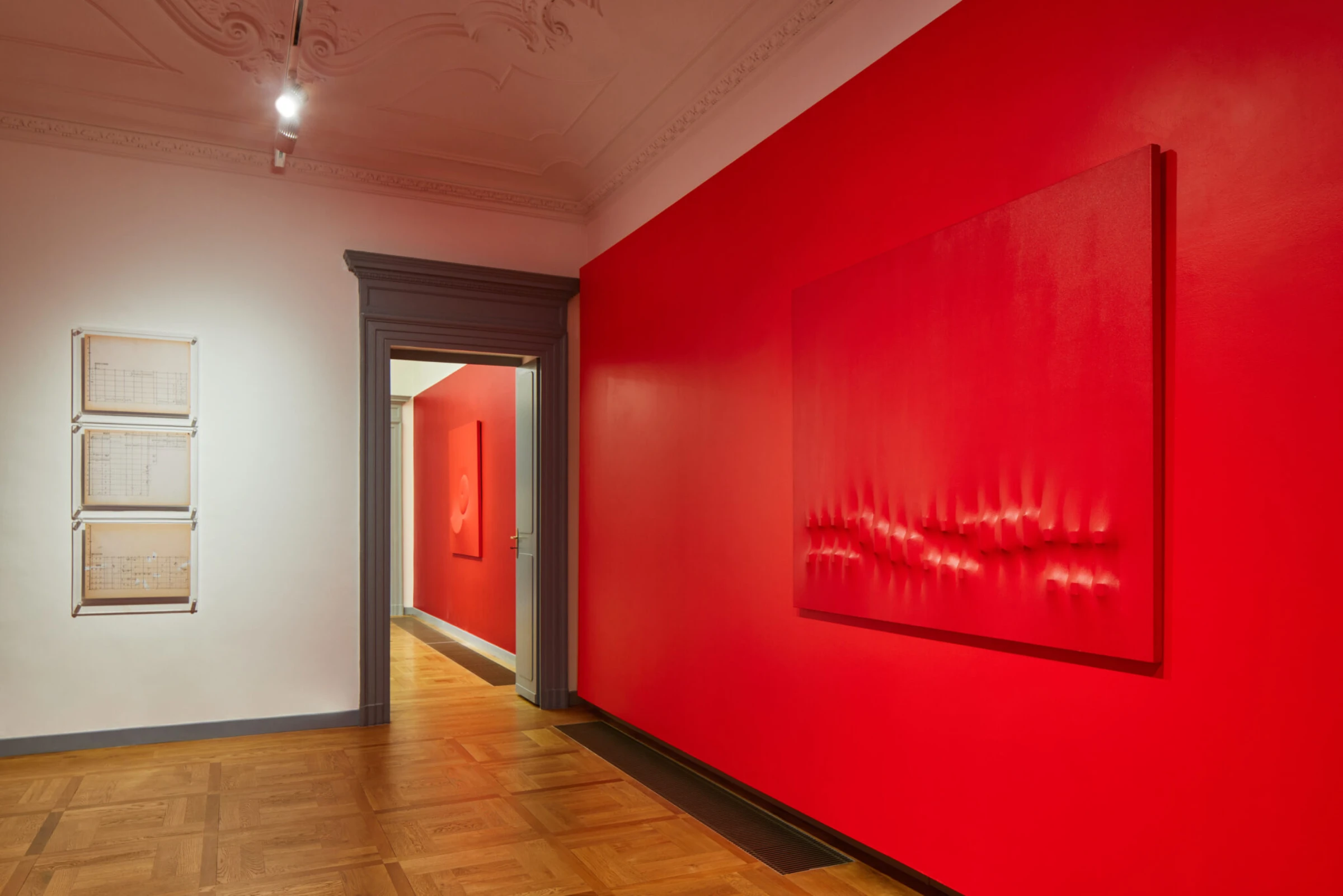
Mazzoleni’s decision to bring Agostino Bonalumi’s Struttura modulare bianca to Art Basel Unlimited is the kind of fair move that can either deepen historical understanding or reduce it to upscale backdrop. The work, first conceived in 1970 for Bonalumi’s Venice Biennale presentation, is not a neat wall object scaled up for spectacle. It is a modular sculpture built from repetition, rhythm, tension, and the viewer’s physical movement through space. As Artnet reports, the presentation comes through a collaboration with Archivio Bonalumi and places the work in Basel’s sector for museum-scale pieces. That placement matters because Unlimited has become one of the few fair contexts where historical sculpture can still ask something of the body rather than just advertise rarity.
Bonalumi’s reputation has often been summarized through the language of shaped canvases and postwar Italian experiment, which is true but insufficient. His work matters because it treated the pictorial surface as an unstable field of pressure rather than a passive support for image. Convexity, concavity, repeated modules, and the choreography of looking were not decorative refinements. They were a method for producing space instead of depicting it. That is why this 1970 work still reads sharply in 2026. It belongs to the history of painting, sculpture, and installation at once, and it does so without begging contemporary viewers to recognize how ahead of its time it was. The work simply behaves with more seriousness than much of the contemporary production that borrows its rhetoric of immersion.
Why Struttura modulare bianca Still Feels Current
The strongest passages in the source interview come when Luigi and Davide Mazzoleni describe Bonalumi’s work as an object painting and, more pointedly, as a generator of restless space. White matters here. Bonalumi strips away chromatic distraction so that shadow, pressure, and edge can do the real work. The surface becomes an instrument for perception. As viewers move, the piece changes without moving. That is a difficult achievement, and it helps explain why historical work like this can outperform more literal experiential art in a fair context. It does not instruct viewers to have an experience. It creates the conditions under which experience becomes unstable and self-aware.
Bonalumi’s place in postwar Italian art also deserves a more exact reading than the usual roll call of peers. Yes, the connections to Fontana, Castellani, and the wider environment of Lo spazio dell’immagine matter. But what distinguishes Bonalumi is the way his work joins discipline to unease. Even at its most orderly, it never feels settled. That is part of why a return to Art Basel Unlimited is interesting. Unlimited can reward works that hold their own across distance and crowd flow, but it can also flatten them into fair architecture. Bonalumi’s sculpture is sturdy enough to resist that fate if the presentation allows viewers enough room to feel its tempo rather than just register its dimensions.
Mazzoleni, the Archive, and the Uses of Historical Positioning
The gallery’s involvement is not incidental. Mazzoleni has spent years building an argument around Bonalumi’s sculptural and environmental ambitions, including prior exhibitions and a sustained relationship with the artist’s archive and scholarship. That matters because historical positioning at fairs can easily become opportunistic. A gallery spots renewed collector appetite for rigorous postwar work, pulls a museum-scale object into the booth economy, and calls the result rediscovery. The better version is slower. It depends on archival labor, estate stewardship, and repeated exhibition contexts that make a fair presentation feel like the latest chapter in an existing case rather than a branding exercise.
In that sense the Bonalumi presentation also says something about the current market. Collectors exhausted by instantly legible spectacle have been moving back toward historical work that can justify attention through formal rigor. We saw a related appetite yesterday in our coverage of Christie’s South Asian London sale, where depth of context and institutional framing mattered as much as headline prices. Bonalumi is not entering Basel as a novelty. He is entering as an artist whose work can absorb renewed scrutiny without shrinking.
What the Presentation Could Clarify About Art Basel Itself
The fair context is still worth scrutinizing. Art Basel Unlimited presents itself as the place where art too large, too ambitious, or too historically significant for the normal booth can breathe. Sometimes that is true. Sometimes it is simply the premium wing of the trade show where scale is monetized through aura. Bonalumi’s Struttura modulare bianca puts pressure on that contradiction. If viewers can encounter the work as a changing perceptual field, the fair has done its job. If they experience it mainly as photogenic proof that the gallery brought something important, then Unlimited has once again behaved like a museum-language annex for sales culture.
Still, there is good reason to think this presentation will land. Bonalumi’s work is unusually resistant to easy consumption because its effects are quiet, cumulative, and bodily. You do not conquer it with a glance. You calibrate to it. That kind of demand is useful in Basel, where overstimulation is part of the business model. A work that slows the eye and makes space feel uncertain can serve as a critique from within the event.
There is also a curatorial argument to make about scale. Many large works in fair environments depend on instant legibility because crowds move quickly and attention is fragmented. Bonalumi’s sculpture works the opposite way. It asks for duration, a shifting bodily relation, and a tolerance for understatement. That makes it a useful corrective inside an art economy increasingly organized around immediate recognition. The presentation can remind viewers that scale is not the same thing as bombast. A work may occupy a large footprint while remaining inward, disciplined, and even reticent. In the current climate, that kind of restraint reads almost radical.
Bonalumi’s return also fits a broader reassessment of postwar Italian art that has moved beyond a few canonical names and into a more nuanced account of how artists tested the boundary between painting, object, architecture, and environment. Younger audiences encountering the work in Basel may find that it clarifies a lineage behind much contemporary installation practice, but without the explanatory overkill that often accompanies contemporary work. Bonalumi does not need to tell you that space is political or contingent. He shows you how a surface can destabilize those certainties through structure alone.
There is an institutional history embedded in the work’s return as well. Struttura modulare bianca was conceived for the Venice Biennale and later shown in other major contexts, but like many ambitious postwar works it has not been as continuously visible as its importance warrants. Reintroducing it now does more than satisfy collector curiosity. It reminds the field that many decisive histories of postwar experimentation still depend on estate stewardship and gallery advocacy to stay visible at all. Museums benefit from that labor even when they do not fund it. Basel’s audience should keep that asymmetry in mind when admiring the work’s survival.
There is also a useful contrast with current market taste for literal immersion. Bonalumi’s sculpture is immersive only in the strict sense that it recalibrates the viewer’s relation to space. It does not add soundtracks, theatrical lighting, or explanatory slogans about participation. That restraint gives it unusual authority. The work trusts perception rather than event design. In a fair full of pieces engineered for the phone camera, that trust can feel almost confrontational, and that may be precisely why the presentation matters now.
For younger artists, the work offers a reminder that formal invention and intellectual ambition do not need to announce themselves in theoretical neon. Bonalumi’s seriousness is built into the object. It unfolds through encounter, not through discourse alone. That is a lesson worth staging prominently at Basel, where explanation often arrives before attention.
That is why this Basel presentation feels more consequential than a standard historical cameo. It offers a work that can slow perception inside a speed-driven market and reward viewers willing to let structure, shadow, and movement do the talking. Art fairs rarely create those conditions on purpose. When they appear anyway, they deserve attention.
It also helps that Bonalumi gives viewers a concrete way to think about abstraction without diluting its difficulty. The work is rigorous, tactile, and plainly made, yet it never settles into illustration. That combination can open the door for audiences who might otherwise treat postwar abstraction as a sealed specialist language. In Basel, where the historical and the contemporary are constantly being priced against each other, that kind of clarity without simplification is unusually valuable.
What Comes After the Fair
The larger question is what happens after Basel. Historical artists benefit from fair attention only when that attention loops back into museum exhibitions, scholarship, and more serious public conversations. Bonalumi has that chance because the archival infrastructure is already there, and because the work’s current relevance does not depend on a trend forecast. It depends on whether audiences remain interested in art that reorganizes space instead of merely illustrating ideas about space.
If Mazzoleni and Archivio Bonalumi can use this Basel moment to widen the artist’s audience without diluting the work’s difficulty, then Struttura modulare bianca will have done something rare in a fair setting. It will have reminded viewers that historical precision can still feel fresh, and that the most durable works do not chase the present. They alter the conditions under which the present is perceived.