Blenheim Palace Finishes a £12m Roof Campaign Built for a Harder Climate
A major conservation project at Blenheim Palace is closing after extensive masonry and drainage work aimed at protecting the UNESCO site from intensified storms and long-term structural risk.
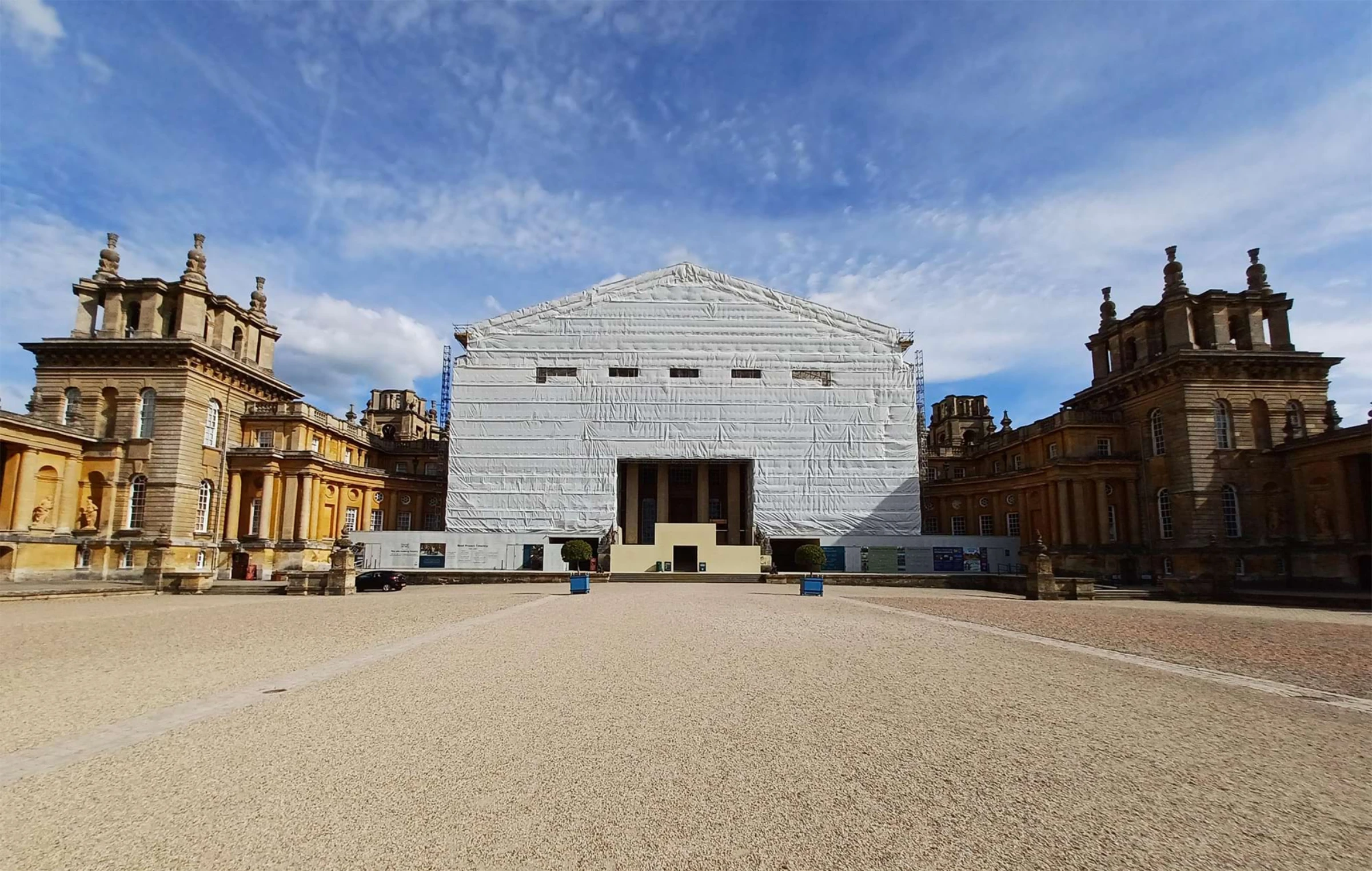
Blenheim Palace is nearing completion of a £12 million roof conservation campaign that reveals how heritage governance is being rewritten by climate pressure. The famous Baroque skyline, crowded with statuary, chimneys, and decorative stonework, has long been treated as monumental scenery. This project reframes it as critical infrastructure that must be engineered against heavier rainfall, thermal stress, and compounding maintenance debt.
The scale is substantial. Conservators and contractors have worked across miles of scaffolding and under temporary weather protection while the estate remained open to visitors. According to project details reported this week, the intervention addressed slipping slates, failing gutters, deteriorating masonry, and timber vulnerabilities that were sending water into roof voids above major interiors. In practice, this was less a cosmetic campaign than a risk-management program for one of Britain’s most visible country houses.
The building’s symbolic weight complicates every decision. Blenheim is both a UNESCO World Heritage Site and a heavily visited destination with event-driven revenue. Closing the palace for an extended conservation window would protect workflows but damage income and public access. Keeping it open preserves continuity, yet it raises logistical and safety burdens. The estate’s choice to expose parts of the restoration process to visitors, including rooftop access during the project period, marks a more transparent model of heritage stewardship.
That transparency matters because climate adaptation is now inseparable from conservation funding. Donors and public stakeholders increasingly want to understand what interventions do beyond preserving appearance. At Blenheim, the argument is concrete: drainage systems had to be rethought, stone failures had to be stabilized, and protective systems had to account for weather volatility that 18th-century builders did not design for. The long horizon is not rhetorical. Without this category of work, interior collections and painted programs face recurrent water risk.
The project also underscores a recurring challenge across historic estates, previous quick fixes can become current liabilities. Nineteenth- and twentieth-century material substitutions, made under financial pressure, often introduced drainage distortions or compatibility problems that are expensive to reverse. Blenheim’s campaign reportedly included undoing some of those inherited compromises, including roof pitch and water-management issues tied to earlier repairs. This pattern is common across European heritage sites now confronting deferred consequences.
Institutionally, Blenheim’s case sits alongside broader UK conversations about the economics of conservation under inflationary labor and materials costs. Large houses are expected to function simultaneously as archives, tourist engines, educational spaces, and regional employers. Capital campaigns therefore carry multiple justifications, cultural, environmental, and operational. A roof project is no longer a backstage technical matter. It is a strategic decision about whether a site can remain publicly legible and financially resilient.
There is also an art-historical dimension. Blenheim’s architecture and sculptural program were conceived for spectacle, but spectacle is vulnerable when material systems fail. Protecting decorated rooflines, monumental statuary, and painted interiors is not simply maintenance. It is preservation of the building’s interpretive coherence, the way visitors grasp the political and aesthetic ambitions embedded in the estate’s fabric.
As scaffolding comes down, Blenheim offers a useful benchmark for other institutions with aging envelopes and high visitor pressure. The lesson is blunt: conservation plans built for older climate baselines are now obsolete. Sites that move early can stage phased interventions on their own terms. Sites that wait are more likely to face emergency repairs, avoidable closures, and escalating loss. Blenheim’s roof campaign reads, above all, as a timely recalibration of what responsible custodianship requires in 2026.