Blenheim Palace Finishes a £12 Million Roof Rescue as Climate Pressure Rewrites Heritage Conservation
Blenheim Palace’s year-long roof restoration reveals how major estates are shifting from cosmetic repair to climate-era structural adaptation.
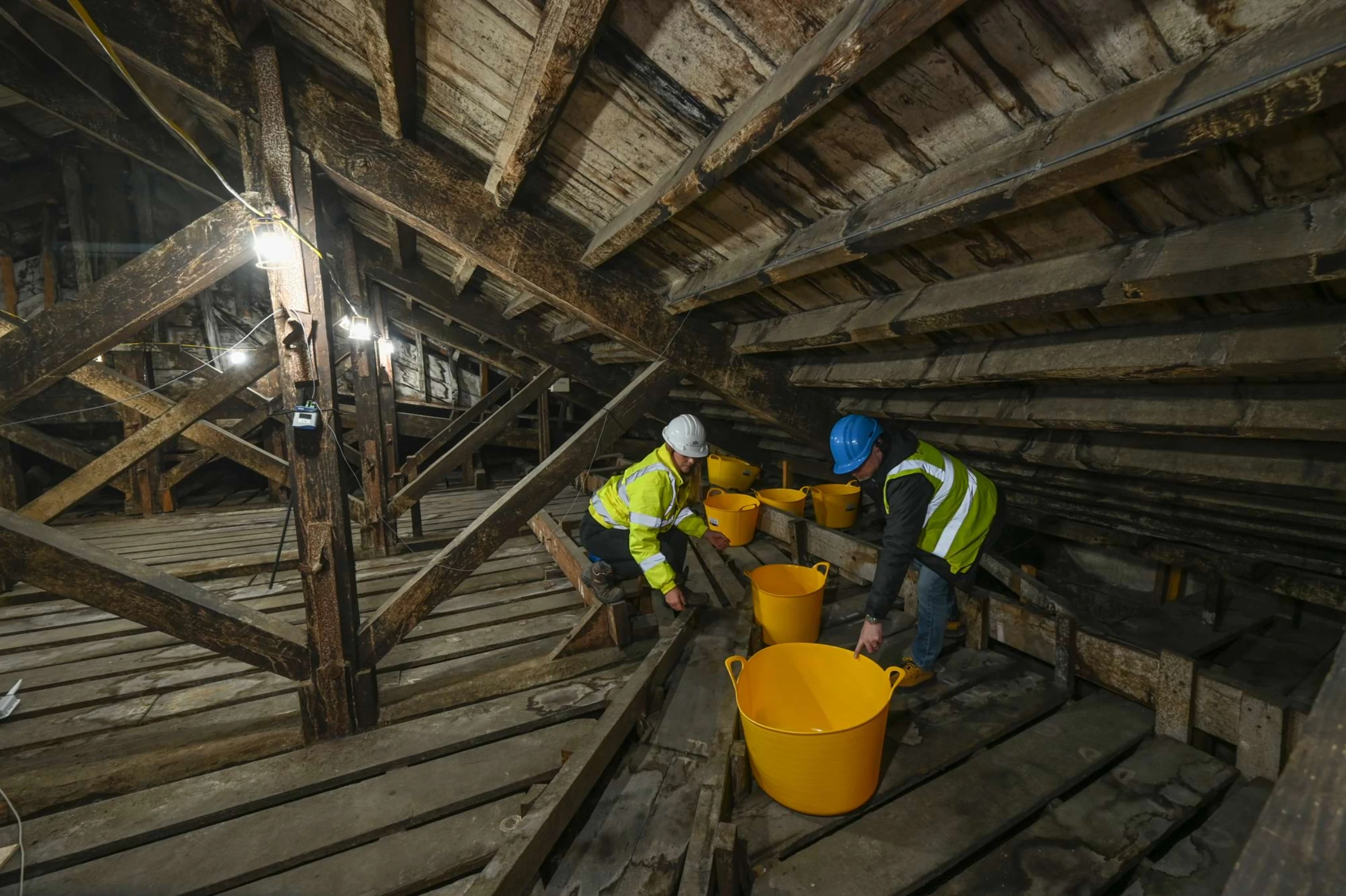
Blenheim Palace is closing out one of the largest preservation efforts in its modern history, a £12 million roof campaign that has functioned as both emergency repair and strategic reset. The Oxfordshire estate, designated a UNESCO World Heritage Site, has spent the last year rebuilding critical roofing systems, replacing failing stonework, and upgrading resilience measures after years of escalating weather stress. What looks from ground level like a stately silhouette of chimneys, statues, and carved stone has, in practice, become a high-risk envelope where water ingress, failing timbers, and unstable masonry can threaten interiors, collections, and visitor safety in one chain reaction.
The scale alone makes the project notable. According to conservation teams, scaffolding stretched for miles of poles and fittings and supported a one-acre protective tent over active work zones. The estate kept operations public through the process, including roof-level access for visitors, which turned technical conservation into visible institutional programming. That move matters because many heritage sites still treat major repairs as background maintenance. Blenheim chose the opposite approach, presenting conservation as part of public culture and site interpretation. For curators and trustees, this is becoming a useful operational model, especially for properties whose financing depends on sustained audience traffic.
The deeper significance is climate adaptation. The restoration team framed the job as preparation for stronger rain events, longer dry periods, and greater thermal stress. That language marks a transition now visible across European heritage management: from periodic patching to future-proofing. At Blenheim, the intervention included reworking roof pitches and drainage pathways, addressing weak points introduced by earlier centuries of ad hoc repairs, and integrating fire and lightning protection as baseline risk controls. For institutions managing large built environments, the lesson is simple and expensive: deferred maintenance no longer stays deferred. It compounds under climate volatility, then returns as capital crisis.
The project also exposed the curatorial implications of envelope failure. Painted interiors by historical artists are often treated as separate conservation domains, yet they sit directly downstream from roofing decisions. At Blenheim, active water penetration above ceremonial spaces made clear that architecture and collections care cannot be budgeted in separate silos. This is increasingly relevant for historic house museums and civic estates where donor culture often prefers visible exhibitions over behind-the-scenes infrastructure. Boards that keep those budgets separated are now making a strategic mistake. Roofs, drains, and structural stone are not facilities overhead, they are collection protection systems.
There is also a policy angle for UK heritage funding. Sites of this scale depend on mixed revenue streams, events income, philanthropic gifts, and public-facing programming. Climate-led repair cycles will demand larger recurring allocations, not one-off rescue campaigns. Institutions that fail to build long-range maintenance funds into governance will move from celebratory anniversaries to emergency appeals with little warning. Blenheim’s approach suggests a more credible path: transparent communication, phased structural works, and public interpretation that treats conservation labor as cultural production in its own right.
For the wider art world, the takeaway is not only about one country house. It is about the operating conditions of heritage stewardship in the next two decades. If a flagship estate with high visibility and broad visitor demand needs this level of intervention now, smaller institutions with weaker reserves are already in the danger zone. The practical benchmark is shifting. Conservation strategy now starts at the roofline.