Blenheim Palace Finishes a £12m Roof Rescue That Reframes Conservation as Climate Infrastructure
The UNESCO site has completed its largest conservation intervention in three centuries, pairing heritage repair with long-term climate resilience.
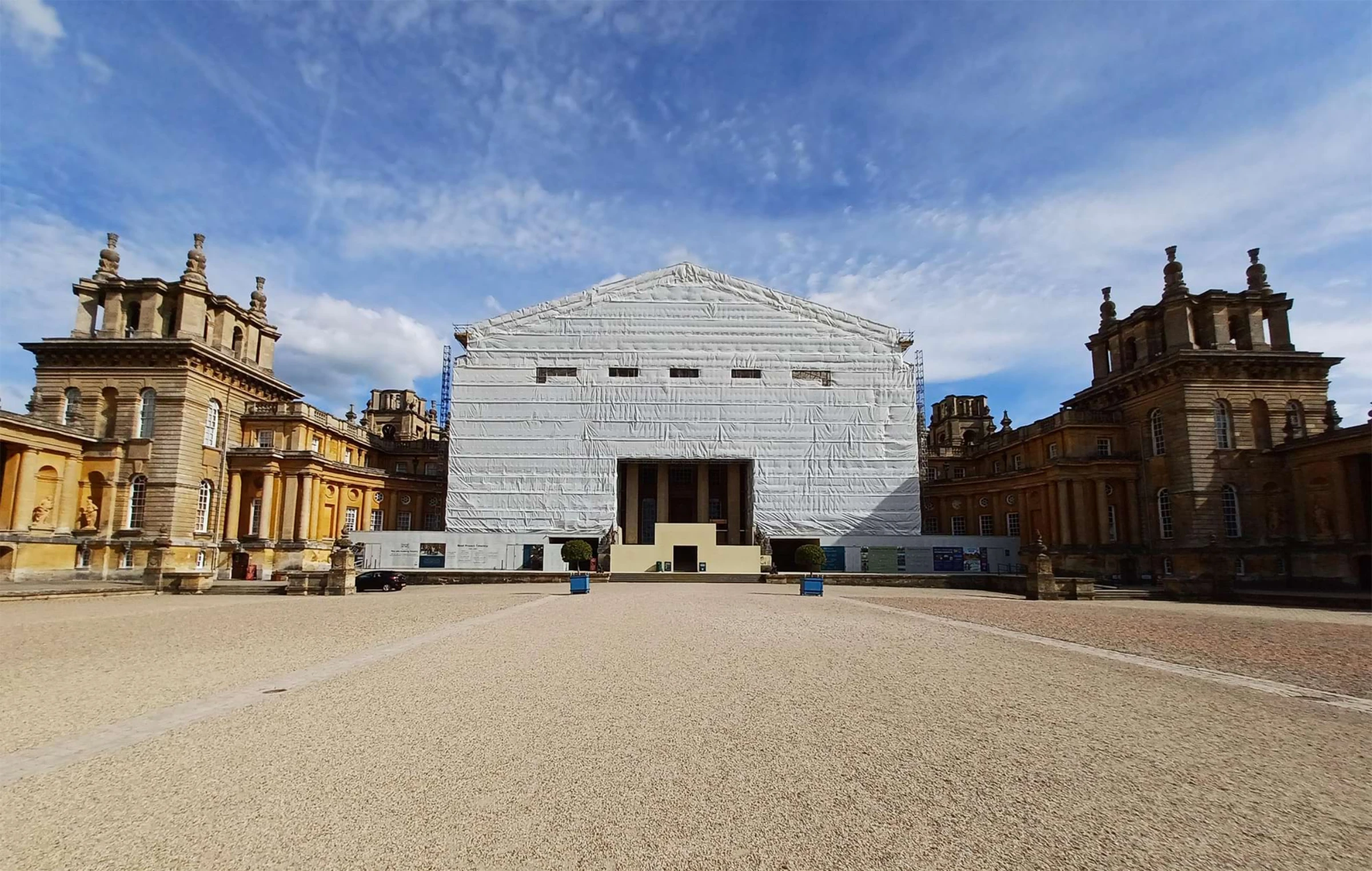
Blenheim Palace has nearly completed a £12m roof rescue that may be remembered less as a repair campaign and more as a strategic pivot in how large historic estates plan for climate instability. The project, led by Donald Insall Associates, has addressed slipping slates, failing gutters, rotting timbers, and degraded masonry across one of Britain’s most complex Baroque roofscapes. The house, designated by UNESCO as a World Heritage Site, remained open to visitors throughout the works.
The scale of intervention is notable. Conservators worked under a one-acre temporary enclosure with 31 miles of scaffolding and around 70,000 fittings, a setup that alone reportedly cost £1.7m. Rather than concealing the process, the estate turned construction into public programming, offering rooftop access and interpretive encounters that made conservation legible to audiences who usually only see finished surfaces. That choice matters. Public heritage funding debates increasingly hinge on visible civic value, not only specialist assessment.
The immediate technical objective was straightforward: stop water ingress. The strategic objective was broader: redesign a vulnerable envelope so the site can withstand heavier rainfall, sharper thermal swings, and prolonged weather stress over coming decades. Project architects have explicitly framed the effort as future-proofing for another 300 years. At Blenheim, conservation is no longer only a question of preserving fabric, it is a question of adapting a historic envelope to contemporary weather volatility.
The intervention also exposed the long tail of prior shortcuts. Nineteenth- and twentieth-century alterations linked to cost pressures, including changes to roof pitches and replacement materials after lead was removed from parts of the structure, had compounded drainage problems. Current works reverse several of those decisions, using compatible materials and rebuilding water-management logic at the level of roof geometry. For conservation professionals, this is a familiar pattern: deferred maintenance and piecemeal interventions eventually become systemic risk.
Inside the palace, teams continue to stabilize and clean major painted interiors while the roof works wind down. The relationship between exterior fabric and interior collections is central here. Once water pathways fail, ceilings, decorative finishes, and movable objects all enter a shared risk field. In that sense, roof conservation is collections care by other means. It protects paintings, plaster, archives, visitor circulation, and revenue functions in a single envelope decision.
There is also an operational lesson for peer institutions. Blenheim kept weddings, tourism, and programming active while carrying out disruptive works, adjusting pricing where necessary and treating inconvenience as a management variable rather than a reason to postpone intervention. Many estates face the same dilemma: close and protect the site, or remain active and absorb complexity. Blenheim chose continuity, betting that transparency would preserve trust.
The project lands during wider Vanbrugh-related programming in Britain, including activity at Sir John Soane’s Museum, and gives that anniversary context practical weight. It reminds us that architectural legacy is not safeguarded through commemoration alone. It is secured through procurement, engineering, envelope diagnostics, and hard capital decisions made before failure becomes catastrophic.
For collectors and trustees watching from outside the UK, the implication is direct. Climate adaptation is not a future line item for heritage assets, it is a current condition of stewardship. The institutions that treat envelope resilience as core infrastructure will preserve both physical heritage and institutional credibility. The ones that continue to defer major maintenance may discover that climate has converted backlog into emergency.