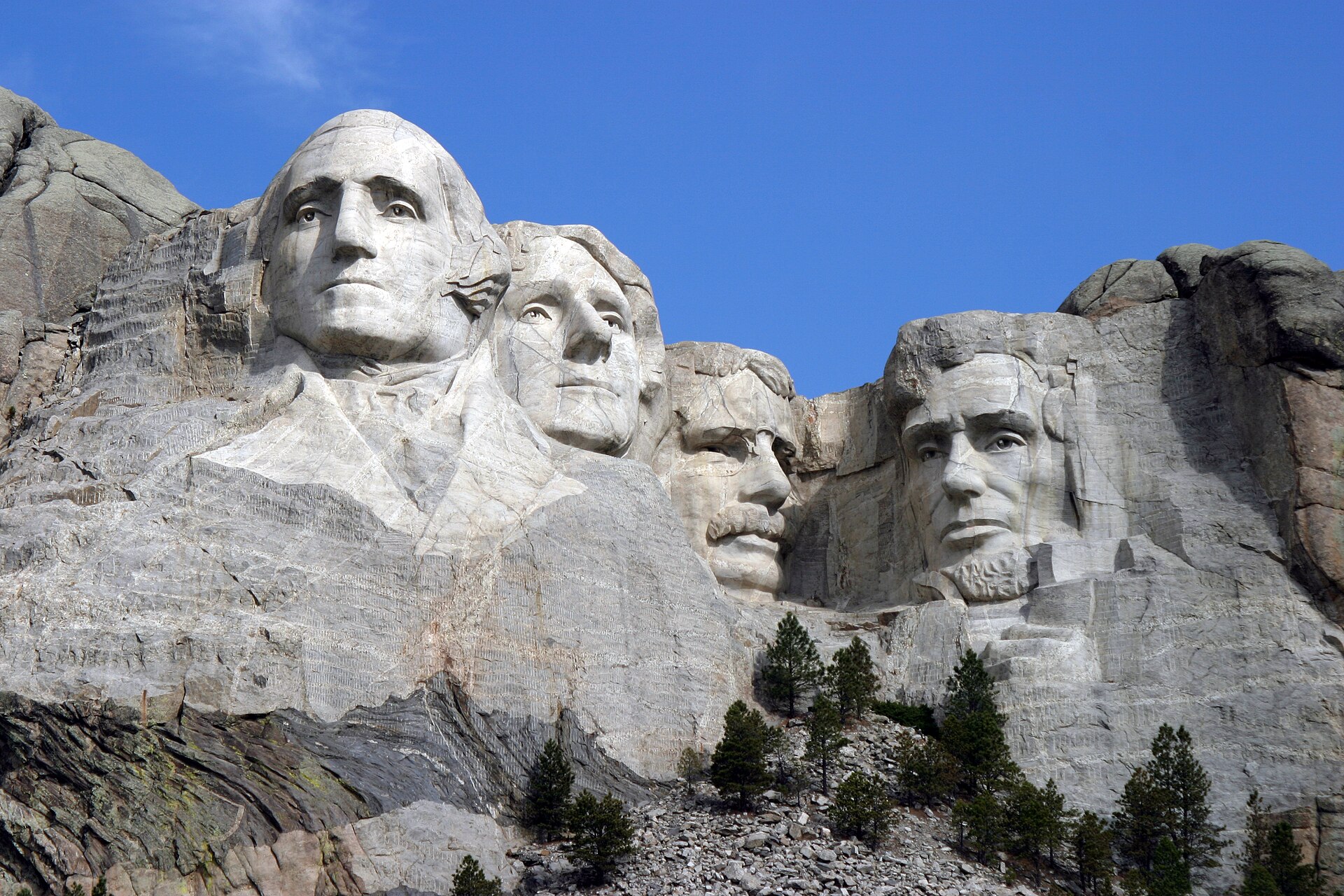
New Book Reframes Mount Rushmore Through Lakota History and Living Testimony
Matthew Davis’s 2025 book <em>A Biography of a Mountain</em> is catalyzing renewed debate in 2026 by shifting discussion of Mount Rushmore from monumental symbolism to land, memory, and Indigenous historical continuity.
Discussion around Mount Rushmore has sharpened again as Matthew Davis’s A Biography of a Mountain, published in 2025, continues circulating through museum, education, and public-history conversations in early 2026. The book does not treat the monument as a fixed patriotic object. Instead, it re-narrates the site through interviews, local testimony, and archival context, foregrounding the Black Hills as Lakota land historically renamed, extracted, and symbolically overwritten.
Davis’s method is central to the book’s impact. Rather than building a single linear account, he layers perspectives from Native organizers, local residents, administrators, and descendants of figures tied to the monument’s making. This narrative structure has brought renewed attention to the original Lakota name, Tȟuŋkášila Šákpe, often translated as Six Grandfathers, and to the long legal and political history surrounding treaty violation and land seizure. In the current climate, where institutions face pressure to move beyond symbolic acknowledgement, that framing has practical consequences.
The strongest contribution of Davis’s project is not a single revelation, it is the insistence that the mountain cannot be discussed apart from the people for whom it has never stopped being occupied land.
The book also reopens scrutiny of sculptor Gutzon Borglum’s ideological affiliations and the monument’s historical entanglement with broader American memorial politics. For curators and public historians, this matters because interpretation at major national sites is not neutral administration, it is narrative governance. Every label, tour script, and educational panel can either reinforce mythic exceptionalism or expose the layered conflicts that produced the monument.
One of the most discussed sections concerns former National Park Service superintendent Gerard Baker, who argued that visitors should leave with hard questions rather than patriotic reassurance. That curatorial philosophy has become a reference point for those pushing institutions to treat discomfort as pedagogical value rather than reputational risk. It also aligns with wider debates across U.S. museums about whether institutional authority should preserve consensus stories or make contested histories legible.
What this conversation clarifies is that Rushmore is no longer interpreted only as a completed sculpture from 1941. It is now read as an active site where questions of sovereignty, commemoration, race, and state power remain unresolved. In that sense, the book functions less as retrospective and more as intervention, one that asks whether the dominant representational order of U.S. monument culture can be revised without first confronting the violence that made it possible.
The timing is especially acute as public institutions prepare U.S. semiquincentennial programming. Anniversaries tend to reward closure narratives, but this debate points in the opposite direction. Any serious commemorative framework now has to reckon with parallel timelines, Indigenous continuity, settler expansion, federal violence, and civic myth-making, rather than presenting national belonging as a settled inheritance. Curatorial neutrality in that context is a choice, not an absence of choice.
For the art field, the lesson is straightforward. Monument discourse can no longer rely on formal analysis alone, scale, carving, composition, iconography, while deferring the politics of land and forced erasure to footnotes. The terms of interpretation have shifted. Institutions that ignore that shift risk becoming archives of outdated consensus rather than spaces where public memory is critically produced, debated, and revised in public, across classrooms, labels, tours, and civic programming.