Arthur Bondar's 35,000-Negative Archive Reframes WWII Memory Politics
Photographer and collector Arthur Bondar has preserved and smuggled a vast archive of WWII negatives into exile, positioning raw photographic records against state-manufactured war narratives.
Arthur Bondar's archive of roughly 35,000 World War II negatives is becoming one of the most consequential private image repositories in Europe, not because it is comprehensive, but because it preserves source material at a moment when war memory is being aggressively rewritten.
Bondar, a Ukrainian photographer formerly based in Moscow, says he prioritizes negatives precisely because they are harder to manipulate than prints. That choice is methodological as much as moral: preserve the source layer, and you preserve the possibility of verification.
The political stakes are immediate. Bondar moved key portions of the archive out of Russia in 2023 in multiple high-risk trips, during a period when legal pressure around wartime narratives intensified and critical depictions of Soviet military history became increasingly dangerous.
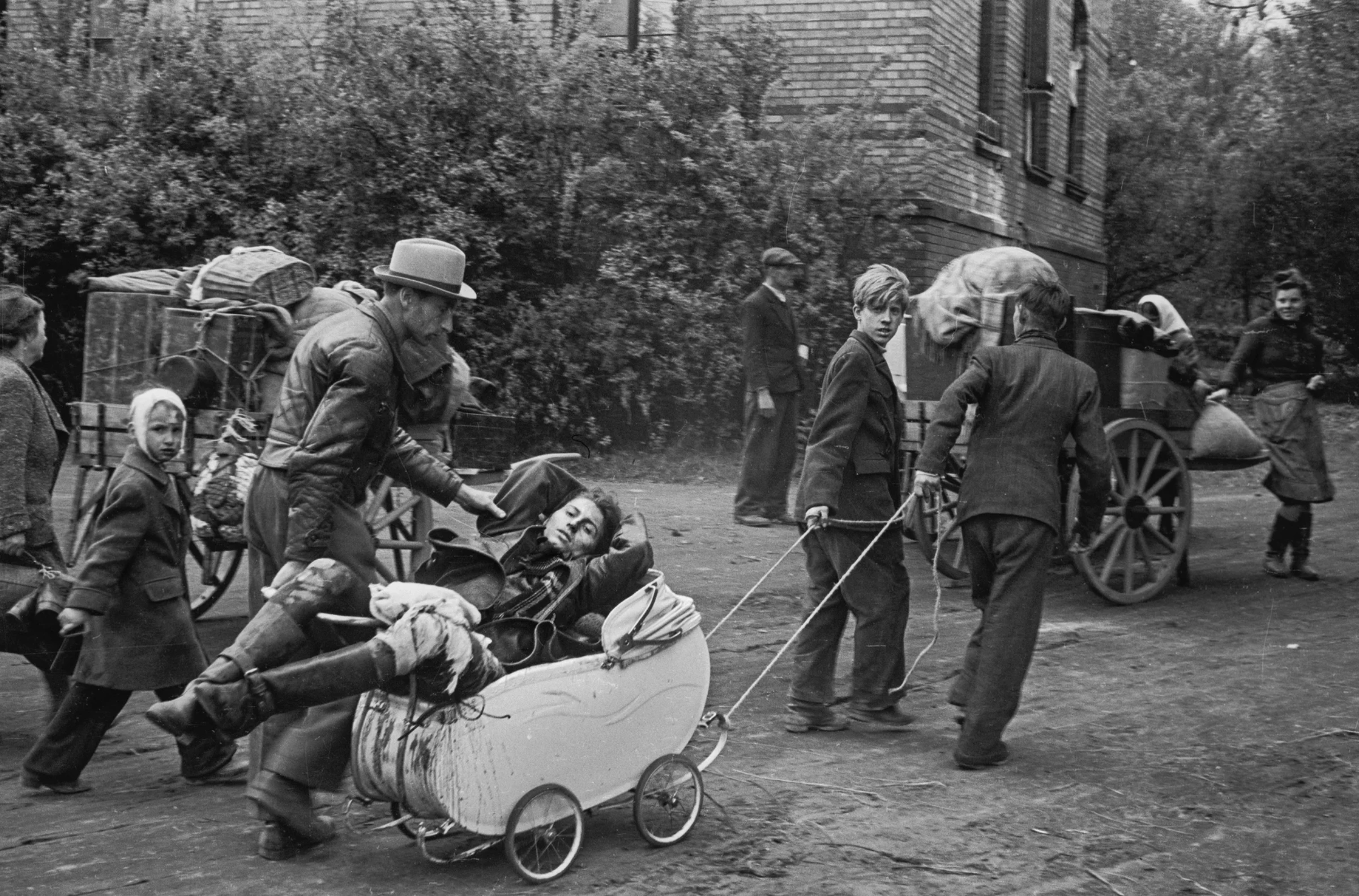
What the images show is not triumphant spectacle but complexity: wounded soldiers, exhausted civilians, mundane routines, and fragile moments that resist clean heroic scripting. In that sense, the archive functions as an anti-propaganda instrument.
His materials span professional and amateur photographers across geographies, including Soviet and allied contexts. That breadth matters because memory monopolies thrive on selective evidence; heterogeneous archives make single-story nationalism harder to sustain.
Bondar is not keeping the collection private. Through exhibitions, publications, and online curation, he is treating dissemination as part of preservation, ensuring the images circulate beyond specialist circles and state archives.
One anchor in the collection is work by wartime photographer Valery Faminsky, whose negatives document battlefield care, survival, and aftermath with unusual proximity. That material has appeared in exhibitions tied to sites such as the Seelow Heights memorial museum, where historical narration is itself contested ground.
For institutions, the lesson is practical: archival stewardship is now a frontline civic practice. Collecting without accessibility leaves records vulnerable to erasure by neglect; accessibility without provenance undermines trust. Bondar's approach aligns with broader standards championed by organizations such as the International Council of Museums and the Europeana network.
The project also raises urgent conservation questions. Large negative archives need climate control, metadata discipline, and digitization funding; without that infrastructure, historically vital collections degrade faster than public institutions can absorb them. This is where partnerships with platforms like the Italian Central Institute for Cataloguing and Documentation model can become relevant for cross-border preservation.
It also raises legal questions around wartime image ownership, cross-border transport, and rights management for anonymous photographers. As this archive grows in visibility, Bondar and partner institutions will likely need stronger rights frameworks aligned with bodies such as WIPO and national archival statutes.
For curators, the deeper challenge is narrative ethics: how to display traumatic material without aestheticizing suffering, and how to contextualize military imagery without collapsing into either triumphalism or nihilism. That balancing act will determine whether these images function as evidence or as spectacle.
Bondar's work demonstrates a clear principle: provenance-first openness. In a media environment flooded with synthetic certainty, this combination may be the most durable defense of historical truth available, and a template other independent archives will likely follow.