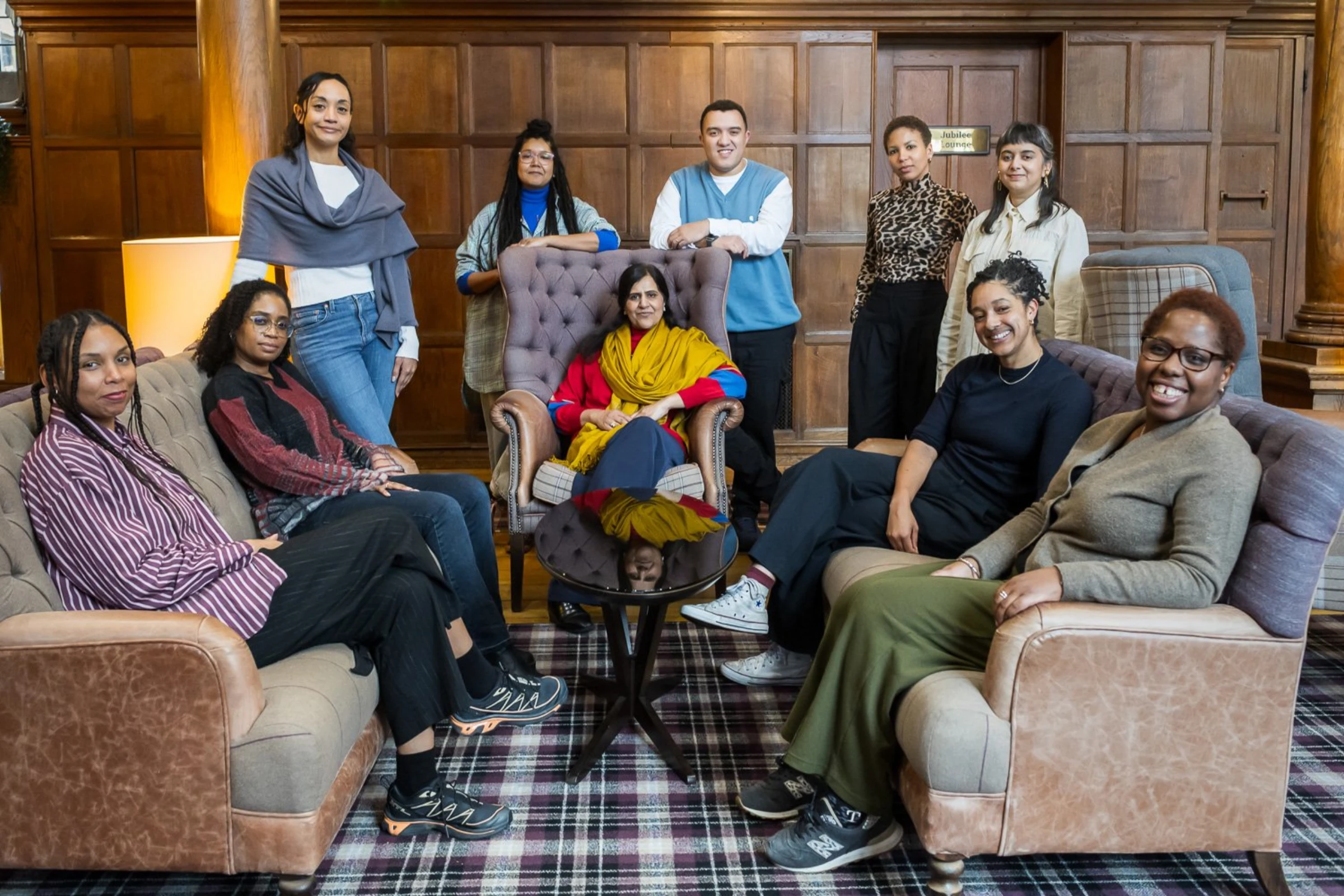
Art Fund Commits to Five-Year Fellowship Pipeline for Global Majority Curators
A new UK-wide fellowship structure places 20 Global Majority curators in multi-year institutional roles, combining exhibition delivery with governance-level equity commitments.
Art Fund has launched Empowering Curators, a five-year fellowship program designed to place 20 curators from Global Majority backgrounds into sustained roles across UK museums and galleries. In a sector that still reports sharp representation drop-off at senior levels, the initiative is notable for its duration, host-institution commitments, and explicit link between curatorial practice and organizational reform.
The first cohort spans institutions including the Whitworth, Tate Liverpool, Manchester Museum, Royal Museums Greenwich, National Museums Liverpool, Autograph, and Chapter Arts Centre. According to the launch materials, fellows are not confined to shadowing programs. They are tasked with building exhibitions, interpretation strategies, and public-facing projects while institutions run parallel internal equity and inclusion processes.
That design responds directly to Art Fund’s own 2022 report, It’s About Handing Over Power, which argued that episodic interventions could not solve entrenched barriers in curatorial hiring and progression. The new structure attempts to move from short-term visibility to pipeline engineering. If it works, the impact will not be measured only by one-off exhibitions, but by whether fellows convert into durable leadership trajectories inside and beyond host organizations.
For museums, the policy implication is uncomfortable but productive. Diversity initiatives often concentrate on programming optics while leaving procurement, governance, and decision-making architecture untouched. Empowering Curators asks host institutions to do both at once: produce public outcomes and redesign internal practice. That dual burden can generate resistance, especially in budget-constrained organizations, yet it is precisely where the program’s seriousness will be tested.
For curators and advisors, this rollout also reframes how to read institutional announcements over the next 18 months. New shows tied to fellows should be assessed on formal quality and research depth, but also on whether they are backed by real authority over collections, interpretation, and commissioning. Without authority transfer, fellowship language risks becoming another cycle of cultural branding. With authority transfer, it can alter who sets agendas in permanent and temporary displays.
The initiative is supported by a broad funding mix that includes trust philanthropy and public sources, alongside professional development support via Clore Leadership pathways. This diversified backing can provide stability, but it also creates accountability complexity. Multiple funders tend to bring multiple reporting logics. The strongest outcome would be a shared metric framework centered on retention, progression, acquisition influence, and long-term institutional policy change rather than headline event counts.
There is a wider market implication as well. Curatorial leadership shapes which artists enter institutional narratives, which in turn affects scholarship, collecting behavior, and valuation over time. A fellowship that changes curatorial gatekeeping can produce delayed but material shifts in canon formation. For collectors tracking five-year horizons, this matters more than any single season’s fair buzz.
A final test for the program will be transparency. If Art Fund and partner institutions publish annual progression data, including retention, promotions, acquisition influence, and curatorial decision authority, Empowering Curators could become a benchmark other national ecosystems can adapt. If reporting stays anecdotal, the field will lose a chance to convert a promising model into durable policy evidence.
Primary references: Art Fund launch announcement, program framework update, and 2022 sector report.