Lost Archimedes Palimpsest Page Identified in French Museum
A long-lost leaf from the Archimedes Palimpsest has been identified in Blois, reconnecting a critical fragment to one of the most important manuscript witnesses for ancient mathematics.
Researchers have identified a long-lost page from the Archimedes Palimpsest in the collection of the Musée des Beaux-Arts in Blois, France, a major development for the study of one of antiquity’s most consequential textual legacies.
The discovery was reported by Victor Gysembergh and linked to early twentieth-century documentation by Johan Ludvig Heiberg. Using historical photographs, scholars matched the Blois folio to leaf 123 in the palimpsest sequence.
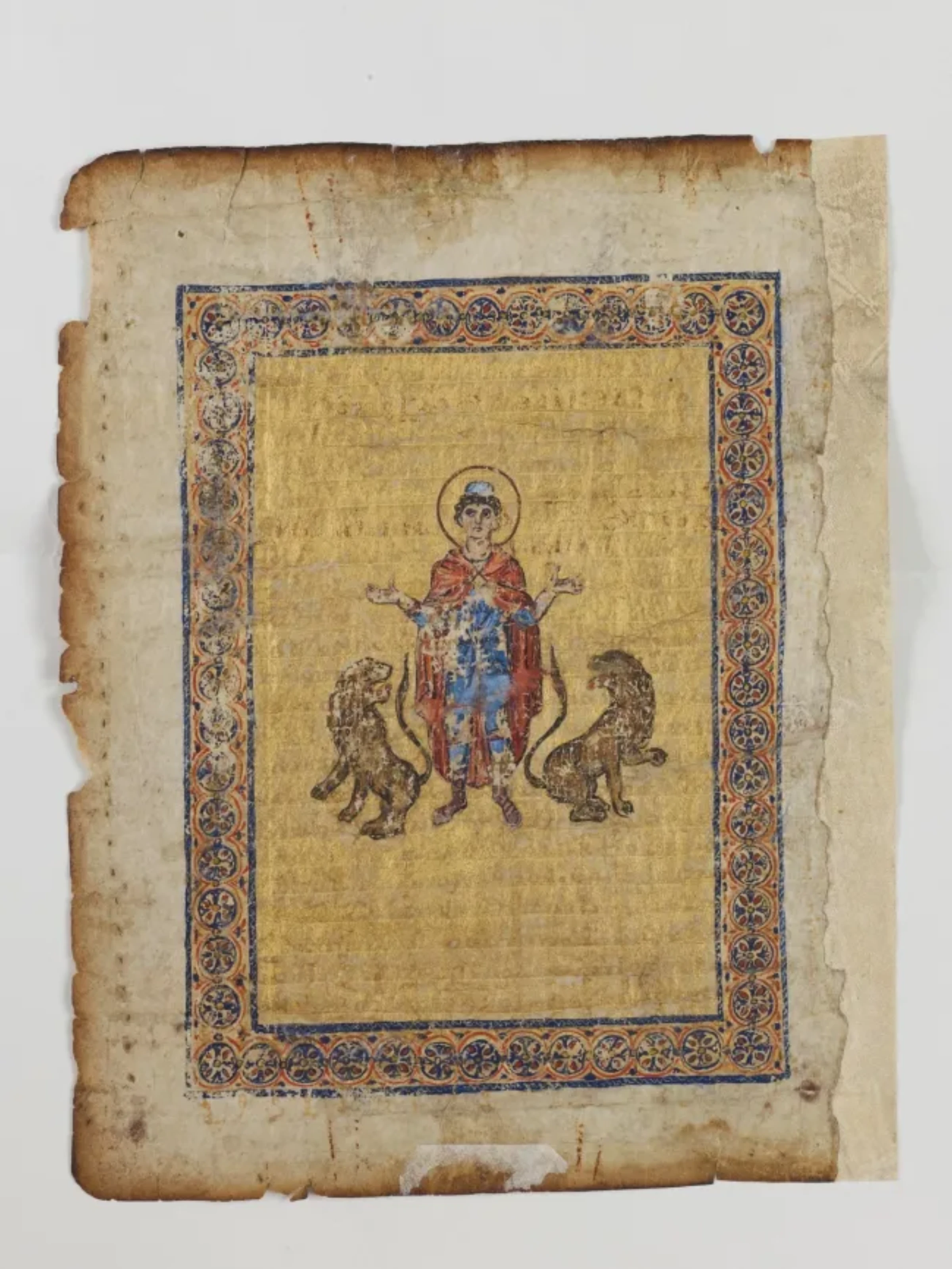
Materially, the page is complex. One side preserves diagrams and text from On the Sphere and the Cylinder, partially obscured by later devotional writing. The reverse includes an image of the Prophet Daniel with lions, reflecting the manuscript’s layered reuse over centuries.
The broader point is methodological. Palimpsest research depends on philology, imaging science, collection history, and patient metadata work. Breakthroughs rarely arrive as isolated discoveries; they emerge from infrastructure and from institutions willing to support long-cycle scholarship.
The Archimedes Palimpsest itself is not an autograph manuscript by Archimedes. It is a medieval copy of older Greek treatises that survived through overwriting, dispersal, and modern conservation. That survival chain is precisely why each recovered leaf matters disproportionately.
For historians of science, additional pages can sharpen readings of diagram logic, wording variants, and transmission pathways. Small textual differences can shift interpretation of how later communities received, copied, and understood mathematical arguments.
For museums, the find is a reminder that uncataloged or miscataloged holdings can still contain high-value evidence. Collections frequently treated as peripheral may become central once the right comparative and technical tools are applied.
Next steps may include multispectral imaging and synchrotron-based analysis, pending permissions. Similar approaches have transformed legibility in other overwritten manuscripts and can reveal erased writing invisible under ordinary light.
Institutions with related holdings should take note. Proactive re-examination is often more productive than waiting for outside claims. The strongest discoveries tend to come when curators, conservators, and external specialists collaborate early rather than sequentially.
Readers who want deeper background can consult the CNRS research ecosystem, manuscript resources from the Walters Art Museum, and comparative catalog information from the British Library.
What this find ultimately confirms is that the archive remains dynamic. Even canonical objects like the Archimedes Palimpsest can still change in meaningful ways when evidence moves from rumor to verifiable material record.
Blois now becomes an important reference point in that record. The city’s museum has shifted from peripheral mention to active node in the ongoing reconstruction of a manuscript that continues to shape the history of mathematics, text transmission, and cultural stewardship.
There is also a policy implication. Public funders increasingly ask museums to prove research impact, not only footfall. Discoveries like this provide concrete evidence that collections work can generate globally relevant knowledge when institutions invest in scholarship and cross-border collaboration.
It is worth reading this case alongside manuscript programs at institutions such as the Bibliothèque nationale de France and the Vatican Apostolic Library, where imaging and re-cataloging continue to surface unexpected textual histories.