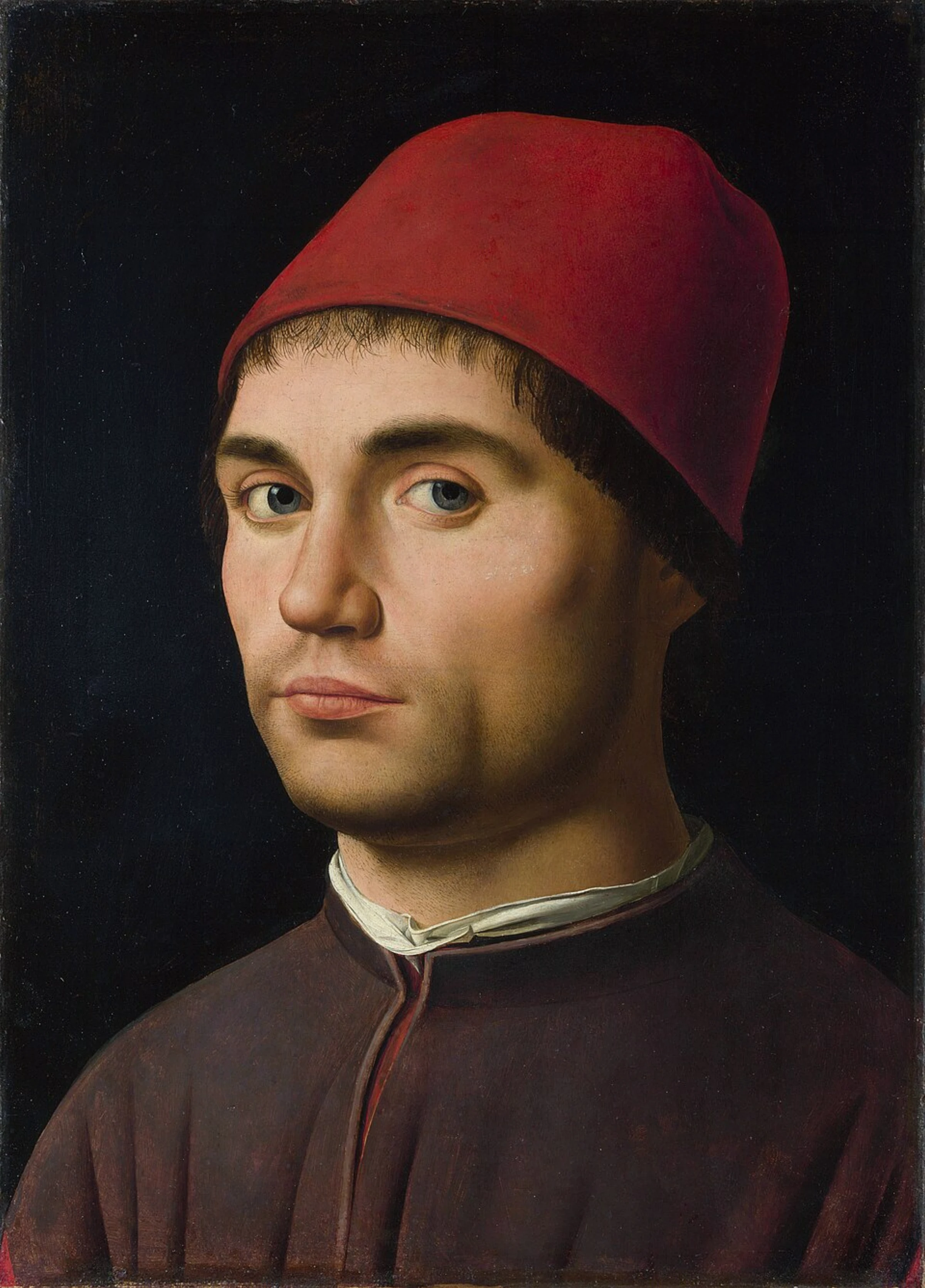
Mafia Suspected in Heist of Antonello Paintings in Sicily
Four Renaissance paintings by Antonello da Messina stolen from a Sicilian museum have Italian officials fearing organized crime involvement
The Theft That Should Not Have Been Possible
Four paintings by Renaissance master Antonello da Messina were stolen from the Regional Museum of Messina on the night of August 15, in a heist so efficient and well-executed that Italian authorities suspect inside help. The thieves broke into the museum during the Ferragosto national holiday, bypassed the alarm system, smashed into security display cases, and fled with three panels from the Polittico di San Gregorio altarpiece plus a fourth smaller devotional painting, all within a matter of minutes. The stolen works have been valued between 70 million and 80 million euros, roughly $81 million to $92 million.
What makes the crime extraordinary is not just the value of the works but the circumstances of their removal. The museum's video surveillance system and alarm were functioning properly, and guards were on site, according to Renato Schifani, the president of Sicily. An internal investigation is now underway to determine whether museum staff served as accomplices. Enzo Caruso, Messina's top culture official, told reporters that the crime would be nearly inconceivable without intimate knowledge of the museum's layout and security systems.
The thieves apparently abandoned two additional Antonello paintings in the garden, leaving them propped against the museum fence. Tourists discovered them two hours later. "Perhaps they did not anticipate how heavy they would be," Caruso said. "These are wooden panels. Stealing them is not as easy as stealing a canvas that can be cut from its frame." The abandoned works were found without protective covering, which struck investigators as amateurish for a theft involving 15th-century paintings of this significance.
Why the Mafia Is the Leading Theory
Caruso has been unusually direct about the possibility of organized crime involvement. In detailed remarks to reporters, he outlined a scenario in which the paintings would not be sold on the black market, where works of this profile and provenance would be instantly recognizable and impossible to fence. Instead, they could function as currency or collateral in criminal transactions, or be used to extort the Italian state. "The Mafia? It's possible they might try to blackmail the state itself in order to return them," Caruso said. "These are the kinds of dynamics that ordinary people never get to see."
The theory gains credibility from the theft's location. Messina sits at the northeastern tip of Sicily, a region where organized crime networks have deep historical roots and ongoing operational capacity. The Strait of Messina, which separates the city from the Italian mainland, is a known route for smuggling. Caruso himself noted that the thieves "may be keeping the Antonellos hidden while things calm down" or could have taken them by sea immediately after the theft. The maritime geography of the region makes interception extraordinarily difficult once stolen goods leave port, and Italian authorities have long struggled to monitor the small craft and fishing vessels that move through these waters. The combination of a holiday weekend, reduced law enforcement presence, and proximity to one of the Mediterranean's busiest smuggling corridors created conditions that a well-organized operation could exploit with minimal risk of immediate interception.
Italy's art crime squad, based in Rome, is reportedly leading the hunt for the stolen works. The unit has a strong track record of recovering stolen cultural property, but the investigation faces significant challenges if the paintings have already been moved outside museum surveillance range or transported by water. The combination of a holiday weekend, a functioning security system that was somehow bypassed, and the professional speed of the operation all point to careful planning rather than opportunistic theft.
The Artist and What Was Lost
Antonello da Messina, born in Messina around 1430, is one of the most significant painters of the Italian Renaissance. Art historians increasingly position him as a pivotal link between northern and southern European painting traditions. He is credited with introducing oil painting techniques from the Netherlands into Italian art, and his surviving body of work is small. The stolen panels were the only works by Antonello remaining in his hometown, making their loss not just a financial catastrophe but a civic and cultural one.
The Polittico di San Gregorio was originally composed of six panels. Antonello created the altarpiece for the Monastero di San Gregorio, which was destroyed in the catastrophic 1908 Messina earthquake. The survival of the panels through that disaster adds another layer of loss: these works had already endured a natural catastrophe that leveled much of the city. Three of the five surviving panels are now gone, along with a fourth double-sided devotional work depicting the Virgin and Child that was purchased by the Sicilian regional government from Christie's in 2003.
International interest in Antonello has surged in recent years. Earlier in 2026, Italy's Culture Ministry acquired his painting Ecce Homo for $14.9 million through Sotheby's in New York, a purchase that underscored both the artist's market value and his growing scholarly reputation. The theft of works valued at five to six times that figure represents a devastating blow to the public access that museums provide to historically significant art. The loss also complicates ongoing scholarly efforts to fully document Antonello's oeuvre, which remains incomplete. With fewer surviving works than contemporaries like Giovanni Bellini or Jan van Eyck, every painting by Antonello carries outsized art historical significance. The stolen panels were not merely valuable objects but primary documents in the study of how Renaissance techniques crossed geographic and cultural boundaries. Their absence creates gaps that scholarship alone cannot fill.
The civic dimension of the loss compounds the art historical one. Antonello is Messina's most famous native artist, and the Regional Museum's collection of his work has been a point of local pride and a destination for scholars and tourists alike. The museum now faces the difficult task of explaining to visitors why its most important holdings are missing, and of maintaining public confidence in its ability to protect what remains. The emotional resonance of the theft in Messina cannot be separated from its institutional impact. This is a city that lost much of its architectural heritage in the 1908 earthquake, and the survival of Antonello's panels through that catastrophe had made them symbols of cultural resilience. Their theft feels like a second disaster, man-made where the first was natural.
A Pattern of Art Crime in Italy
The Antonello heist is not an isolated incident. Days before the Messina theft, police in Parma announced the recovery of three stolen paintings by Renoir, Cezanne, and Matisse, valued at approximately 10 million euros. Five suspects were detained in connection with that theft, which took place on March 22 and 23. The Rome-based art theft investigators responsible for that recovery are now involved in the Antonello case. That unit, part of the Carabinieri TPC, maintains the world's largest database of stolen cultural property and has built international partnerships that extend across Europol and Interpol channels.
Italy faces a persistent challenge with art crime that few countries can match. The country's vast cultural heritage, distributed across thousands of museums, churches, and archaeological sites, presents an enormous security surface. Many of these institutions operate with limited budgets and aging infrastructure. The Messina heist, executed against a museum with a functioning alarm system and on-site guards, suggests that the vulnerability may lie as much in human factors as in technological ones.
Marisa Mercurio, the director of the museum, captured the sense of institutional devastation in her own remarks. "It is an extremely serious and significant loss," she said. "They have stolen works of enormous cultural, artistic and symbolic importance, not only for Messina but for Sicily as a whole. All we can do now is hope they are recovered as soon as possible."
More than 100 visitors came to the museum within a day of the news breaking, many entering the gallery to see the black cloth now shrouding the pedestals where the Polittico di San Gregorio once stood. That cloth is both a mark of respect and a visible reminder of what the public has lost. Whether the paintings will return depends on an investigation that is still in its earliest stages, and on whether Italian authorities can navigate the criminal networks that may now hold works that belong, by every measure, to the cultural patrimony of a nation. Italy's art crime squad has recovered thousands of stolen works over the past two decades, but each recovery depends on intelligence, cooperation, and sometimes luck. The Antonello panels, valued at upward of $81 million, represent one of the highest-profile art thefts in recent European history. Their recovery, if it comes, will likely take months or years rather than days. In the meantime, the black cloth in the Messina gallery stands as a reminder that cultural heritage is never as secure as it appears, and that the institutions tasked with protecting it are only as strong as the human networks that surround them. For context on how Italy's art crime operations work, coverage from The Art Newspaper on cultural property investigations provides useful background on the squad's methods and track record.