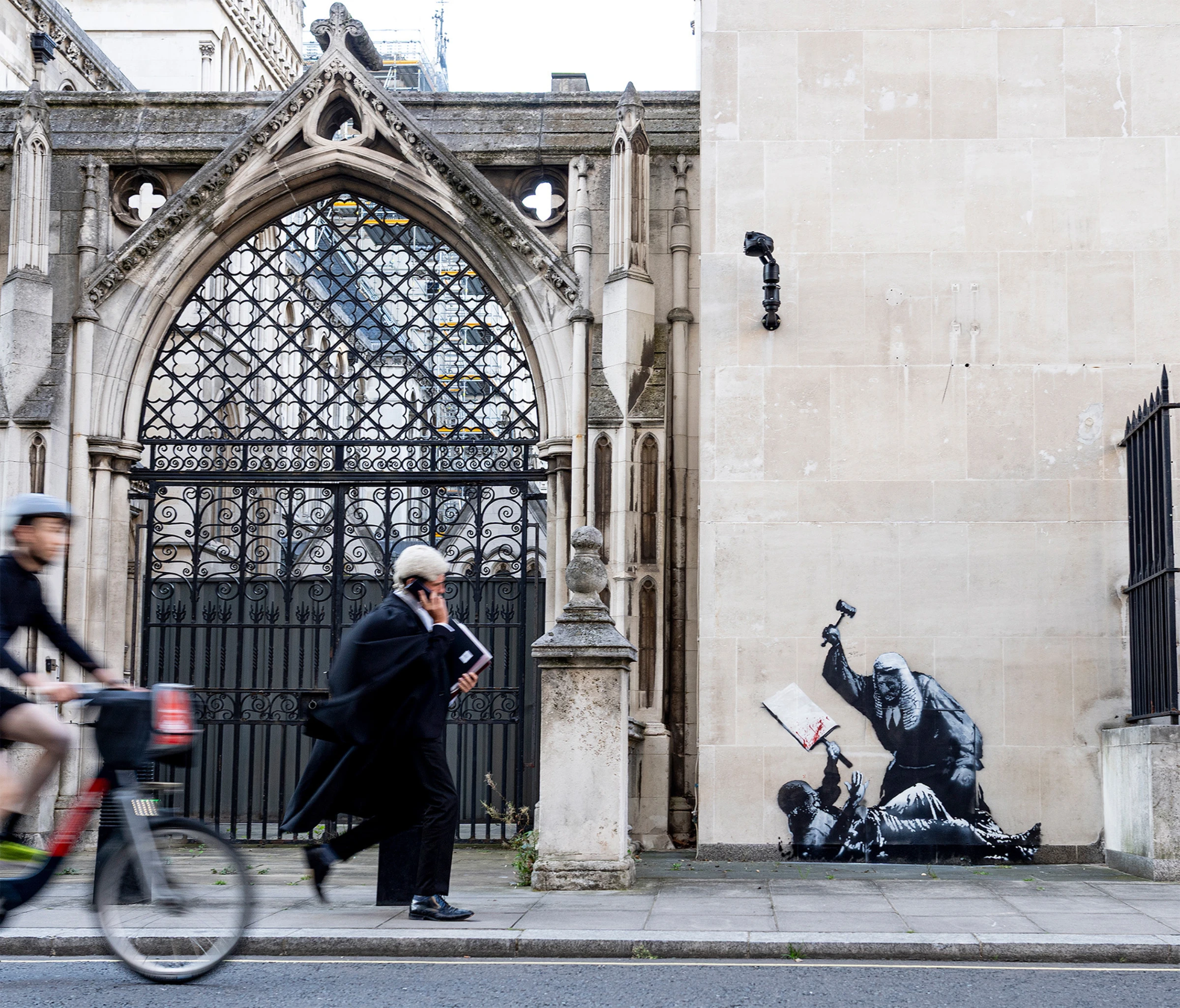
Why the Banksy and Ferrante Identity Chase Keeps Returning
A fresh cycle of identity claims around Banksy and Elena Ferrante has revived a long-running conflict between disclosure culture and the right of artists to control the terms of their public presence.
Another week, another identity cycle. New reporting and renewed commentary around Banksy, paired with revived speculation around Elena Ferrante, have put anonymity back at the center of cultural debate. The pattern is familiar: disclosure is framed as public service, headlines spike, then criticism catches up and asks what was actually gained.
The current flashpoint was sharpened by a Reuters-linked identity claim around Banksy, discussed in <a href='https://www.theguardian.com/commentisfree/2026/mar/20/the-guardian-view-on-anonymity-in-art-the-unmasking-of-banksy-and-ferrante-should-stop' target='_blank' rel='noopener'>The Guardian editorial. Around the same period, social-media confusion involving Ferrante and a false death claim recycled the same hunger for authorial certainty. Different mediums, same reflex: if a maker is famous, the public assumes the legal name is owed.
That assumption deserves resistance. In both cases, anonymity is not an accidental gap in record keeping. It is part of the conditions under which the work enters public space. Banksy’s anonymity historically carried legal and tactical function in relation to street intervention. Ferrante’s anonymity has been repeatedly framed as an artistic and existential choice to separate writing from author performance culture.
There is also a deeper historical context that gets flattened in modern hot takes. Writers and artists have long used pseudonyms, initials, collectives, and partial identities to navigate exclusion, censorship, market prejudice, and gendered gatekeeping. From nineteenth-century pen names to contemporary collectives, controlled opacity has often been a survival tool and not a publicity gimmick.
Critics who defend disclosure argue that anonymity can become market theater. That is true in some cases. Scarcity and mystery can create premium value. But market effects do not automatically cancel the legitimacy of privacy claims. A better critical question is whether disclosure materially improves understanding of the work or simply satisfies audience appetite for biographical drama.
For editors, the practical line should be clearer than it often is. If a disclosure exposes criminal wrongdoing, financial fraud, or significant public harm, publication can be justified on direct public-interest grounds. If it mainly delivers name recognition without changing the meaning or accountability landscape, the case is weaker. Not every curiosity is a civic necessity.
For institutions, this conversation matters because exhibition framing often reproduces the same pressure. Museums and media teams increasingly default to personality-led storytelling, where the artist biography becomes the primary entry point and the work itself becomes supporting evidence. Anonymity disrupts that economy. It asks viewers to look first and profile later, or not at all.
Audience behavior suggests many people are already comfortable with that arrangement. Fans of Banksy do not need a passport name to parse iconography, timing, or political placement. Readers of Ferrante do not need a public face to evaluate voice, structure, and narrative intelligence. In both cases, the work offers enough to judge seriousness without compulsory intimacy.
The best cultural response now is disciplined pluralism: allow artists to choose the terms of their visibility, and evaluate the work with rigor regardless. That approach protects privacy where warranted, preserves space for investigative reporting where warranted, and avoids turning every anonymous practice into a morality play about transparency.
Further context: <a href='https://www.reuters.com/' target='_blank' rel='noopener'>Reuters reporting trail, <a href='https://www.theguardian.com/books/elena-ferrante' target='_blank' rel='noopener'>Guardian coverage on Ferrante, and <a href='https://www.banksy.co.uk/' target='_blank' rel='noopener'>Banksy’s official archive site.