Ancient Egyptians Used Correction Fluid to Revise the Book of the Dead, Scholars Find
Researchers at Cambridge's Fitzwilliam Museum have identified a 3,000-year-old white pigment mixture used to correct mistakes on a Book of the Dead papyrus, revealing a scribal practice strikingly close to modern correction fluid.
Researchers from Cambridge University's Fitzwilliam Museum have determined that ancient Egyptians used a correction fluid comparable to modern Wite-Out when making amendments to papyrus manuscripts, a finding published this week in The Art Newspaper that opens a rare window onto scribal practice in ancient Egypt.
The discovery was made using x-ray fluorescence spectrometry, which allowed scholars to analyze the chemical composition of white markings on a 3,000-year-old copy of the Book of the Dead without damaging the object. The fluid was found to contain calcite, huntite, and trace quantities of yellow orpiment, a highly toxic sulfide of arsenic also used in ancient Egyptian medicine to treat syphilis and malaria. The combination of these minerals produced a stable off-white pigment capable of covering errors in ink or paint. The vignette associated with the study is held in the collection of the Museo Egizio in Turin, one of the world's foremost repositories of ancient Egyptian material culture.
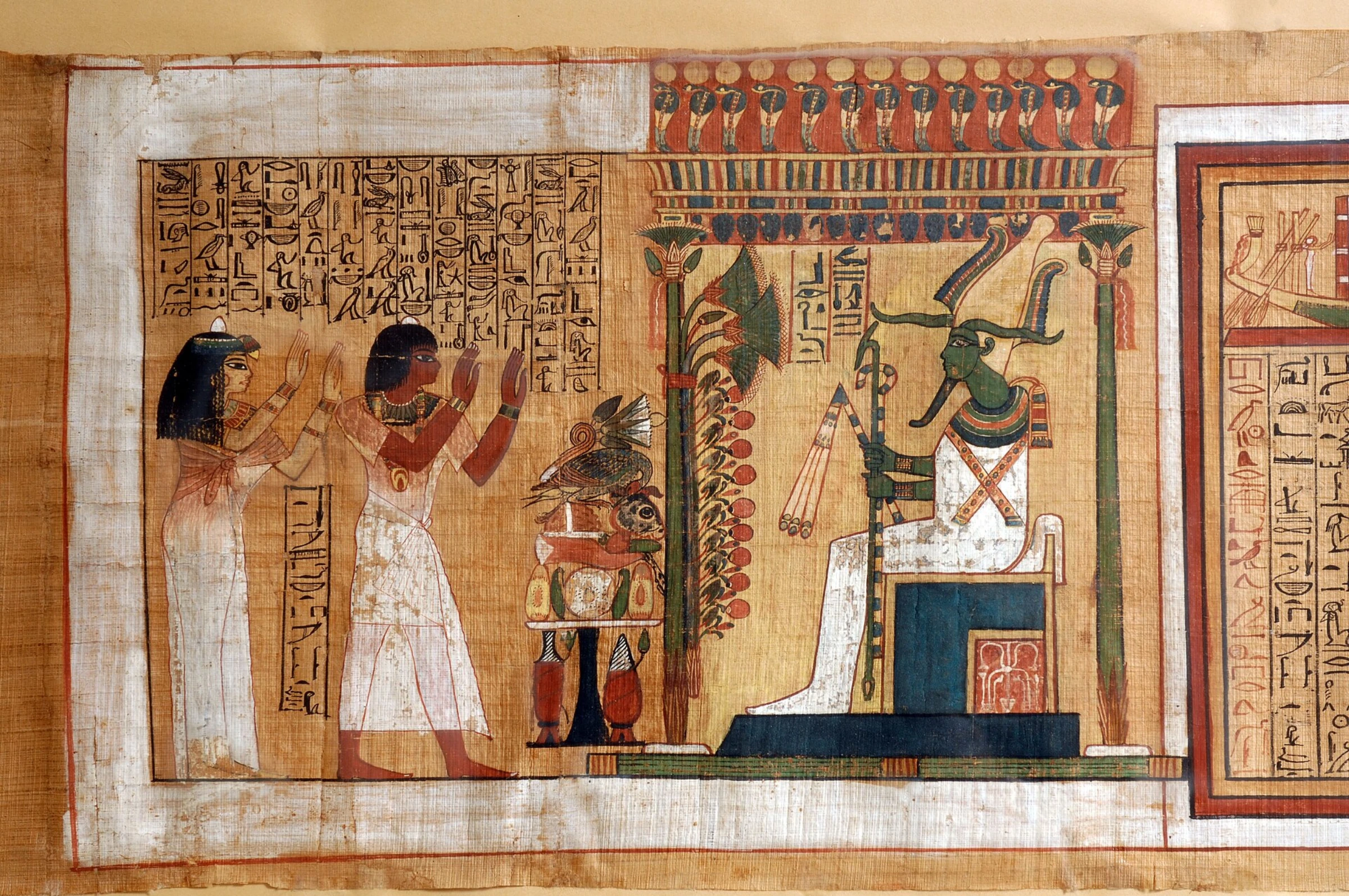
The altered manuscript in question was commissioned for Rambose, identified in the text as a royal archive supervisor. Within a vignette depicting a jackal interacting with Rambose, researchers identified streaks of white paint applied above and below the animal's black-outlined body and across its hind legs. The intervention was designed to reduce the apparent size of the creature. 'It's as if someone saw the original way the jackal was painted and said: it's too fat; make it thinner,' said Egyptologist Elizabeth Strudwick, a scholar at the Fitzwilliam Museum, in comments to The Art Newspaper.
Strudwick cautioned against reading symbolic intent into the revision. 'If there were symbolic meanings, I would expect to see other examples in illustrations of this spell, which is not the case,' she noted. 'To me, the original jackal looks pretty good, but jackals are scavengers and probably fairly scrawny in comparison to domestic dogs, so maybe a senior artist, or maybe the original painter, reviewed this image and thought that this jackal looked too dog-like and needed to be thinned down.' The alteration appears to have been purely aesthetic or normative, consistent with workshop quality control rather than theological revision. The Fitzwilliam Museum holds one of Britain's most significant collections of Egyptian papyri, and the research was conducted there using non-invasive analytical methods.
Scholars believe the jackal depicted is Wepwawet, or 'Opener of Ways,' the deity responsible for guiding the dead through the underworld. That such a theologically significant figure would be subject to correction reveals the pragmatic dimension of even the most sacred scribal production. The Book of the Dead, a collection of funerary spells intended to assist the deceased in navigating the afterlife, was produced across Egypt for over a millennium and often commissioned by individuals of status who required personalized copies.
The findings reframe assumptions about the degree of improvisation and revision permitted within ancient scribal workshops. Previous scholarship often emphasized the formulaic and sacred character of funerary texts, suggesting minimal margin for error or correction. The presence of a correction fluid applied systematically and with clear compositional logic implies instead that workshops operated with a degree of flexibility - a quality-control culture recognizable to anyone familiar with contemporary studio or editorial practice.
The Fitzwilliam Museum, which holds a significant collection of Egyptian antiquities and papyri, has been a leading site for the technical study of ancient manuscripts. X-ray fluorescence has become increasingly standard in conservation and art history research, enabling non-invasive elemental analysis that yields material data previously inaccessible without physical sampling. In this case, the technique allowed scholars to confirm not only the presence of the white substance but its precise mineral components, establishing that the correction was intentional and materially distinct from the surrounding pigments.
For institutions holding papyri and other ancient documents, this finding opens practical questions about cataloguing and interpretation. Marks previously understood as damage, fading, or accident may warrant reexamination as intentional revisions. The practice of using correction fluid also implies that scribal workshops produced and stored the mixture as a standard tool, suggesting a level of material sophistication in manuscript production that remains underexplored in Egyptological literature.
The study contributes to a growing body of research that approaches ancient art-making through material science rather than purely iconographic or philological analysis. By recovering evidence of process rather than only finished product, such scholarship restores complexity to practices often understood at a remove. Institutions engaged in this kind of technical study, including the Fitzwilliam and the Museo Egizio, are reshaping how ancient workshops are understood - not as sacred production lines operating without revision, but as professional environments with their own standards, tools, and material knowledge.